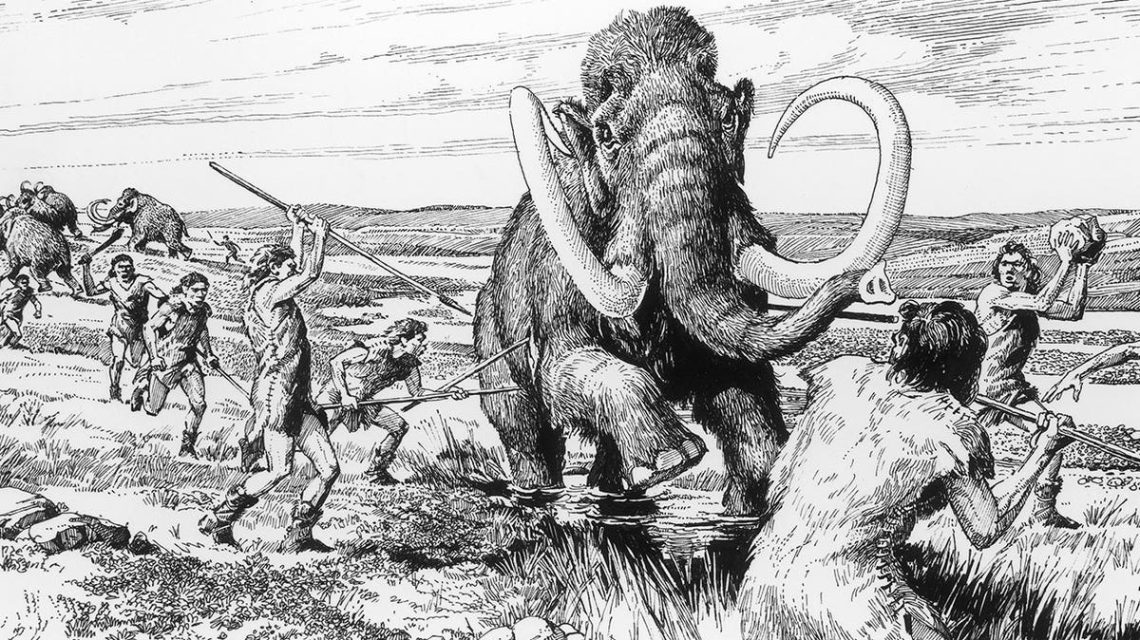
Recent research has refined the timeline for early human migration to North America, addressing a longstanding scientific question. The study, set to feature in the December 2026 issue of Current Opinion in Genetics & Development, involves a review of genetic and archaeological evidence to pinpoint when humans first arrived in the Americas.
The findings suggest that humans arrived between 14,000 and 20,000 years ago, with an arrival before 15,000 years ago deemed probable. Previously, it was believed that the first humans, identified by the ‘Clovis First’ theory, reached North America about 13,500 years ago. However, archaeological discoveries have suggested that humans may have arrived thousands of years earlier.
The researchers, including Bethany Potter and Savannah Hay from the University of Kansas, analyzed ancient DNA and archaeological data, such as 23,000-year-old footprints discovered at White Sands National Park, New Mexico. These footprints imply earlier human habitation than genetic evidence currently indicates.
Notably, early populations may have belonged to genetic lineages that left no surviving descendants or have yet to be sampled. By comparing genetic data from remains in Asia and the Americas, researchers traced the ancestry and divergence of early Indigenous populations into distinct groups, with some ancestral lineages splitting about 21,000 years ago.
The study also highlights that around 15,500 years ago, ancestral Native American populations divided into northern and southern groups, likely south of the large ice sheets then covering much of North America. This division suggests prior occurrence on the continent before these groups diverged.
‘Genomic data show us that the dynamics of the peopling of the Americas were quite different — at one point, a small group of people must have entered the American continents completely devoid of other humans,’ the researchers noted.
The researchers acknowledge remaining uncertainties about divergence timing and location. They connect this study to other recent discoveries, revealing that humans reached North America well before Christopher Columbus in 1492, altering perspectives on the continent’s initial inhabitants.
In related recent findings, researchers discovered ancient DNA remnants such as the sheep pox virus in a 1,000-year-old manuscript from England and ancient smallpox DNA in Chilean mummies. These discoveries provide critical genetic evidence for historical diseases.
 Japanese Spacecraft Embarks on Mars Moon Exploration
 Global Helium Shortage Amid War in Iran
 Impact of 2010 Deepwater Horizon Spill on Gulf of Mexico Marine Life
 Ancient Ring Discovery in Submerged Harbor of Cleopatra
 Meta’s Settlement and AI’s Impact on Children’s Development
 Help Name the Feisty Red Panda Cub at the National Zoo