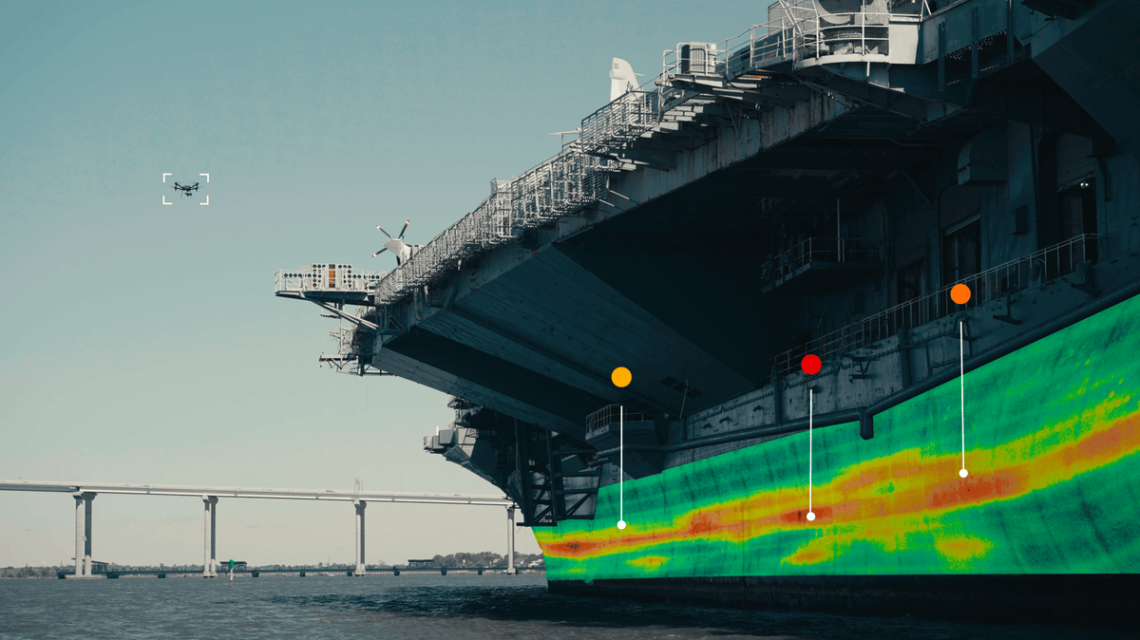
The U.S. Navy has significantly increased its investment in AI-driven robotics technology by raising the ceiling on a contract with Gecko Robotics to $300 million. This decision comes six months after the initial contract was established to expedite ship maintenance. Gecko Robotics, headquartered in Pittsburgh, provides advanced robotics solutions that aim to improve the readiness of the naval fleet amid increasing competition from China.
Originally, the contract was valued at $71 million. The Navy is enhancing this agreement to focus on fleet readiness, confronting challenges posed by China’s expanding shipbuilding capabilities. Gecko Robotics claims its technology could save the Navy up to $8 million per ship in repair costs and expedite the identification of structural problems up to 50 times faster than traditional methods.
Gecko Robotics utilizes robotic inspections alongside AI-driven software to assess structural conditions on U.S. Navy warships. This enables maintenance teams to pinpoint areas in need of repair more efficiently. A new robot, named Komodo, has been specifically developed for the Navy to inspect steel under thick coatings on warship decks without the need to strip the coatings off first. Komodo functions like a CAT scan, providing detailed insights into what needs repair without disassembling the deck.
The implementation of Komodo allows more precise damage assessments. For instance, an initial repair estimate of 1,200 square feet was reduced to about 300 square feet after Komodo’s inspection, leading to more focused repairs.
The Navy’s expanded agreement with Gecko Robotics was initially a $71 million contract to enhance the use of robotic inspection technology across the fleet. Gecko began with 18 ships in the U.S. Pacific Fleet, including destroyers and amphibious warships. Their robots are capable of crawling over hulls, flight decks, and other hard-to-reach areas to detect corrosion and structural issues. The AI-powered Cantilever platform then processes this data to guide maintenance planning and repair priorities.
Speed is a critical factor in these operations, allowing the Navy to achieve faster turnaround times and maintain fleet availability. As the Navy aims for an 80% readiness rate, the expanded use of Gecko’s technology becomes essential in preventing maintenance delays, particularly as China’s naval forces continue to grow.
Gecko Robotics also aims to leverage years of inspection data to preemptively address potential issues, ensuring repair resources are allocated efficiently. This proactive approach may reduce reliance on a skilled labor force, which is facing shortages. By improving efficiency, the Navy can better utilize its existing fleet while balancing the production capabilities of American shipyards against China’s.
Incorporating robotics and AI not only minimizes inspection-related risks but also frees up labor for more critical repair tasks. This strategy might be crucial for the U.S. Navy as it strives to match the operational readiness of a rapidly expanding rival fleet.
 Remote Work and Social Connections: A Deeper Look
 Review of Afghanistan Withdrawal Expected Amidst U.S. Political Climate
 Tragedy in Baton Rouge: Young Couple Killed by Impaired Driver
 Controversial Tree Removal at East Potomac Golf Links
 Minnesotans React to Raid on Ilhan Omar’s Home
 Controversy Surrounds Autonomous Vehicle Legislation in D.C.