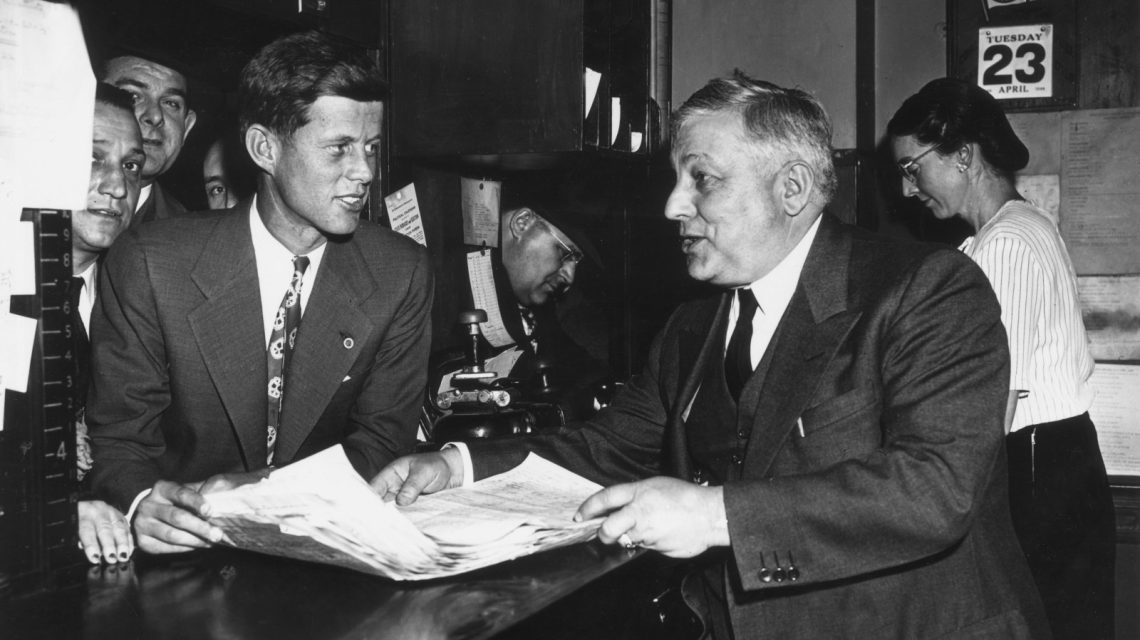
The Alaska U.S. Senate race features an uncommon controversy involving two candidates with the same name: Dan Sullivan. This situation draws a parallel to John F. Kennedy’s initial congressional campaign, where two candidates named Joe Russo contested in the 1946 Democratic primary.
The Trump administration has taken legal action to block the certification of Alaska’s Senate election if the incumbent, Republican Dan Sullivan, loses. The administration argues that voters might mistake him for another candidate, Daniel J. Sullivan Jr. Alaskan officials are responding by requesting a federal judge to dismiss this lawsuit. The results of the November 3 contest could play a role in determining control of the Senate.
The Case of Two Joe Russos in Kennedy’s First Campaign
In 1946, Kennedy sought the Democratic nomination for Massachusetts’ 11th Congressional District. This district included areas such as Boston’s West End and North End. As a Navy veteran from a politically-inclined family, Kennedy was running for office for the first time. Among his opponents was Joseph Russo, a prominent Boston city councilor.
Joseph Russo had immigrated from Sicily and by 1938, had been elected to the Boston City Council. As a councilor, he drew significant support from Italian American voters. Russo challenged Kennedy’s lack of experience, often citing the advantages Kennedy’s wealth provided. He ran advertisements mocking Kennedy’s campaign.
The primary race featured an unusual complication. Another candidate named Joe Russo, a 27-year-old janitor, was also on the ballot. According to historical accounts from the West End Museum, this second Russo was allegedly paid by Kennedy’s campaign manager to enter the race and split support from the original Russo. Joseph P. Kennedy Sr. supposedly approved this strategy, although Kennedy’s involvement remains unclear.
“There’s no doubt in my mind that Joe Kennedy and the people around him put one of those Joseph Russos in the fight,” said Mark Dalton, from Kennedy’s campaign, according to a PBS documentary.
Despite these tactics, Kennedy won the primary handily with 22,183 votes compared to 5,661 for the councilor and 773 for the janitor.
After the Votes: Outcomes for the Russos and Kennedy
Joseph Russo continued in public service, eventually serving on Boston’s Election Commission. Reports from the museum indicate that he encountered Kennedy again during the 1956 Democratic National Convention, reportedly without animosity. Kennedy proceeded to win the general election, serve in Congress, and later be elected as President in 1960.
The Current Dispute: Alaska’s Two Sullivans
The contemporary situation in Alaska involves similar tensions. Republican Senator Dan Sullivan faces Daniel J. Sullivan Jr., an independent challenger. Allegations arose that the latter aims to divert votes from the incumbent, a claim the challenger denies.
The Alaska Supreme Court has allowed Daniel J. Sullivan Jr. to remain on the ballot, distinguished by his full name and lack of party affiliation. The state uses a ranked-choice voting system, enabling voters to rank candidates.
The U.S. Justice Department filed a lawsuit to halt election certification if the incumbent loses, arguing that the other Sullivan could affect the results. Alaskan officials countered, asking a federal judge to dismiss the lawsuit and questioning how intent could be assessed without breaching voter privacy. A conclusion to this legal battle is expected soon.
This situation in Alaska differs from Kennedy’s time. Then, another candidate with the same name was allegedly introduced to dilute support. In contrast, Alaska’s case questions whether a similar name justifies federal intervention in state election certification processes.
These episodes underscore how candidates sharing names can cause electoral controversies, highlighting distinctions between political tactics and legal standards for candidacy.
 Mayor Mamdani’s Policing Reform Plans
 Gen Z Voter Shifts and Their Impact on the 2026 Midterm Elections
 Disappearance of US Senate Candidate Raises Questions
 DOJ Rule Change Reduces Appeal Time for Immigrants Facing Deportation
 Hakeem Jeffries’ Bid for House Speaker Faces Progressive Hurdles
 Ohio Judge Dismisses Defamation Lawsuit by Rep. Max Miller