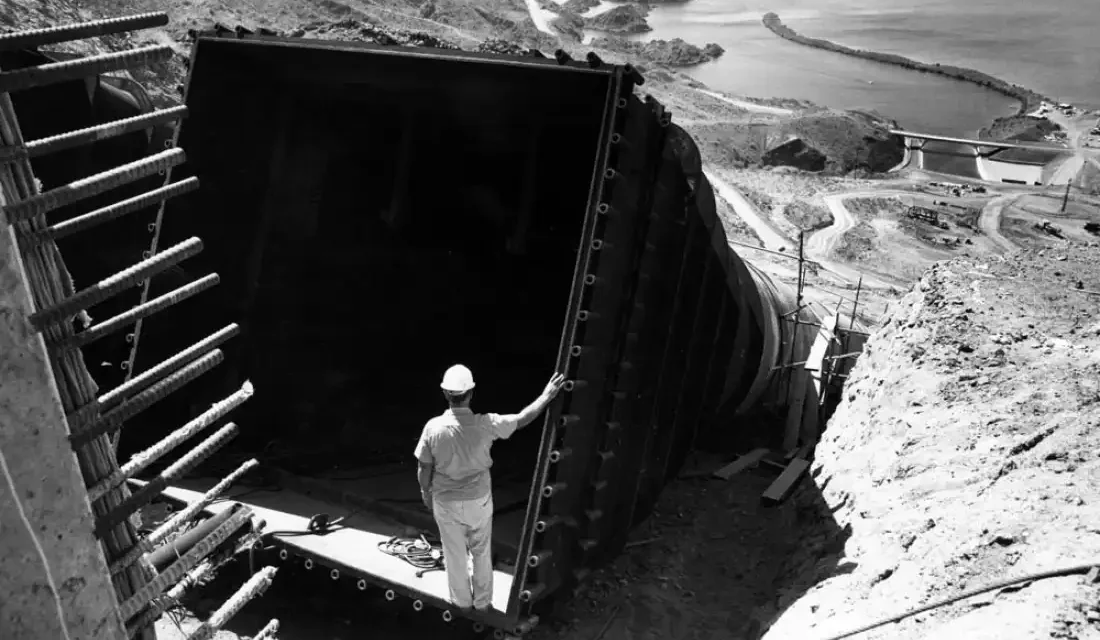
In June 1982, a worker surveyed the construction of the Mark Wilmer pumping plant near Parker, Arizona. This pump station moves water from the Colorado River near Lake Havasu to the Phoenix area through the Central Arizona Project (CAP). The system was warned in the 1960s that it would face severe shortages in the 21st century. However, these warnings were largely ignored over the decades.
The Colorado River now stands at a critical juncture. Extraction exceeds what the river can supply, with policymakers struggling to agree on how to reduce demand. This impacts nearly 40 million users across seven Western states, including major cities, tribes, and economies. Recent federal plans to reduce water usage have led to legal challenges from Nevada, Arizona, and the canal system supplying water to Phoenix. Yet, these modern-day issues were anticipated by the architects of the CAP, who warned that future cutbacks were likely.
Historical Warnings and Present Challenges
Without the CAP’s 336-mile system of canals and pumping plants, cities like Phoenix and Tucson would not exist as we know them. The system faces threats from water shortages, and past warnings now seem prophetic. Rich Weissinger, a former director of field maintenance for CAP, emphasized the canal’s importance, noting that many people and industries rely on its water supply.
The Colorado River basin suffers from a combination of record-breaking droughts and climate change, exacerbating the supply-demand imbalance. Despite these challenges, past forecasts by the CAP’s creators went unaddressed. These forecasts included potential augmentations like connecting to the Columbia River system or creating large-scale desalination facilities.
“We have lots of people, lots of industry, lots of municipalities that depend on a stable water source, and that’s what CAP can bring — a stable, reliable water source.” — Rich Weissinger
Confronting a Modern Dilemma
As reservoirs dwindle to new lows, Arizona faces the reality of drastic water cuts, which could reduce CAP’s supply by 47%. This problem emerged despite early warnings. Suggested augmentations like pipeline links or desalination never materialized. As Tom McCann, a former CAP deputy general manager noted, financial and political barriers hindered these solutions.
Historical Context and Political Realities
Figures like President Lyndon B. Johnson and Congressman Mo Udall spoke optimistically about CAP’s potential, yet acknowledged its limits. Floyd Dominy of the Bureau of Reclamation predicted declines in water availability due to upstream consumption in other states. However, drought and climate change have been the primary culprits in water supply reductions.
The CAP’s failure to leverage proposed solutions like river augmentation reflects a larger hesitance to tackle future problems before they became pressing. Stewart and Mo Udall, key proponents, suggested grandiose plans fitting for their era of post-war national optimism. Yet, as Brad Udall mentioned, these plans seem far-fetched in retrospect.
“The 1968 idea was we could build our way out of anything. We could engineer our way out of every crisis. We’re smart. We’re rich. The world’s our oyster.” — Brad Udall
Rethinking Water Management
As Arizona grapples with water shortages, solutions like ocean desalination and wastewater recycling are being reconsidered. Chuck Podolak, formerly with the Water Infrastructure Finance Authority of Arizona, suggested these technologies could be politically palatable alternatives. However, their execution hinges on cost and public willingness to invest.
Finding Solutions and Moving Forward
The original CAP planners understood the inherent issues of managing limited river resources. As John Berggren from Western Resource Advocates pointed out, resolving these issues requires a basin-wide commitment to reducing water reliance. A fundamental reassessment of water management is necessary to address the “structural deficit” of the river system.
“Everyone across the Colorado River basin is going to have to help chip in and use less water because that’s how the system was designed.” — John Berggren
 Record Low Hydropower Output in the Southwest
 Data Centers Face Challenges in Vernon, Los Angeles
 Rams Captured Relaxing in Residential Area
 Global Climate Finance and the Developing World: A Turning Point
 Hidden Plastics in Everyday Items
 The Final Journey of the SS United States