Washington, D.C. — On Tuesday, the Supreme Court’s conservative justices indicated they might support Catholic preschools refusing to sign a pledge to accept students with transgender or gay parents. The central issue is whether Colorado may impose conditions on public funding in its Universal Preschool Program that indirectly challenge certain religious beliefs.
Colorado’s Universal Preschool Program, launched in 2023, offers 15 hours per week of tuition-free preschool to every four-year-old in the state. The program welcomes public, private, and religious schools, provided they sign a nondiscrimination agreement that ensures no child or parent’s sexual orientation or gender identity influences enrollment.
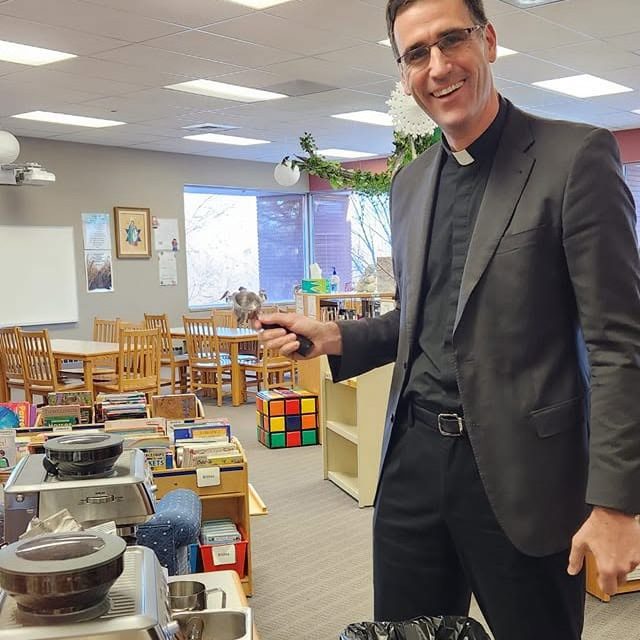
Fr. James de Cendra, principal of St. Mary’s, expressed concerns about the agreement’s implications for Catholic beliefs.
Justices Samuel Alito, Neil Gorsuch, Brett Kavanaugh, and Amy Coney Barrett questioned the conditions set by Colorado. Meanwhile, Justices Sonia Sotomayor, Elena Kagan, and Ketanji Brown Jackson cautioned against granting exemptions unavailable to secular schools. Chief Justice John Roberts examined arguments from both sides, noting that previous court decisions which favored religious schools involved laws explicitly naming a religion, unlike Colorado’s nondiscrimination agreement.
The case centers around two legal precedents: Sherbert v. Verner (1963), which protected religious practices from government denial of benefits unless under strict scrutiny, and Employment Division v. Smith (1990), which upheld laws applied generally to everyone regardless of their impact on specific religious beliefs.
Justices questioned Colorado’s approach. Gorsuch suggested that the state might indirectly circumvent recent court rulings favoring religious schools. Kavanaugh pointed out discrepancies between secular and religious preferences in enrollment policies. Barrett questioned the need for the rule.
Sotomayor asked whether schools might refuse children based on their parents’ sexuality. Lawyer Nicholas Reaves replied that if the refusal aligns with sincere religious belief, it might be permissible. Sotomayor then contrasted the scenario with potential racial discrimination, which Reaves dismissed.
Harris, representing the DOJ, highlighted inconsistencies in religious liberty precedents, pushing for strict protection of religious beliefs in public programs. Colorado’s lawyer Helen Norton argued for equal opportunity access to preschools.
The Trump administration supported the parishes in this dispute, emphasizing stricter safety for religious believers in public benefits.
Erika Nagle, a Colorado resident, shared her family’s denial of $12,000 in preschool benefits due to choosing a Catholic school. St. Mary Catholic Parish and others sued after Colorado denied their request for religious exemptions, citing violations of the First Amendment’s Free Exercise Clause.
Colorado’s LGBT protections have been challenged at the Supreme Court thrice since 2018, each time with the state losing. Previous rulings include cases on conversion therapy, web design for same-sex couples, and a baker refusing to create a cake for a gay wedding.
Reaves emphasized the financial impact on the Sheleys, advocating for policy change. The decision in St. Mary Catholic Parish v. Roy is anticipated by June.
 Mayor Mamdani’s Policing Reform Plans
 Gen Z Voter Shifts and Their Impact on the 2026 Midterm Elections
 Former Reality Star Wins Lawsuit Over Workplace Harassment
 Disappearance of US Senate Candidate Raises Questions
 DOJ Rule Change Reduces Appeal Time for Immigrants Facing Deportation
 Hakeem Jeffries’ Bid for House Speaker Faces Progressive Hurdles