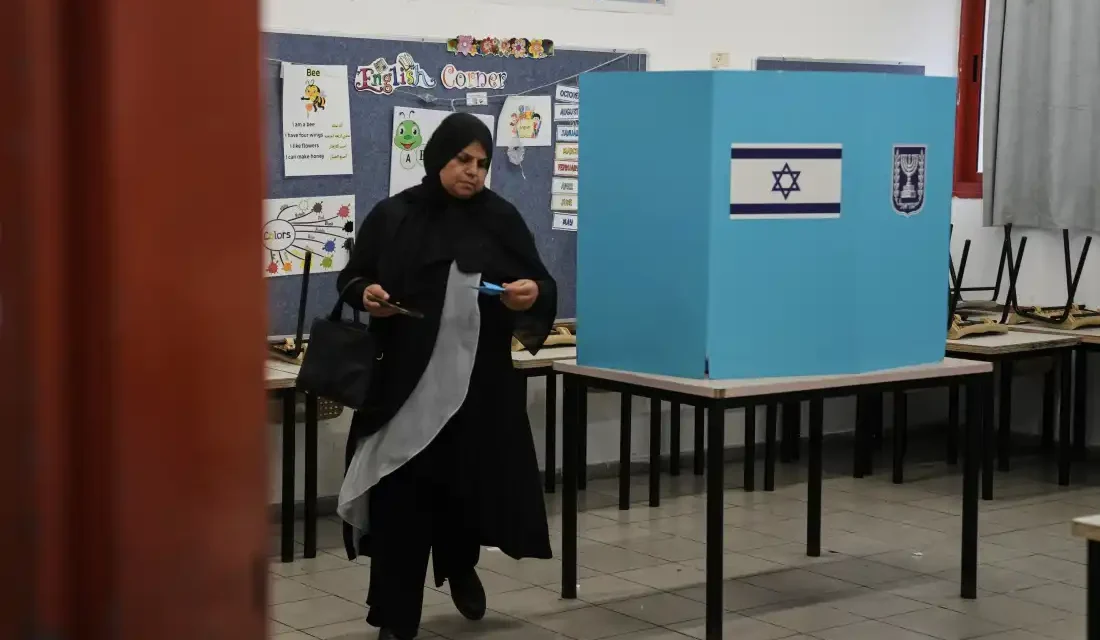
A Palestinian citizen of Israel casts their vote in a pivotal general election held in Umm al-Fahm, Israel on October 27, 2026. Historically, many Palestinian citizens of Israel refrained from voting, doubting any benefit in engaging with a state they perceive to marginalize their communities and oppress Palestinians in the West Bank and Gaza.
Last month’s elections marked a shift. Palestinian Arabs in Israel went to the polls in unprecedented numbers. This move significantly impacted the political landscape, depriving Prime Minister Benjamin Netanyahu’s far-right government of a majority and elevating Arab-led parties within Israeli politics. Jamal Zahalka, chair of the High Follow-Up Committee, viewed this as a “historical achievement,” emphasizing that their community has now realized its strength.
In the election results, neither Netanyahu’s coalition nor Gadi Eisenkot’s center-right opposition met the 61-seat threshold required to form a government. Arab-led parties secured 19 out of 120 Knesset seats, placing them in a critical position during the ensuing government formation negotiations.
Commemoration and Reflection
In Kufr Qasim, hundreds gathered for an annual commemoration. This event marked the 1956 tragedy when Israeli border police killed residents on the opening day of the Suez Crisis. The gathering focused on the ongoing challenges for Palestinians, including increased discrimination within Israel post-October 7, 2023, following Hamas-led attacks, and the war in Gaza that followed.
Residents of Kufr Qasim stated the worsening rights inside Israel motivated higher voter turnout among Palestinian citizens. Intisar Sarsur, a 65-year-old resident, expressed that everyone she knew participated in the election, seeking basic human rights amid the challenges.
Impact of Election Results
Palestinian citizens, now about 20% of Israel’s population, showed a remarkable increase in electoral participation with Arab-led parties seeing a 64% rise in votes compared to the previous election. This outcome has stirred concerns within Israel’s political right, who view these developments as threatening Israel’s Jewish character.
Netanyahu and allies raised alarms over the increased Arab turnout. Election day saw Netanyahu posting a video describing it as an “emergency,” and further allegations of election fraud surfaced without evidence. Election officials and police dismissed such claims, acknowledging the election’s integrity.
The evolving political context reflects rising anti-Arab sentiment since 2023, complicating potential alliances with Arab parties for any coalition, particularly for Eisenkot’s bloc. Eisenkot, with a military background, remains a contentious figure due to his past in the war cabinet and strategic doctrines.
Arab Parties’ Strategy
Arab party strategies diverge post-election. Ra’am, a conservative Islamist party, is open to coalition participation, having placed a Jewish former police official second on its list. Meanwhile, the Joint List, which won a significant number of seats, opts not to formally ally with Eisenkot, primarily due to ongoing conflicts in Gaza and the West Bank.
President Isaac Herzog currently consults with parties to decide who should attempt to form a coalition. A candidate will soon receive a mandate to assemble a government, with specific timeframes guiding the process. Failure to form a coalition could lead to repeat elections next year.
In Kufr Qasim, as memories of past conflicts were evoked, Mansour Shaaban, who voted for the first time, recognized the necessity of voting against discrimination and fostering a voice for Palestinian citizens. He noted the challenges coexist with some Israelis, yet recent leadership has exacerbated divisiveness.
Even if substantial change lacks immediacy, the heightened Arab political engagement has signaled awareness across the political spectrum within Israel.
 Mayor Mamdani’s Policing Reform Plans
 Gen Z Voter Shifts and Their Impact on the 2026 Midterm Elections
 Disappearance of US Senate Candidate Raises Questions
 DOJ Rule Change Reduces Appeal Time for Immigrants Facing Deportation
 Hakeem Jeffries’ Bid for House Speaker Faces Progressive Hurdles
 Ohio Judge Dismisses Defamation Lawsuit by Rep. Max Miller