Lithium demand has surged over 400% this decade, exceeding 1.5 million metric tons annually. Estimates suggest it may reach nearly 4 million tons by 2035. The rise is driven by lithium-ion batteries for electric vehicles, large-scale energy storage, and emerging robotics.
Currently, the U.S. contributes just over 1% of global lithium supply, mainly from Albemarle’s Silver Peak in Nevada. Refining is heavily dependent on China, which dominates the processing of many critical minerals.
New Prospects in Arkansas and Texas
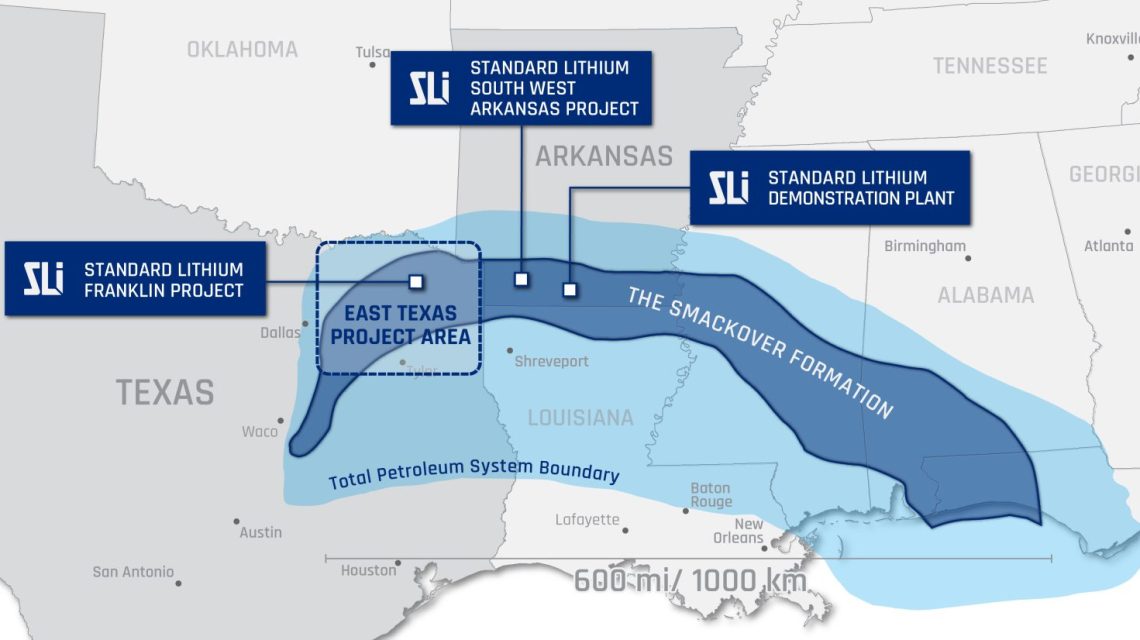
In southern Arkansas and East Texas, the Smackover Formation holds significant lithium reserves in its extensive underground aquifer. This area was originally identified by French settlers and later found to contain large lithium deposits.
Standard Lithium leads the efforts in this region, planning to start its South West Arkansas Project (SWA) soon. The company aims to construct its initial 22,500-ton phase by 2027. EnergyX, based in Austin, will also join the lithium race with its Project Lonestar facility later this decade.
The Shift to Direct Lithium Extraction (DLE)
Lacking traditional resources like those in Australia, Chile, and China, the U.S. turns to DLE technology in the Smackover region. This method involves drilling, extracting brine, and processing lithium without needing fracking.
The process is efficient, as EnergyX’s Teague Egan notes: “You extract the lithium, reinject the brine, keeping the ecosystem unchanged.”
Max Yerrill from BMO Capital Markets acknowledges the potential but warns that DLE remains largely unproven commercially. Despite these challenges, DLE may be crucial due to regional geologic constraints.
Growing Industries and Future Outlook
Self-driving vehicles and robotaxi industries primarily rely on EVs, pushing lithium demand. Utility-scale battery storage is another growing domain. Egan emphasizes the vital role of lithium batteries for future energy storage needs.
Expanding U.S. Lithium Infrastructure
Although lithium shares characteristics with rare earths, its extraction remains challenging due to its presence in brine rather than metal form. In response, refining is set to occur on-site at Smackover projects, bypassing dependency on Chinese facilities.
Standard Lithium’s CEO David Park highlights the strategic importance of bypassing China, while building critical infrastructure and securing contracts poses hurdles. However, bipartisan support from U.S. administrations has assisted projects.
Conclusion
Standard Lithium plans to expand its SWA production and explore additional facilities in East Texas. EnergyX’s agreement with Trafigura further exemplifies the burgeoning interest and investment in lithium extraction.
U.S. oil majors, including ExxonMobil and Chevron, have acquired land in the Smackover Formation to tap into its lithium potential. While the technology is being assessed, ExxonMobil plans a pilot project in Arkansas.
Park stresses that demand is not the issue. Rather, ensuring supply can meet the pace of demand is crucial. The U.S. aims to position itself as a significant player in the global lithium market with projects like Smackover.
 Record Low Hydropower Output in the Southwest
 Data Centers Face Challenges in Vernon, Los Angeles
 Rams Captured Relaxing in Residential Area
 Global Climate Finance and the Developing World: A Turning Point
 Hidden Plastics in Everyday Items
 The Final Journey of the SS United States