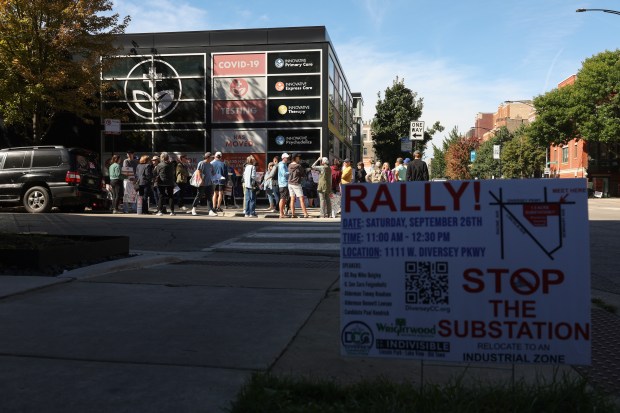
The North Siders took action on Diversey Parkway, conscious that their electrical grid is nearing its limit. They agree on the need for a new substation to supply power to their homes and businesses, yet argue it should be built elsewhere. Mary Driscoll, a resident for over 50 years, underscores that their stance is not about exclusionary politics but rather a positive community effort.
Driscoll belongs to the Diversey Community Coalition (DCC), a grassroots group opposing ComEd’s proposal for an electrical substation at 1111 W. Diversey Parkway. While ComEd claims the location is optimal to prevent blackouts and brownouts, opponents advocate for the land to be used for housing instead. This dispute has led to accusations of dishonesty by ComEd from residents, and vice versa.
Community Efforts and Opposition
The DCC, emphasizing what they call THIMBYism (Transit-oriented Housing In My Backyard), focuses on uniting the community against the substation. Organizers warn that the proposed substation could bring noise and fire hazards. They present housing as an alternative, suggesting the site could provide over 200 apartments with affordable housing options.
Ald. Timmy Knudsen supports the housing plan estimates, despite the lack of consultation with developers or real estate experts. Meanwhile, former Chicago zoning administrator Edward Kus expresses doubts about the feasibility of such a development under current zoning laws.
ComEd’s Position and Residents’ Concerns
ComEd owns the land, acquired for $11.5 million, and plans to build regardless of zoning designations if the Illinois Commerce Commission (ICC) approves. Some locals, including Driscoll, voice safety concerns based on past incidents involving electrical equipment failures.
ComEd argues that updated technology reduces risks and that many existing substations are already near schools throughout Chicago. They emphasize that reusing existing infrastructure is cost-effective and less disruptive. ComEd explored 14 alternative sites suggested by the coalition, all deemed unsuitable due to potential additional costs and public disruption.
The Challenge of Housing Development
Lincoln Park’s housing market faces strong demand even as its population has decreased since 1950. This shift resulted from developers favoring single-family homes over multi-unit buildings. Community opposition to higher-density housing projects has contributed to this trend.
As all parties await the ICC’s ruling on ComEd’s proposal, both sides remain hopeful. The ongoing conversation centers on how best to balance infrastructure needs with community desires. The resolution will decide not only the future of the Diversey Parkway site but also the underlying tensions over urban development versus essential services.
 Record Low Hydropower Output in the Southwest
 Data Centers Face Challenges in Vernon, Los Angeles
 Rams Captured Relaxing in Residential Area
 Global Climate Finance and the Developing World: A Turning Point
 Hidden Plastics in Everyday Items
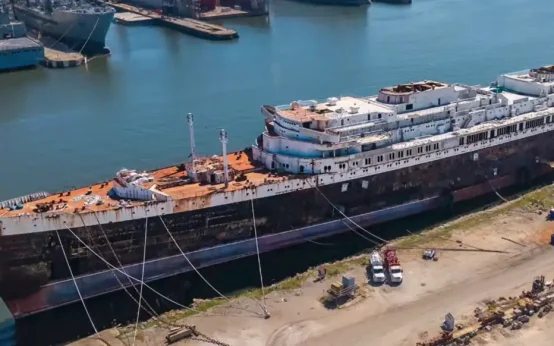 The Final Journey of the SS United States