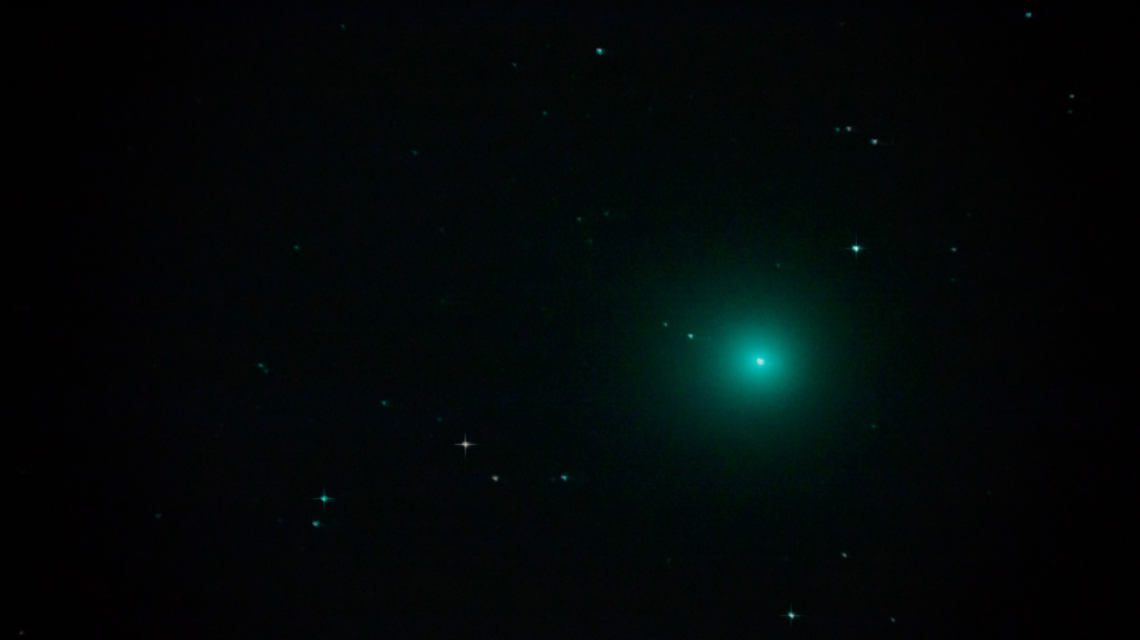
A small object orbiting the Sun, identified as 1998 KY26, has sparked significant scientific debate. Researchers propose various theories about its identity, from a fast-spinning asteroid to a “dark comet,” or even a long-lost Soviet spacecraft.
Origins and Initial Observations
First spotted by astronomer Tom Gehrels on May 28, 1998, at the University of Arizona’s Spacewatch project, early estimates suggested 1998 KY26 was about 30 meters wide, rotating once every 10.7 minutes. Recent observations have altered this view. Research led by Toni Santana-Ros concluded the object is only 11 meters across, with a rotation period of approximately 5.35 minutes, indicating a smaller and faster object.
The Mystery of the Extra Push
Adding to the mystery, 1998 KY26 appears to receive an additional push as it moves through space. Typically, comets exhibit such behavior when gas and dust are ejected. However, no visible cloud or tail has been detected around 1998 KY26, leading to new questions about its nature.
Theory One: A Dark Comet
One explanation is that 1998 KY26 might belong to the “dark comets” group. Unlike regular comets, dark comets get a push without showing an evident tail. A study by Bryce T. Bolin using telescopes in Hawaii found evidence of an extra push, but no related dust cloud. The rapid spinning could cause tiny fragments to be ejected, pushing the object slightly.
Theory Two: Phobos 1 Probe
Another hypothesis is that 1998 KY26 might not be a natural object. Harvard’s Abraham Loeb and his colleagues suggest it might be the lost Soviet Phobos 1 probe. The paths of Phobos 1 and 1998 KY26 closely align, and unexplained movements of the latter could result from sunlight interacting with the probe’s solar panels.
Theory Three: A Fast-Spinning Asteroid
An alternative is that 1998 KY26 is an unusual asteroid. Analysis by Santana-Ros and Bolin suggests a tightly-bound rock structure could account for its fast rotation. The surface is similar to Xe-type asteroids, possibly explaining its unexpected motion by surface material shedding.
Theory Four: A Dried-Out Object
Research by Korbin Hansen and Masatoshi Hirabayashi explores if 1998 KY26 once held ice like a dark comet. Their model indicates that the Sun’s heat makes it unlikely for water ice to survive. If ice was present, it would have evaporated, leaving a rocky core.
Current Interest and Future Exploration
New observations have altered scientists’ understanding of 1998 KY26, attracting renewed interest. JAXA’s Hayabusa2 spacecraft is set to visit 1998 KY26 in 2031. This mission could provide definitive answers about the object’s true nature. Until then, theories continue to evolve, with observational evidence currently supporting the view of it as an unusual natural object.
 Voyager 1 Reaches Light-Day Distance from Earth
 The Value of Kindness: New Research Insights
 SS United States Transformed into World’s Largest Artificial Reef
 Mini-Moon 2026 QQ8 Temporarily Orbits Earth
 California Approves Proposition 38 for Health Research Funding
 Meteor Lights Up Skies Over North Carolina and Tennessee