
The Dow Jones Industrial Average experienced a significant drop of more than 1,100 points on Thursday, slipping below the critical 50,000-point threshold. This plunge brought renewed focus to the index, especially given its prominence during Pam Bondi’s congressional testimony concerning sex offender Jeffrey Epstein’s investigation.
Market Repercussions
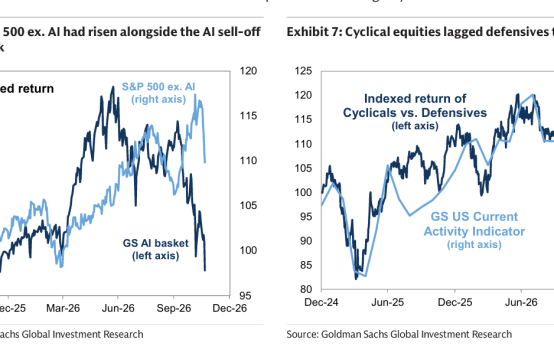
The index ended the day at 49,097.06, marking a 2.19% decrease. The S&P 500 and the Nasdaq composite also saw declines, closing at 7,175.83 and 23,879.20, respectively. Investors’ concerns over the artificial intelligence industry, regulatory oversight, and potential Federal Reserve interest rate hikes contributed to this sell-off.
Nvidia, a prominent technology firm, saw its stock decrease 3.3% to $145.98, reversing earlier gains despite better-than-expected quarterly results.
The Political Context
The 50,000-point milestone gained political significance during a contentious congressional hearing in February 2026. Bondi, addressing the House Judiciary Committee, defended the Trump administration’s economic achievements by citing the Dow’s performance. This milestone was not an official economic threshold but became symbolic due to Bondi’s defense against questions about Epstein-related investigations.
Her remarks about the stock market’s strength provided a contrasting focus during discussions about the Justice Department’s handling of Epstein’s case, drawing skepticism from lawmakers.
Nvidia’s Earnings and Market Sentiment
Despite strong third-quarter results, Nvidia’s earnings report failed to maintain a positive momentum for its stock. The company reported adjusted earnings of $2.68 per share on a revenue of $115.84 billion, exceeding analysts’ expectations. However, potential regulatory scrutiny by the Securities and Exchange Commission has introduced uncertainty about the company’s future prospects.
Interest Rate Concerns
Interest rate uncertainty continues to influence Wall Street’s performance. Federal Reserve Governor Christopher Waller suggested a possible half-percentage-point rate increase may be necessary to address persistent inflation. This potential increase concerns investors as higher rates could make bonds more attractive compared to stocks and increase business financing costs.
The technology sector, highly sensitive to interest rate changes, could see significant impacts from the Fed’s decisions. Investors await the Federal Open Market Committee’s meeting and the release of its October meeting minutes for further insights.
Healthcare Stocks Impact
Healthcare stocks also contributed to the Dow’s decline. The Centers for Medicare & Medicaid Services proposed a new rule to combat fraud, potentially affecting insurance providers like UnitedHealth Group and Humana, both seeing a 6% drop in shares. Such developments have compounded the market’s challenges, influencing its downward trajectory.
Future Market Prospects
Upcoming trading sessions hold importance as investors evaluate whether recent declines signify a short-term correction or a more extended downturn. Although there’s strong demand for AI infrastructure, concerns about valuations and corporate leadership persist.
The successful IPO of Anthropic highlighted continued investor interest in AI, yet it couldn’t halt the broader market’s downturn. The Dow’s current position below 50,000 prompts investor caution. Key factors such as inflation moderation, earnings resilience, and the Federal Reserve’s stance on interest rates will be crucial in determining the market’s direction.
 United Fidelity Bank Closure Marks Largest Shutdown in Three Years
 Deutsche Bank Predicts Stock Market Surge by End of 2027
 Stocks Rise as Traders Aim for a Strong Thanksgiving Week Finish
 Taiwan Limits Short Selling Amid Market Volatility
 S&P 500 Enters Correction Amidst AI Market Uncertainty and Fed Concerns
 Tech Stock Sell-Off Leads to Market Downturn