
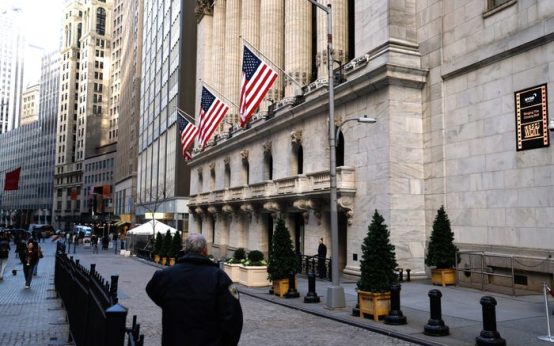
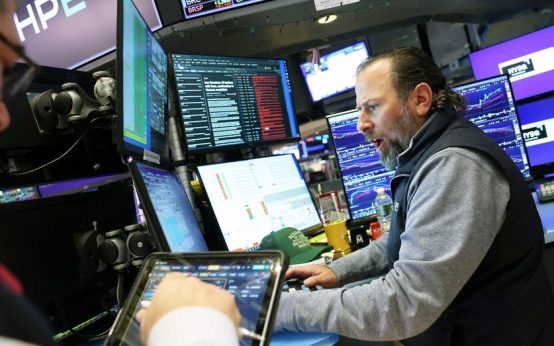
On Tuesday, November 17, 2026, a significant downturn affected the New York Stock Exchange due to a sharp decline in artificial intelligence stocks. This led the S&P 500 to fall by 3.7%, marking its worst weekly loss in over 18 months. The Nasdaq composite slid into negative territory for the year.
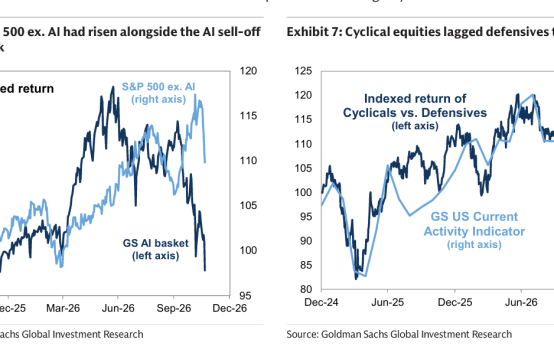
Professional investors now describe the S&P 500 as being in a “correction” with a more than 10% decline from its peak on October 6. This level of loss retraces the market back to March 2025 when market conditions were disrupted by a trade war under the Trump administration. The S&P’s current decline marks the most significant since April 2025; during that period, the escalation of trade tensions contributed to a downturn. The index also suffered from a seven-day losing streak, the worst since the COVID-19 pandemic began in 2020.
The Nasdaq, influenced heavily by tech stocks, fell 5.3%, positioning it in negative territory for the year. This downturn is comparable to the steep decline experienced in March 2020 when the global economy was heavily impacted by the pandemic. Meanwhile, the Dow Jones Industrial Average, less dependent on tech stocks, experienced a 1.9% drop.
Chip stocks such as Nvidia, Micron Technology, Broadcom, and Advanced Micro Devices were hit hard. Other companies linked to AI developments such as Corning and Bloom Energy also suffered. The newly public company Anthropic, having just launched its IPO, saw its shares fall by 9.1%.
The sell-off extended beyond U.S. borders, affecting international markets. In Asia, Japan’s Nikkei and South Korea’s Kospi both declined by over 5%. European markets saw significant drops as well.
AI stocks, which have been major players in Wall Street’s success this year, are now driving the downward trend. The large market valuations and spending in the AI sector are being scrutinized, with concerns about overvaluation intensifying after recent U.S. elections. Some elected officials advocate slowing data center construction.
“The idea that AI can sustain endless spending and prop up the stock market is being reassessed”, stated Michael Antonelli, a market strategist at Baird. Despite this, Antonelli believes the bull market that emerged in October 2022 continues.
The AI sector decline focused mainly on chip companies that have benefited from AI infrastructure investments. Advanced Micro Devices, Micron Technology, and Broadcom suffered significant losses, with the PHLX Semiconductor Index dropping 10.7%. Corning fell 10.9% and Bloom Energy decreased by 15.3%. Nvidia saw a notable 13.8% drop, compounded by concerns following the downfall of its former CEO and co-founder, Jensen Huang. Since the scandal involving Huang, Nvidia’s stock has plunged over 25%.
The high-profile market entry of Anthropic, a prominent AI company, disappointed, with shares falling 9.1% to $88.30. This remains above its IPO price but represents a substantial decrease from the peak of $115.10 reached just a day before. This drop surpasses the declines seen after Facebook’s initial public offering in 2012. Market debuts for tech firms frequently bring volatility, as seen when SpaceX saw a significant rise and subsequent fall shortly after its IPO.
Outside the technology sector, other stocks performed better. For example, General Mills, known for Cheerios, rose 3.7%, and homebuilder Lennar saw a 1% increase. The S&P 500 experienced a drop of 265.44 points to land at 6,910.39. The Dow descended 949.73 points to 48,147.33, while the Nasdaq decreased by 1,261.47 points to close at 22,617.73.
Despite the stock market challenges, consumer sentiment among Americans has improved. The University of Michigan’s consumer sentiment index increased significantly from the previous month, slightly surpassing economists’ predictions. Factors contributing to this rise include the easing of gas prices and improved business condition expectations following the midterm elections. However, sentiment is still lower than in February, before the U.S. conflict with Iran began.
In the bond market, Treasury yields fell. The 10-year Treasury yield dropped to 4.93% from the previous 5.04% on Thursday. Brent crude oil rose by 0.6%, settling at $92.57 per barrel amid ongoing tensions near the Strait of Hormuz due to the U.S. conflict with Iran. Saudi Arabia reported further missile and drone attacks by Iran-backed Houthi forces, and Iraq reportedly reached a deal with a significant Iran-backed militia involved in oil smuggling.
 United Fidelity Bank Closure Marks Largest Shutdown in Three Years
 Deutsche Bank Predicts Stock Market Surge by End of 2027
 Stocks Rise as Traders Aim for a Strong Thanksgiving Week Finish
 Taiwan Limits Short Selling Amid Market Volatility
 S&P 500 Enters Correction Amidst AI Market Uncertainty and Fed Concerns
 Stock Market Dives Amid AI Stock Sell-Off