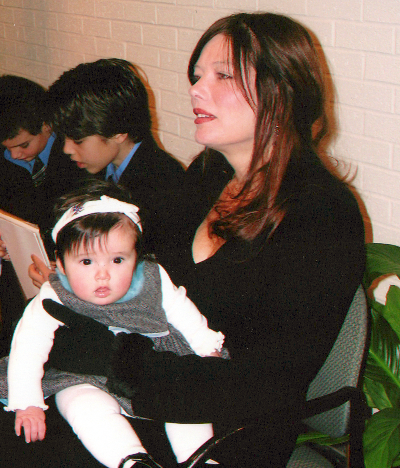
At the age of 18, Lucia Adarve had visited more doctors than most people do in their lifetime. Her health challenges began at birth, marked by missed developmental milestones, frequent seizures, and struggles with communication and academics. Her reactions to stimuli like loud noises or bright lights were often problematic, and her balance was compromised.
Her mother, Lisa Adarve, refused to give up in her quest to identify what was wrong. Throughout the years, Lucia accumulated numerous diagnoses, including epilepsy, lupus, fibromyalgia, ADHD, and dyslexia. However, none of these labels fully explained her symptoms, nor did the therapies provide relief.
“Her stack of medical records was getting bigger and bigger,” Lisa stated. “I thought, ‘There’s no way this one child has all of these labels and issues. There has to be something underlying.'”
Lucia’s medical challenges dominated her life early on. After failing to thrive in multiple educational settings, Lisa, a former Montessori teacher, took on the task of homeschooling Lucia beginning in third grade. She implemented creative strategies like knitting to enhance fine motor skills and horseback riding to improve balance.
Outside the classroom, Lisa made adaptations to activities with Lucia’s siblings, like installing a ladder to climb over the backyard wall. This consistent support was crucial, although Lucia still experienced fainting spells, sometimes leading to further injuries and anemia.
While her family stood by her, Lucia became discouraged by medical appointments and treatments. She found solace in her service dog, saying:
“No one listened to me. I didn’t see doctors as a good thing. I saw them as something I went to occasionally that didn’t do anything.”
Identifying a Rare Condition
In 2025, a pivotal visit to Dr. Todd Arthur at Cincinnati Children’s Hospital Medical Center marked a turning point. The neurologist took the time to listen attentively, sparking hope for Lucia and Lisa after years of frustration.
Arthur’s referrals led them to the Cleveland Clinic’s Undiagnosed Disease Clinic, where pioneering technologies like whole genome sequencing were employed. Dr. Adnan Alsadah noted the challenges of diagnosing ultra-rare conditions, which can take over a decade to pinpoint.
Through extensive screening and genetic analysis, a crucial discovery was made. The clinic diagnosed Lucia with a mutation in the PPP2R5D gene, identifying her condition as PPP2R5D-associated neurodevelopmental disorder, known as Jordan syndrome. This ultra-rare disorder affects fewer than 500 people worldwide.
The Impact of a Diagnosis
Jordan syndrome brings developmental challenges, as explained by Dr. Wendy Chung. Children with the condition may show unique features, and it can lead to difficulties in movement, speech, reading, or writing. Some may exhibit developmental delays similar to Lucia, while others might never acquire certain skills.
The disorder’s association with seizures, autism, and ADHD makes a definitive diagnosis crucial for management and treatment.
Lisa felt relieved upon receiving the diagnosis, acknowledging it validated the genuine concerns about her daughter’s condition.
“It finally felt like, wow, these things were real. I wasn’t being overprotective. I knew something was different,” she said.
Lucia’s response was more nuanced. While initially pleased with the answer, she later expressed frustration over the lengthy process to reach a diagnosis.
“I felt really happy about it for a month or two,” Lucia observed. “Then I started to feel slightly annoyed, because it frustrated me that it took 18 years to get an answer.”
Looking Forward
The diagnosis brought clarity, paving the way for a structured approach to Lucia’s needs. Medications have reduced her seizures, and a dedicated team crafted a management plan for her symptoms.
In addition, Lucia connected with advocacy and support groups, engaging in clinical trials that may offer new treatment possibilities. Her outlook has brightened, and her personality is rediscovering its youthful vibrancy.
“She knows what she has, so she can kind of stand up and advocate for herself,” Lisa expressed. “She’s getting back to who she was. She’s helping others, she’s making friends.”
Finally free from relentless medical appointments, Lucia is pursuing a degree in criminal behavioral psychology. Her ability to function independently is exceptional among patients with Jordan syndrome, highlighting the significance of her mother’s unwavering support.
“I was extremely lucky to get my mom,” Lucia said. “She’s one of the best people I know. She worries way too much, and she is the best person to have during this.”
 Increased Funding Needed for Psychiatric Hospitals
  Trump Administration Distributes ACA Refund Checks
  Higher Consumption of Ultra-Processed Foods Linked to Increased Health Risks
  Understanding Inflammation: Myths and Facts
  Calm Parenting: Strategies to Manage Stress
  Trump’s Executive Order to Combat Mosquitoes and Ticks in D.C.