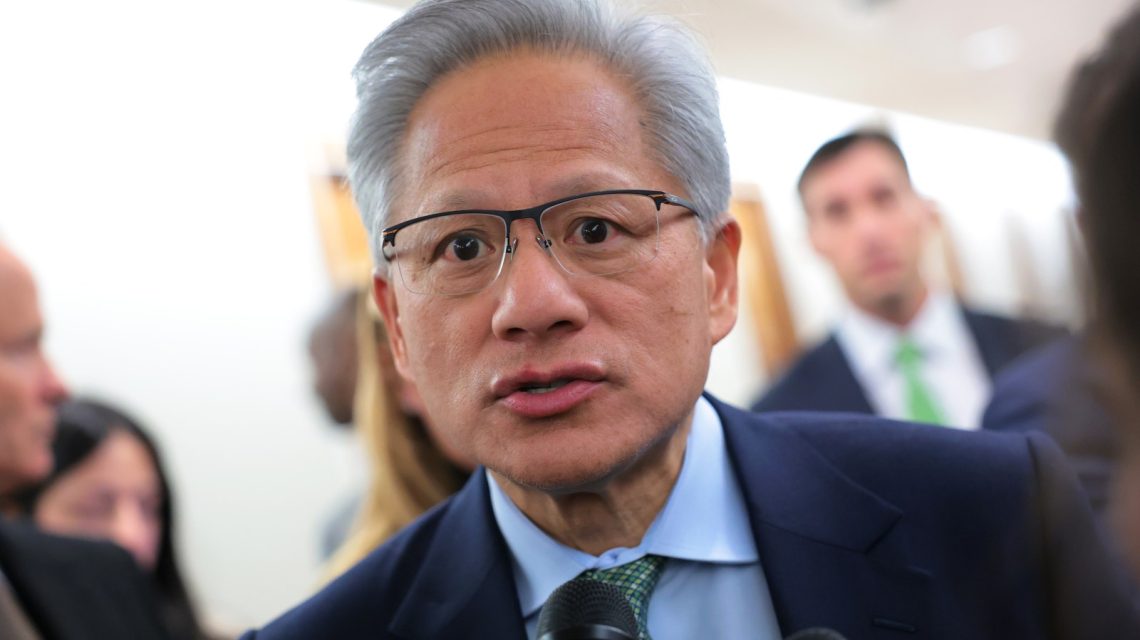
President Donald Trump has addressed national security concerns involving Nvidia’s CEO, Jensen Huang. This week, lawmakers from both parties will explore the basis of his reassurances.
In a recent comment to CNBC, Trump stated that government officials conducted a thorough investigation and believe Huang has been cleared of potential criminal liability and export control violations. This comes just weeks after Nvidia’s board reinstated Huang as CEO, despite ongoing investigations into possible foreign intelligence targeting.
“What did he tell her? This is the most important,” said Lewis. “If it was information in the public domain, no real damage. If it was technical or confidential, there could be damage.”
Huang’s recent congressional appearances are amid reports that Nvidia’s advanced AI chips have been found in a Chinese data center linked to Alice Huang, with whom he allegedly had an affair. A national security expert and a Wall Street analyst suggest lawmakers should ask what information Huang shared with Alice Huang, the circumstances of potential chip smuggling to China, and his discussions with officials.
The revelations might impact Nvidia, its investors, and the U.S. technological edge over China. Newsweek sought comments from the White House and Nvidia regarding these developments.
Reason for Congressional Testimony
Huang is set to testify before the Senate Banking Committee on a hearing titled “Protecting America’s AI Advantage: Oversight of U.S. Export Controls.” Scheduled to be livestreamed, Huang will testify alone.
Huang will also give a closed-door interview to members of several House committees. Nvidia’s general counsel, Tim Teter, and Commerce Secretary Howard Lutnick are also scheduled to testify on related matters.
Trump’s involvement in Huang’s reinstatement has increased the political and public significance of these appearances. Several lawmakers, including Senator Elizabeth Warren, have asserted that Nvidia remains accountable despite Trump’s assurances.
Key Questions for Huang
James Lewis, a technology and national security expert, suggests lawmakers need to understand the nature of information shared between Huang and Alice Huang. Reports claim there is no definitive evidence linking Alice Huang to Chinese espionage, but her connections raise questions.
Another crucial aspect is whether security agencies warned Huang about these threats. Senator John Cornyn has questioned the FBI about possible warnings provided to Huang regarding these risks.
Beyond personal relationships, lawmakers will scrutinize how restricted Nvidia chips reached China. Reports have found Nvidia’s technology at sites linked to Alice Huang, prompting inquiries into company sales practices.
Commerce Department began investigating Megaspeed’s potential export control violations. The ongoing case has drawn congressional attention, with questions about Nvidia’s role in possibly influencing the investigation.
Huang’s Reinstatement as CEO
On November 23, Nvidia’s board unanimously reinstated Huang following discussions with senior U.S. government officials who deemed his return a non-risk. Officials assured there was no national security threat, contributing to the board’s decision. Trump credited himself for persuading the board to reinstate Huang.
Despite these assurances, lawmakers still question the evidence and decisions underlying these assurances. Attorney General Todd Blanche reportedly told Trump that Huang did not pose a national security risk.
Nvidia’s independent investigation into foreign intelligence threats continues, involving the creation of a new National Security and Export Control Committee to oversee related issues. Huang remains under scrutiny with numerous committees and regulatory bodies investigating.
 Texas Governor-elect Expanding Abortion Exceptions and Pennsylvania’s Abortion Rights Debate
 Gov. Hochul’s Upcoming Battle Against New York’s Trial Lawyers
 Governor Hochul’s Strategy to Enhance New York’s Affordability
 Leopold Aschenbrenner’s Vision for a Robotic Future
 States Challenge Immigrant Enforcement Amidst Legal Battles
 The Rule of Law and the Fall of the Roman Republic