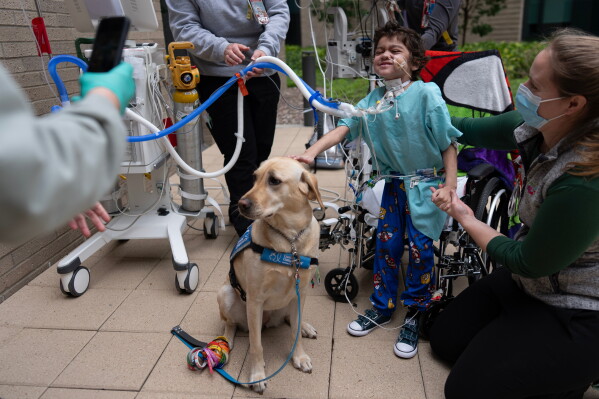
Facility dogs are bringing comfort and joy to children’s hospitals, offering more than just a friendly presence. Unlike volunteer therapy dogs, these specially trained dogs work full-time. They can access sensitive areas and support patients throughout their hospital experience.
Experts note the growing use of facility dogs in children’s hospitals nationally. Research highlights benefits like improved well-being, reduced stress, and eased pain. These interactions help children feel more comfortable in medical surroundings.
At Cincinnati Children’s Hospital, dogs such as Hadley provide emotional support during tough procedures. They encourage kids to stay active and bring a sense of normalcy to hospital life. Their influence reaches beyond patient rooms, with pictures in hallways, TV appearances, and mailboxes for children’s letters and drawings.
One patient, five-year-old Calvin Owens, posed with facility dog Hadley, supported by physical therapist Paige Torbet during a therapy session on the hospital patio.
Schellie Scott and Hadley looked on from the hallway, unable to enter immediately post-transplant, as they started painting with patient Aspen Franklin. They used peanut butter on plastic bags over paint-dabbed canvases for Hadley to lick and participate in the creative process.
In another instance, Grover, another hospital facility dog, engaged with patient Kira Hodge in Seacrest Studios to create a closed-circuit TV show broadcasted to patient rooms.
Facility dogs like Grover and Hadley play in designated areas, offering relaxation between visits. Grover, for example, enjoys his Buzz Lightyear toy between patient sessions.
Images of facility dogs in graduation caps decorate the hospital halls, celebrating their contribution. These dogs are valued full-time members of hospital teams, significantly enhancing patient experiences.
 Early Detection of Atherosclerosis and Heart Disease Prevention
  Church Attendance Linked to Increased Sexual Satisfaction for Married Couples
  Dining with Loved Ones May Benefit Blood Sugar Levels
  Urgent Need for Action in East Africa’s Food Crisis
  Facing Terminal Illness: Embracing Life’s Moments
  Eating with Partners May Impact Blood Sugar Regulation