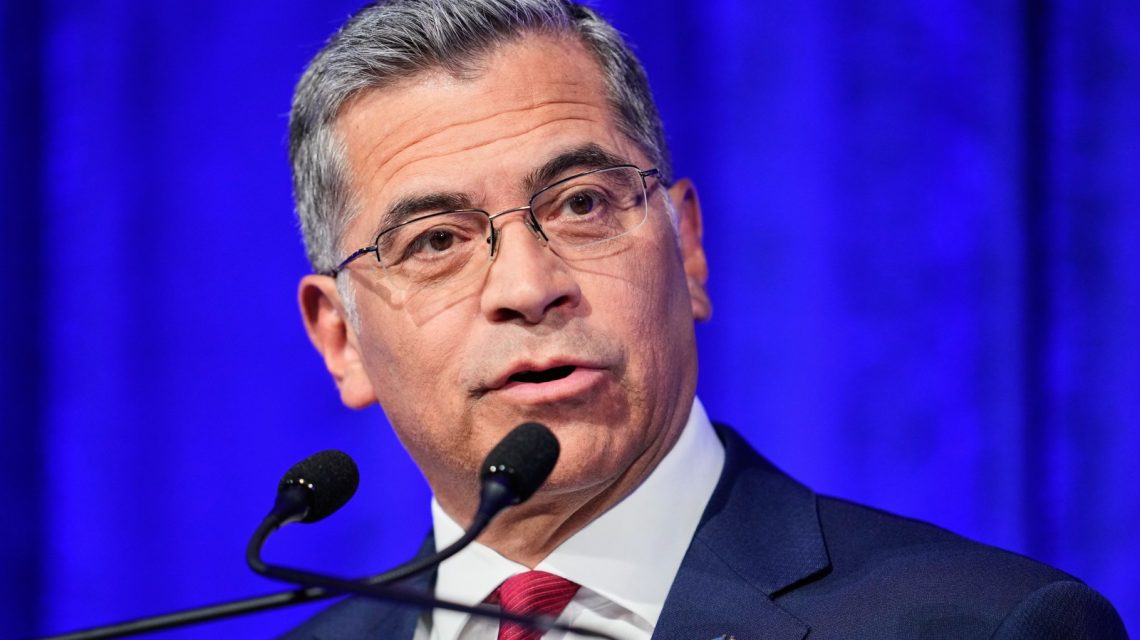
As California gears up for its gubernatorial elections, Xavier Becerra, a key candidate, has proposed scrapping the existing high-speed rail plan to ensure timely completion of the project. This initiative aims to connect Los Angeles and San Francisco at speeds up to 220 miles per hour. However, the project, approved by voters in 2008 with a target completion year of 2020, faces numerous hurdles including delays and financial gaps. Current completion is projected for 2038, contingent upon continued support from future governors.
Becerra, a Democrat and former Secretary of Health and Human Services under President Biden, expressed his resolve to meet deadlines during a recent event in Fresno. He emphasized sticking to budget and schedules but lacked specific details regarding potential changes to expedite the process. Efforts to reach his campaign for further comments went unanswered.
Voter backing for the project dates back over 17 years to Proposition 1A, which allocated nearly $10 billion in bonds for planning and constructing the 800-mile rail system. Yet, costs have escalated beyond initial estimates, and slow progress has postponed completion by over a decade.
Funding was problematic from the onset, given that the initiative’s budget of $10 billion fell significantly short. A 2006 estimate approximated the cost to be $45 billion, excluding impacts of inflation. Despite support from the Obama administration, the project suffered when Donald Trump rescinded approximately $1 billion in 2019 due to disagreements with Governor Newsom. Funding was restored under Biden’s administration, with $3.1 billion allocated from the Infrastructure Investment and Jobs Act. However, this was insufficient to cover a $7 billion deficit needed to construct an initial segment.
The Trump administration further cut federal grants totaling $4 billion in 2025, prompting litigation from California, which was later withdrawn. Challenges such as stringent environmental regulations complicated progression, accruing over $765 million in environmental review costs by fiscal year 2024-2025. Recent legislative reforms under CEQA were highlighted by Newsom as instrumental in advancing the project, facilitating environmental clearance for 463 miles of the planned 494-mile route.
California’s gubernatorial candidates hold varying positions regarding the rail project. Democrat Antonio Villaraigosa supports expanding transit, while Katie Porter expressed intentions to fulfill project goals despite criticisms. Republican candidates, however, remain firm in their opposition, with Chad Bianco dubbing it “a train to nowhere,” and Tony Strickland labeling it a “mismanaged failure.” Despite skepticism, a POLITICO-Citrin Center-Possibility Lab poll from last year indicated 62 percent of Californians were willing to fund the initiative irrespective of federal backing.
 The Trump Team’s Challenge to the Military Leadership
  Maryland First State to Restrict Electronic Pricing in Grocery Stores
  Activists Push for Nationwide Ban on Child Marriage in the U.S.
  Democratic Hopes and Historical Warnings in 2026 Senate Race
  Republicans Face Challenges Amidst Cost of Living Concerns
  A Different Kind of Fall for Congress This Year