New laws have been enacted in several states to criminalize disruptions during worship services, responding to a widely publicized protest in a Minnesota church. Legislators, mostly Republicans, argue that these measures offer additional protection for religious assemblies beyond existing trespassing laws. They aim to prevent conflicts amid heightened concerns following recent mass violence affecting religious groups.
State Actions
Idaho, Louisiana, and Oklahoma, with Republican-majority legislatures, have signed bills into law making it an offense to disrupt worship services. Kansas is progressing a similar bill without the support of Democratic Governor Laura Kelly. Similar proposals are under consideration in seven other states and at the federal level.
In 1994, a federal law was established under President Bill Clinton to penalize intentional interference or intimidation of individuals entering worship facilities or reproductive health clinics. While trespassing laws already cover disruptions on private religious property, the recent legislation aims to enhance penalties and prohibit other protest activities around religious venues.
The new penalties mandate up to a year of imprisonment and fines reaching $10,000 for initial violations. These laws enable states to prosecute breaches even if local authorities opt not to.
Triggering Event in Minnesota
The legislative push follows a protest at a Minnesota church service that resulted in charges against 39 participants, including media personnel. The protestors targeted a pastor involved with U.S. Immigration and Customs Enforcement due to a controversial enforcement operation.
The U.S. Department of Justice charged them with conspiracy against religious freedom. Their cases remain unresolved in federal court. Videos from the event showing distressed children at the church motivated Louisiana Rep. Gabe Firment to push for action, emphasizing that protest rights do not extend to private properties like churches.
Local Legislators’ Initiatives
Oklahoma Sen. Todd Gollihare introduced similar legislation after disruptions in his church service by anti-abortion protestors. His law involves blocking highways near services or approaching people with flyers in proximity to places of worship.
Concerns about potential overreach were voiced by Oklahoma Sen. Kendal Sacchieri, fearing the precedent such laws could set.
Legal Challenges
The law in Nassau County, New York, faces opposition from the New York Civil Liberties Union, challenging the ordinance as a violation of constitutional expression rights in public spaces without any documented instances of threats outside worship areas.
Kevin Goldberg from the Freedom Forum highlights that governments must demonstrate a tangible threat or problem to justify these laws if taken to court. The need for concrete evidence rather than speculation is emphasized.
Louisiana Democrats raised alarms about mandatory jail sentences for service disruptions. Concerns were voiced by Rep. Edmond Jordan regarding potential arbitrary applications of the law, such as penalizing unexpected worship interruptions.
Law supporters countered that law enforcement and judiciary bodies would have discretion in enforcing these measures.
 Sen. Cotton Opposes Permanent Daylight Saving Time
 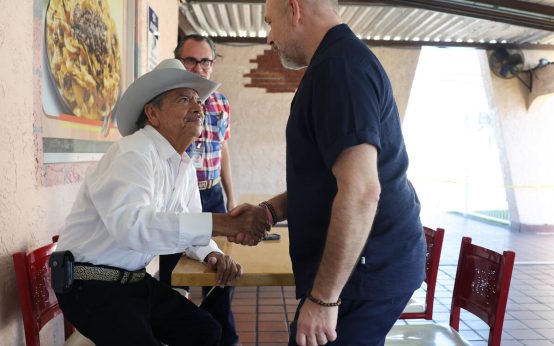 Steve Hilton’s Latino Outreach and Gubernatorial Ambitions
  The Need for Reform in Presidential Nominations
  Controversy Surrounds Performances at Gillette Stadium
  Celebrity Controversies Over Political Activism and Speech
  Trump Pushes for Permanent Daylight Saving Time, Sharing Senator’s Contact Information