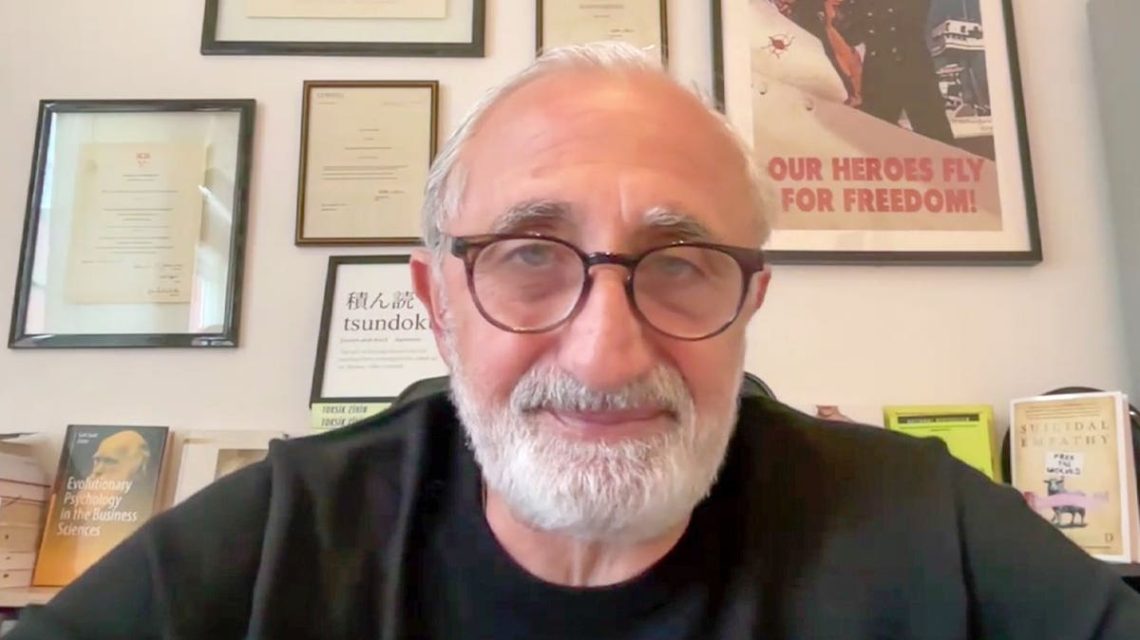
Author and scholar Gad Saad has raised alarms about the state of Western civilization, warning it is on the verge of collapse due to misplaced empathy. During a recent interview with Fox News Digital, Saad discussed his latest book, ‘Suicidal Empathy: Dying to Be Kind‘, where he argues that excessive compassion threatens truth and common sense.
Saad emphasized that while empathy is valuable, it must be balanced, referencing Aristotle’s principle that all positive attributes should be practiced in moderation. According to Saad, a lack of empathy may indicate psychopathic tendencies. Conversely, unchecked empathy can become destructive, particularly if directed toward inappropriate circumstances.
“If you are too empathetic, if it hyperactivates, if it targets the wrong people in the wrong circumstances, then that becomes suicidal empathy,” Saad explained.
Saad pointed out the aftermath of Hamas’ attacks in Israel on October 7 as evidence of this phenomenon. He observed a quick shift in sympathy away from Israeli victims as criticism mounted against Israel’s military actions in Gaza.
Saad describes the ideological changes, visible in backlash against Israel following the Hamas attacks, as nearly four decades in the making. He coined the term ‘civilizational seppuku’ to describe how misplaced empathy can lead to societal self-destruction.
Influence of Academia
Saad attributes the rise of these ideas to university campuses, later permeating politics, media, and culture. This cultural shift challenges long-held concepts like gender, leading to confusion and ideological conflicts.
Over time, understanding fundamental concepts has become muddled. Saad illustrated this with an anecdote from Justice Katanji Brown Jackson’s 2022 confirmation hearing. When asked to define “woman,” Jackson replied, “I’m not a biologist.” Saad critiqued this response, arguing that recognizing basic realities should not require specialized knowledge.
Increasing Anti-Semitism
Saad was born in Lebanon and later fled to Canada during civil unrest. He recounted a gradual escalation of anti-Semitism after 1998, and its impact on his experiences as a Jewish professor. He described facing growing hostility at Concordia University, prompting him to take a leave of absence.
Saad expressed concern about the normalization of anti-Jewish sentiment in society, which he views as a significant moral failing.
Urgency for Cultural Change
Despite some resistance to diversity and gender ideologies following President Trump’s election, Saad contends that entrenched cultural shifts require extensive effort and time to reverse. He noted that political changes can be quick, but genuine cultural transformations demand long-term commitment.
Acknowledging the fear among academics to address controversial topics, Saad mentioned receiving anonymous messages from professors who support his work but wish to remain unidentified. This reluctance, he remarked, signals a broader challenge in mobilizing efforts against prevailing ideologies.
Saad is affiliated with the Declaration of Independence Center for the Study of American Freedom at the University of Mississippi and will become a distinguished professor there next year.
 Historical Events in Chicago on October 3
  Martina Navratilova’s Enduring Influence in Tennis and Beyond
  World Porridge Making Championship: A Unique Scottish Tradition
  Readers React to Miss Manners Column
  Troy Swanson: Award-Winning Librarian Transforming Academic Libraries
  Lisdoonvarna Matchmaking Festival: A Unique Tradition