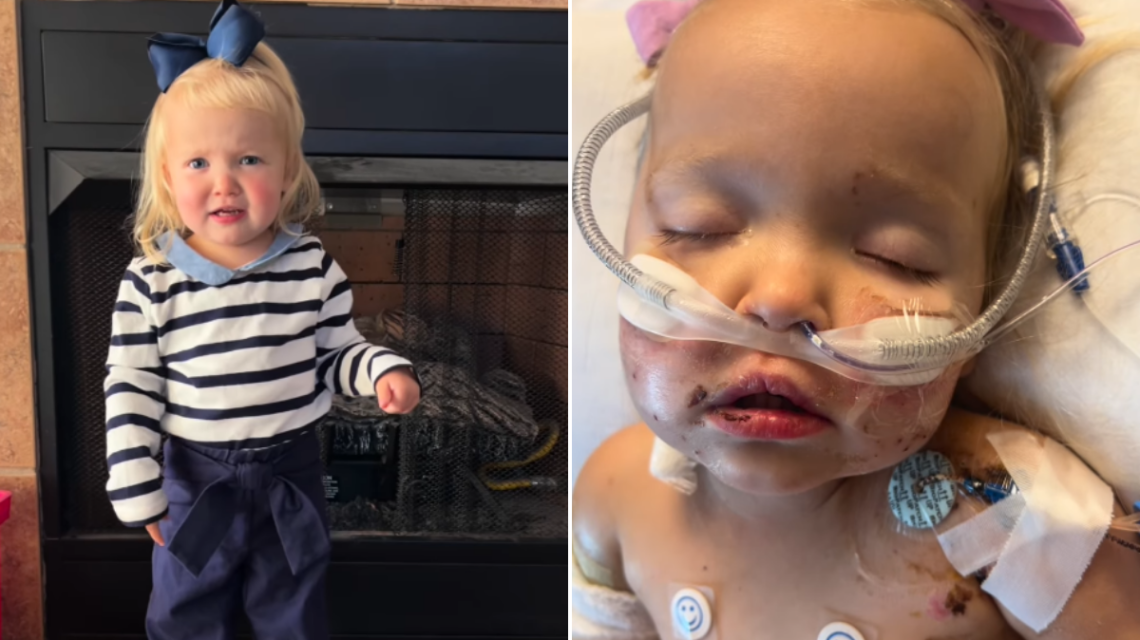
Kory Paige Loden, a mother from Tennessee, shares the harrowing experience of her daughter Mady’s sudden illness that began like the flu but quickly turned life-threatening.
Mady’s Sudden Illness
Two-and-a-half years ago, Mady, then 18 months old, became ill overnight. Initially, Kory thought it was Flu B, as Mady’s brother had recently contracted it. However, by evening, symptoms intensified. Mady became lethargic, refused food and drink, developed a fever, and her extremities turned blue. A call to a relative in the medical field hinted at a more serious issue.
Rushed to Emergency Care
Kory took Mady to an urgent care facility, where she was quickly transported to the local hospital by ambulance. In the hospital, doctors realized the seriousness of her condition. Mady was stabilized enough to be airlifted to a children’s hospital 90 minutes away. The gravity of the situation became clear when the hospital called Kory and her husband for consent to perform emergency procedures if necessary.
The Critical First Days
At the children’s hospital, Mady’s condition was dire. Doctors needed to put her on life support as a last resort. The following 48 hours were crucial. Family support and faith helped Kory and her husband endure this difficult time. Mady underwent several life-saving procedures, including heart surgery.
Discovery of Underlying Health Issues
During treatment, doctors discovered Mady had an interrupted inferior vena cava and was born without a spleen. This lack of spleen compromised her body’s ability to fight encapsulated bacteria, leading to sepsis. Her condition worsened with disseminated intravascular coagulation, causing uncontrolled blood clotting.
Diagnosis and Treatment
Days later, doctors identified the cause: sepsis from strep pneumonia. The infection triggered kidney failure, and Mady’s limbs deteriorated. Despite efforts, her body could not recover blood flow to her legs, leading to amputation.
Life as a Bilateral Amputee
After enduring multiple surgeries and months of treatment, Mady became a bilateral amputee. Fortunately, Mady has adapted well and remains a happy, active child. She can move effectively with or without prosthetics.
Raising Awareness
Kory shares Mady’s story to highlight the sudden onset of sepsis. Early detection is critical. Mady’s case underscores that symptoms may not always follow expected patterns, reinforcing the importance of vigilance among parents and caregivers.
 Trump Administration Distributes ACA Refund Checks
  Higher Consumption of Ultra-Processed Foods Linked to Increased Health Risks
  The Quest for the Knuckleball Dream
  Navigating Grief After a Sibling’s Overdose
  Understanding Inflammation: Myths and Facts
  Calm Parenting: Strategies to Manage Stress