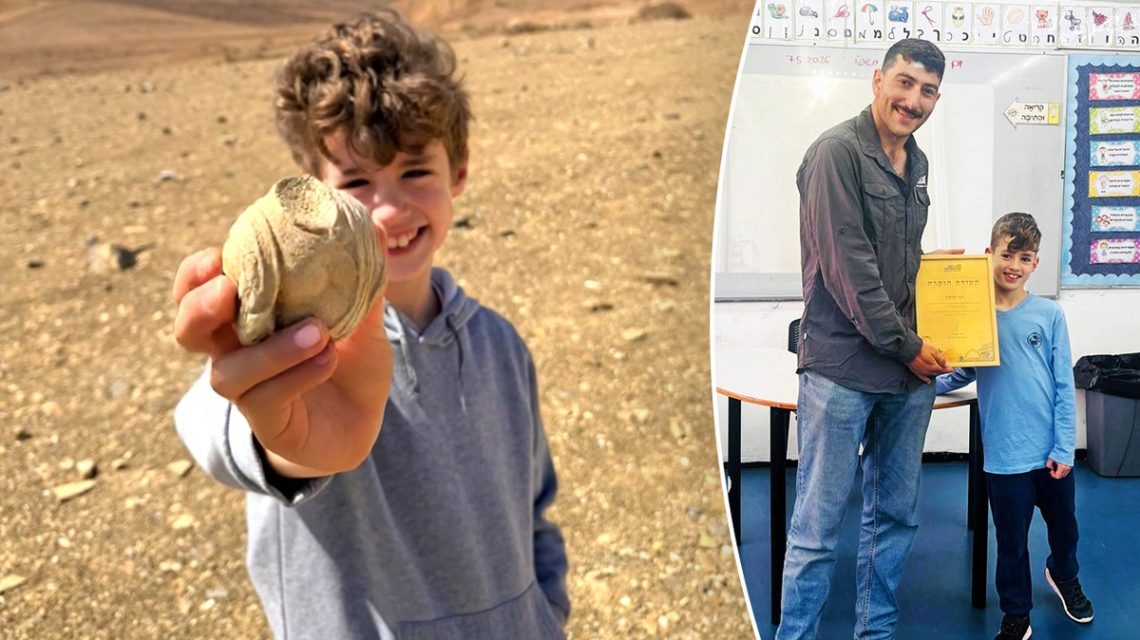
A recent discovery by an 8-year-old during a visit to the Negev Desert in southern Israel revealed a 1,700-year-old Roman statuette fragment. The Israel Antiquities Authority (IAA) made this announcement on May 11.
Discovery During Family Retreat
Dor Wolynitz, the young finder from Rehovot, Israel, spotted the artifact while attending a family weekend event organized by a paratrooper reserve unit. The fragment is believed to date back to the fourth century A.D.
“I was looking for special things on the ground that I could show in class,” Wolynitz stated. “Suddenly, I noticed an interesting stone with stripes lying on the ground and picked it up.”
He shared the find with Akiva Goldenhersh, an archaeologist and his father’s friend, who accompanied them on the trip. The fragment, measuring six by six centimeters, features part of a human figure with intricate garment folds.
Analysis and Significance
Initially thought to be a fossil, the artifact soon revealed its unique fabric sculpting upon closer inspection by Goldenhersh, highlighting the artist’s skill.
Crafted from a phosphorite-type mineral native to the region, the statuette likely originates locally. The figure wears a heavy mantle called a himation, with no undergarments apparent. It might represent the Roman god Jupiter or the Nabatean deity Zeus-Dushara.
Goldenhersh emphasized the rarity of such discoveries as surface finds instead of during controlled excavations. The object reflects a blend of local traditions with classical influences due to the area’s historical role as a vital trade route.
Preservation and Reporting
The desert conditions of the Negev can preserve artifacts and sometimes reveal them on the surface, contributing to such finds.
Wolynitz demonstrated “good citizenship” by reporting the find to Israel’s National Treasures Department, receiving a certificate for his actions. Goldenhersh praised him as a “role model” for showcasing responsible conduct and protecting cultural heritage.
 The Risks of Mirror Cells: Scientific Endeavors and Potential Consequences
  The Impact of the James Webb Space Telescope on Our Understanding of the Universe
  Exploring the Essence of Mathematics with Eugenia Cheng
 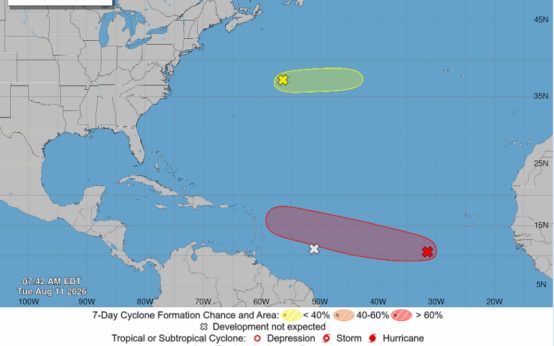 Atlantic Disturbance May Become Third Named Storm of 2026
  NOAA Withdraws Support from Arctic Report Card
  Total Solar Eclipse to Grace Parts of Europe and Asia