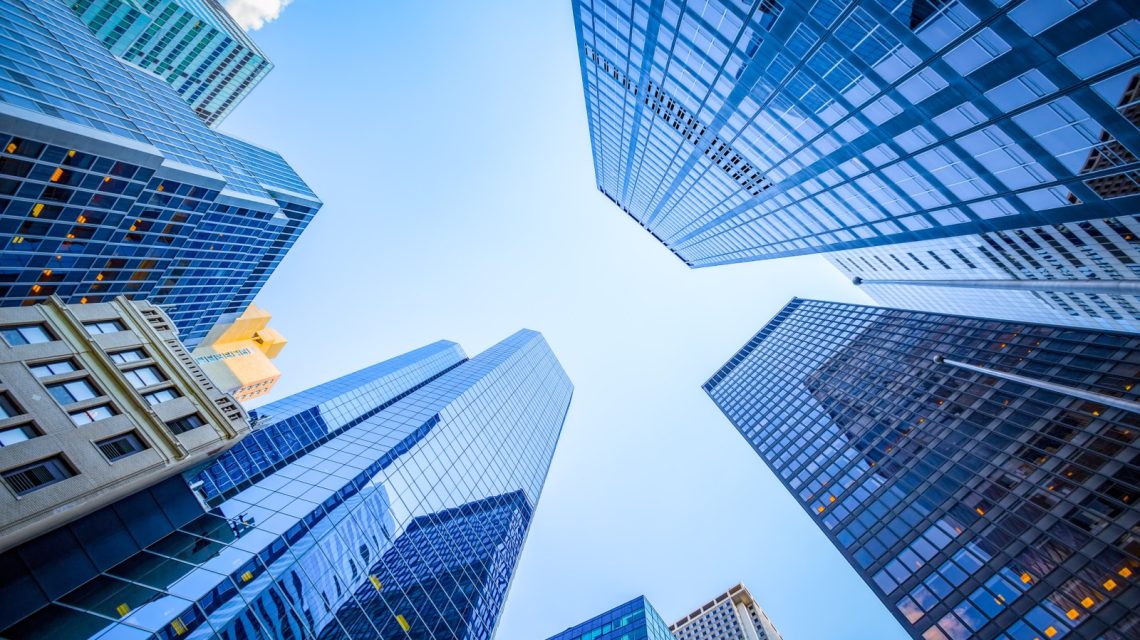
Skyscrapers are often known for their height and shimmering exteriors, yet much complexity lurks within. Beyond the observable floors and viewing platforms lies a network of hidden levels – spaces crucial for the tower’s stability, safety, and functionality, but mostly invisible to those inside.
Zaeem Chaudhary, director and a chartered architectural technologist at AC Design Solutions, explained to Newsweek, “Hidden floors in skyscrapers are more common than many realize. These include mechanical plant floors, structural transfer levels, and fire refuge floors. These exist for engineering and safety purposes but are not occupied or publicly acknowledged.”
Though invisible, these hidden floors are vital for skyscraper operations. Mechanical systems, structural cores, refuge levels, and damping systems represent the unseen engineering that supports remarkable heights.
With urban density increasing, architects and engineers focus on designing more efficient and sustainable tall buildings. Global studies indicate a shift towards reducing energy use, integrating renewable systems, and enhancing building performance with advanced technology. According to the United Nations Environment Programme, buildings and construction contribute around 37% of global CO₂ emissions, pushing for industry innovation.
In land-restricted cities, vertical construction becomes essential, prompting designers to rethink energy usage, materials, and space management in skyscrapers.
The Invisible Infrastructure
Central to tall buildings are mechanical floors, which house crucial systems such as heating, ventilation, electrical equipment, and water infrastructure. These levels are standard in high-rises, scattered throughout to ensure efficient operations. Skyscrapers require multiple mechanical levels as services cannot operate solely from a ground floor plant room.
Hassan Baloch, a structural engineer and founder of Civil Engineering Daily, remarked, “Skyscrapers have floors dedicated to mechanical systems. None of this is visible to occupants, but all of it keeps these tall structures functioning.”
In iconic towers like Dubai’s Burj Khalifa, these systems span several levels, often featuring expanded floor heights to accommodate extensive equipment. Such infrastructure is pivotal in creating a “vertical city,” a term engineers use for seamless utility management across great heights.
Structural Floors That Don’t Exist On Paper
Among the hidden levels are structural transfer floors. These stories are filled with beams and load-distribution systems, not usable spaces. As Chaudhary elaborates, these floors are inserted for altering a building’s structural layout, such as moving from a broad lobby to an intricate residential grid. Entire floors may not appear on lift panels but are crucial for load redistribution within columns and cores to enable flexible architectural designs and stability.
Similarly, outrigger and belt-truss systems form a concealed layer. These elements connect a building’s core to outer columns, enhancing stiffness and mitigating wind-induced movement – a significant concern for skyscrapers. These structural components are vast, creating non-occupiable zones often integrated with mechanical floors.
Wind-induced motion challenges tall buildings, demanding tuned mass dampers to counteract energy and improve comfort and safety. These systems are aligned with a building’s natural frequency, stabilizing structures from wind or seismic activity.
Safety design introduces refuge floors, mandated by fire codes to offer protected waiting areas during emergencies. These floors are integral to phased evacuation strategies, more practical than complete evacuation in tall buildings. Skyscrapers also comprise lift overruns, communication rooms, roof plant spaces, and interstitial zones housing structural trusses or unconditioned architectural voids.
 Trump Unveils AI-Powered America.gov Platform
  Trump’s 2024 Campaign Targets Young Men Through Cryptocurrency
  How Modern Windows Improve Home Insulation
  State Department Simplifies Passport Process with Online Applications
  Senate Democrats Block Data Center Bill Over Efficiency Concerns
  Future Cities: Ambitious Projects Aiming for Innovation and Sustainability