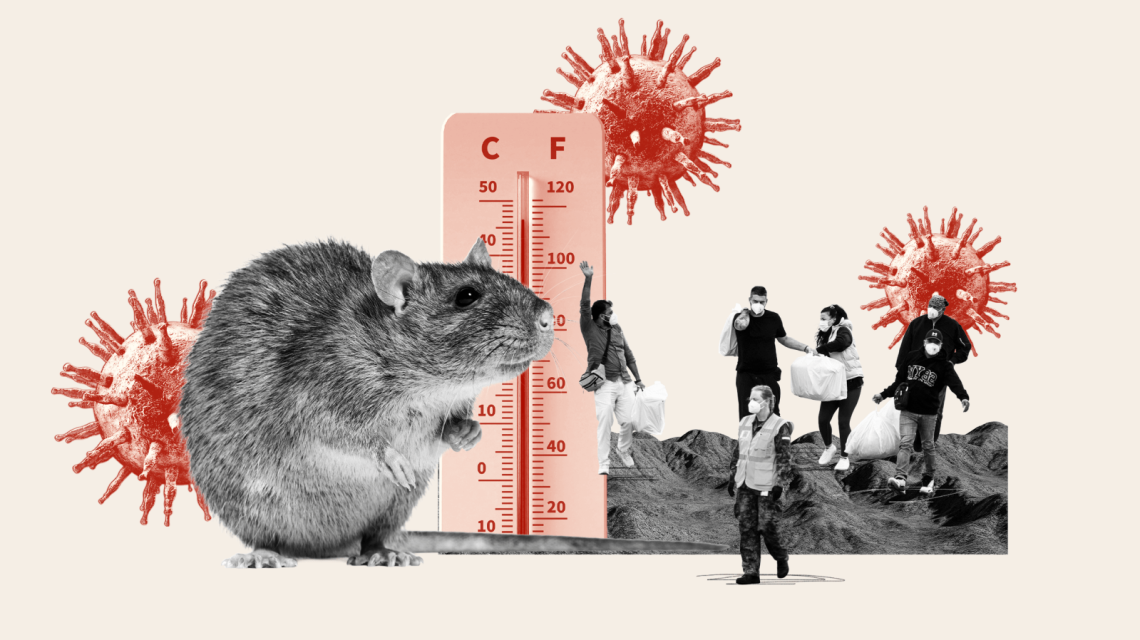
A potential “super El Niño” developing in the Pacific could do more than reshape weather patterns. Experts caution it might elevate the risk of rare but deadly hantavirus infections in parts of the United States this summer by boosting rodent populations that carry the disease.
The recent hantavirus outbreak linked to the MV Hondius cruise ship has significantly raised public awareness of the virus, which many Americans had been unfamiliar with before. This infection cluster led to several deaths and prompted coordinated international responses, garnering widespread media coverage. Efforts to monitor and quarantine were launched in numerous countries, including the U.S.
Hantavirus History in the U.S.
The U.S. Centers for Disease Control and Prevention (CDC) started tracking hantavirus in 1993 during a mysterious and often fatal respiratory illness outbreak in the Four Corners region, encompassing Arizona, Colorado, New Mexico, and Utah. The strain responsible was the Sin Nombre strain, distinct from the Andes strain causing the recent cruise ship outbreak.
The 1993 incident led to the identification of hantavirus pulmonary syndrome (HPS) and initiated national surveillance. Health officials realized the disease had likely continued undetected before official recognition. Although 1993 was an ENSO-neutral year as per the National Oceanic and Atmospheric Administration (NOAA) data, above-average rainfall in parts of the Southwest was documented.
Now, similar weather conditions could influence the deer mice population, the main hantavirus carriers, in the U.S. Southwest this summer.
Understanding Super El Niño
The term “super El Niño” describes an unusually strong El Niño event. El Niño is a natural climate pattern where surface waters in the central and eastern Pacific Ocean warm unusually. Though El Niño events occur periodically, a “super” event is a rare scenario where ocean temperatures rise to extreme levels, often reaching at least 2 degrees Celsius (3.6°F) above average for several months. These higher temperatures disrupt normal wind and atmospheric patterns, intensifying global weather effects associated with typical El Niño.
Earlier in the month, NOAA’s Climate Prediction Center issued a forecast suggesting an 82 percent chance of El Niño emerging between May and July and a 96 percent likelihood of persisting across the northern hemisphere between December and February 2027. In the U.S., El Niño is associated with various weather events, including a weaker Atlantic hurricane season and heavier rains during the Southwest’s monsoon season, according to AccuWeather senior meteorologist Tom Kines.
Potential Impact on Hantavirus Cases
Researchers believe a strong “super” El Niño can indirectly increase exposure risk by altering environmental conditions. Increased rainfall and warmer temperatures promote vegetation growth, providing food and shelter for deer mice, primary carriers of the Sin Nombre virus in the U.S.
“A ‘trophic cascade’ is linked to the Four Corners outbreak: more rain results in more vegetation, supporting more rodents, and increasing hantavirus risk,” stated Washington State University associate professor Stephanie Seifert. “Yates et al. in 2002 supported this, showing increased HPS risk following high precipitation events associated with El Niño in the southwestern United States.”
Seifert also emphasized that other studies indicate weather influences deer mouse populations, but rainfall alone is not solely responsible. Milder winters or extended breeding seasons might also contribute to rodent population spikes. El Niño conditions usually involve increased precipitation and warmer winters across much of the western United States, potentially enhancing overwinter survival and extending deer mouse breeding conditions.
As rodent populations grow, chances of human contact, especially in rural or agricultural areas or inside cabins, sheds, and enclosed spaces, can increase, heightening infection risks. Similar environmental factors were related to the 1993 Four Corners outbreak, which highlighted hantaviruses nationally.
Symptoms of Hantavirus
Unlike the high-profile outbreak linked to the cruise earlier, any increased risk in the U.S. would likely involve the Sin Nombre virus—the main hantavirus strain in North America—not the Andes strain from the maritime cluster. Sin Nombre spreads to humans through contact with infected rodent urine, droppings, or saliva, often inhaled after particles are disturbed in enclosed areas, and is not known to spread person to person.
Sin Nombre hantavirus primarily causes hantavirus pulmonary syndrome in North America, following a consistent pattern of symptoms, starting with an early “flu-like” phase and progressing to a sudden, severe respiratory phase.
- Early flu-like symptoms: fever, fatigue, muscle aches (thighs, hips, back, shoulders), headache, chills, gastrointestinal symptoms.
- Follow-on respiratory symptoms (4-10 days later): cough, shortness of breath, chest tightness, rapid breathing, and worsening fatigue due to fluid leaking into the lungs. Severe cases can lead to low blood pressure, irregular heart rate, and respiratory failure.
HPS carries a fatality rate as high as 60 percent.
Identifying Deer Mice
Deer mice differ from house mice, which usually do not carry the hantavirus, explained Orkin Entomologist and National Technical Director Shannon Sked. Deer mice, or field mice, can become household pests during winter months when colder temperatures drive them indoors.
Deer mice obtain water from food, but increased rainfall enhances vegetation they consume and use for shelter, potentially boosting their numbers. Sked noted that the easiest way to differentiate between house and deer mice is their color. Deer mice are bicolored, either gray or brown with a white belly, while house mice are usually gray or brown.
When cleaning up mouse droppings, Sked advised care. Droppings can harbor hantavirus for up to 6 days, so assume droppings are fresh during clean-up. “Use a sanitizer before cleaning up,” he said, emphasizing prevention by blocking mice from entering homes since they can squeeze through holes as small as a dime.
Preventive Measures
Public health experts emphasize that even if conditions favor rising rodent populations, hantavirus infections in the U.S. remain rare and are preventable with basic precautions. Avoiding contact with wild rodents, sealing home gaps, and employing protective measures like ventilating enclosed areas and not sweeping or vacuuming droppings without disinfectants can greatly minimize risk.
While individual risk for HPS is low, Seifert notes no year since its discovery in 1993 has been without HPS cases in the U.S., underlining the enduring presence of this rare yet deadly disease.
 Early Detection of Atherosclerosis and Heart Disease Prevention
  Church Attendance Linked to Increased Sexual Satisfaction for Married Couples
  Dining with Loved Ones May Benefit Blood Sugar Levels
  Urgent Need for Action in East Africa’s Food Crisis
  Facing Terminal Illness: Embracing Life’s Moments
  Eating with Partners May Impact Blood Sugar Regulation