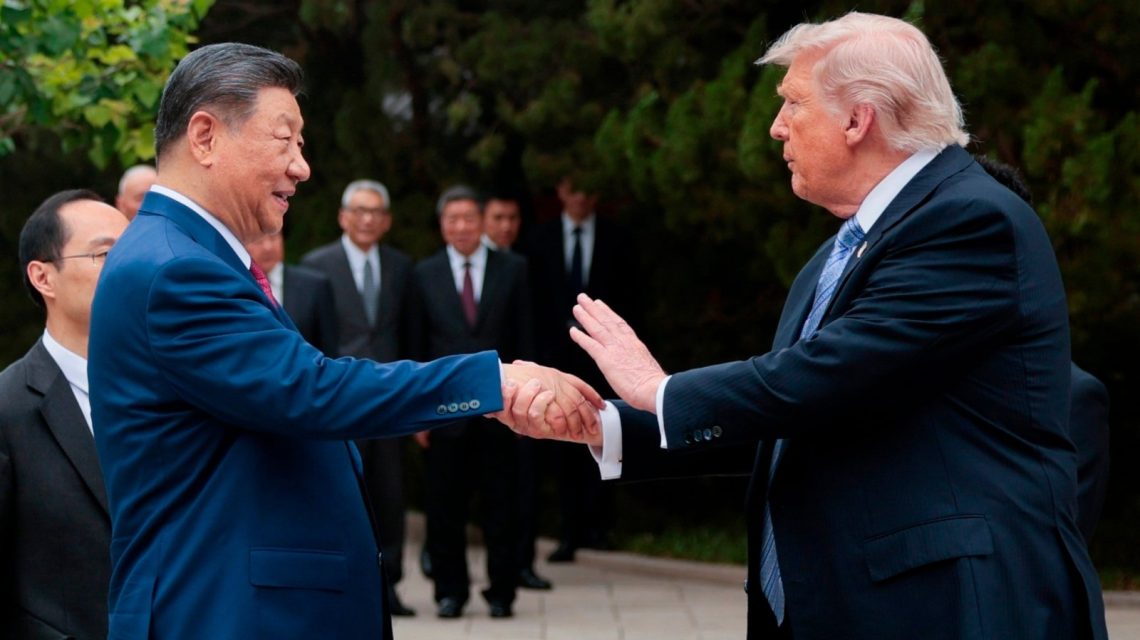
The Office of the U.S. Trade Representative (USTR) is calling for public input on which “non-sensitive” goods should be considered for tariff reductions as the nation implements its new “Board of Trade” with China. This trade mechanism emerged as a significant economic commitment from President Donald Trump’s state visit to Beijing for discussions with Chinese President Xi Jinping.
USTR Jamieson Greer emphasized the importance of comments from interested parties to facilitate mutually advantageous trade with China. While tariffs will continue to defend American economic and national security, the goal is to promote balanced and reciprocal trade. The administration will collaborate with stakeholders in manufacturing, fishing, ranching industries, and small businesses to identify areas where non-sensitive goods trade can yield positive results.
The deadline for comment submissions is set for July 10. Efforts to reach the USTR and Chinese embassy for statements were made by Newsweek. Xin Qiang, deputy director of the Center for American Studies at Fudan University, shared insights with Chinese state media, highlighting the call for feedback as a step toward easing trade tensions following the Trump-Xi summit. He noted that reducing U.S. duties could alleviate longstanding trade disagreements and foster constructive bilateral engagement.
“Since the existing trade dispute was primarily triggered by U.S. tariff actions, any substantive reduction in U.S. duties could help ease long-standing tensions and create space for more constructive engagement in bilateral trade,” Xin Qiang told the Global Times.
While the Trump-Xi talks didn’t produce many deliverables in conflicting strategic interest areas such as artificial intelligence and Taiwan, trade was seen as having the potential for progress. The USTR outlined the Board of Trade as a venue for managing trade in non-sensitive goods, while the separate Board of Investment focuses on investment-related discussions, as per a White House statement post-summit.
Interestingly, these two mechanisms, rather than reported purchases of American agricultural products and Boeing aircraft, were described as the cornerstone of the U.S.-China deal by Zongyuan Zoe Liu, a senior fellow for China studies at the Council on Foreign Relations.
The trade war initiated during Trump’s first term saw increased tensions last year with “Liberation Day” duties imposed on various countries. Tariffs on Chinese goods were notably high, reaching up to 145 percent in response to perceived unfair trade practices and lack of action on fentanyl precursor production.
Previous face-to-face talks between the U.S. and China, such as the October meeting in Busan, South Korea, have started to relax trade tensions. During these discussions, the U.S. reduced fentanyl-related tariffs on Chinese goods from 20 percent to 10 percent, while China agreed to resume soybean imports and lift rare earth export restrictions temporarily.