The corridors of a Las Vegas courtroom echo with the footsteps of men who once found themselves at the heart of a violent gang feud. More than three decades past, these individuals were young men navigating a deadly conflict that claimed many lives, including the famous rapper Tupac Shakur. These survivors of the bloodshed now revisit those turbulent times as the murder trial of Shakur unfolds, shedding light on the complex relationships between factions like the Crips and Bloods, and East Coast and West Coast rappers from the early 1990s.
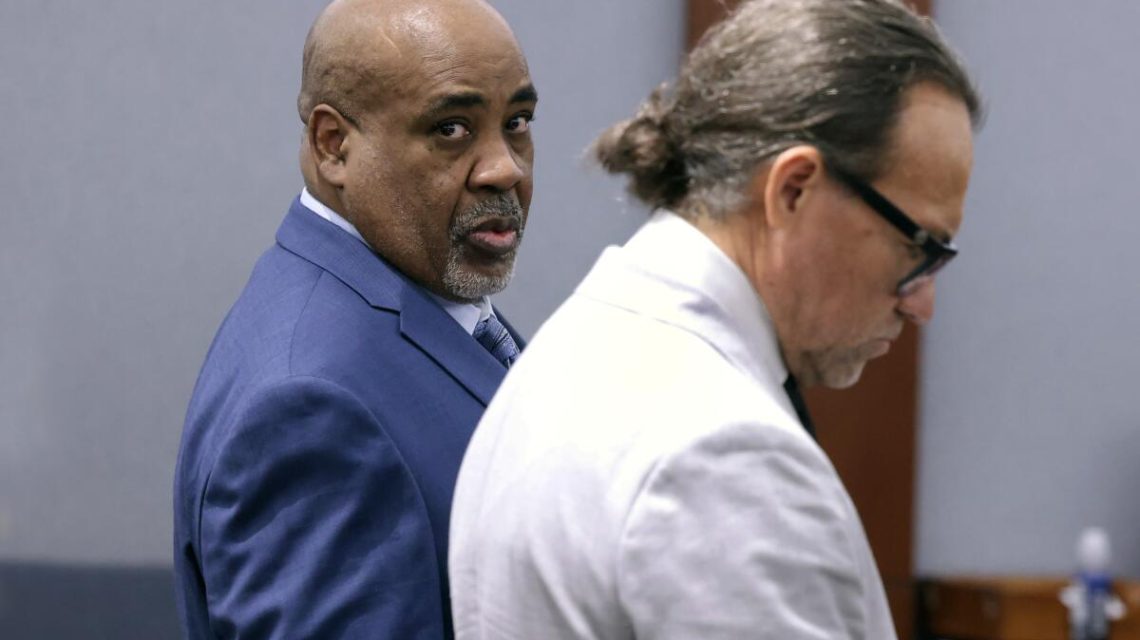
Duane Davis stands among those in the courtroom, accompanied by his attorney, Michael Sanft. Davis is accused of orchestrating Shakur’s murder on the Las Vegas Strip in 1996, a case that remained unsolved for decades. Las Vegas prosecutors are now leveraging Davis’s own words and those of his associates to build their case against him.
The murder of Tupac, occurring on September 7, 1996, followed an escalation in gang rivalries. Prosecutors highlight a clash between Southside Crips-Burris Street, led by Davis, and Mob Piru, a gang tied to Death Row Records. Shakur, closely allied with Death Row, was fatally shot after a violent disruption at a Mike Tyson fight earlier that evening.
Clark County Chief Deputy District Attorney Binu Palal presented video evidence showing Shakur’s group confronting Davis’s nephew, Orlando Anderson. Witness Travon Lane, associated with Mob Piru, had recognized Anderson in the MGM Grand hotel lobby. Anderson’s previous theft of Lane’s Death Row Records chain in a mall had intensified hostilities.
The aftermath of Shakur’s killing was a surge in gang warfare across Compton’s streets, leading to multiple deaths and injuries, including harm to a young girl. James McDonald, known as Mob James and a former associate of Death Row Records, testified about the pervasive violence linked to gang life. Despite once being entwined in the conflicts, McDonald expressed no desire to harm Davis, though prosecutors treated him as a resistant witness.
McDonald distanced himself from the past, focusing on his current role in raising his grandchildren and advising them against the path he once followed. He reluctantly addressed inquiries from prosecutors about past events, indicating the complexity of the relationships involved.
“Anytime you deal with gang life, it is going to be violence at any given time,” McDonald asserted.
Jurors also received insights from Davis himself, through recordings from a 2008 LAPD task force interview and a 2009 discussion with a Las Vegas homicide detective. In these interviews, Davis acknowledged acquiring the weapon used to kill Shakur. He indicated his willingness to have carried out the shooting had circumstances been slightly different.
Reggie Wright Jr., former security chief for Death Row and an ex-Compton police officer, recounted assigning security to Shakur during events such as the Soul Train Music Awards in May 1996. He detailed a confrontation between Shakur and rapper Christopher Wallace, known as Biggie Smalls. This altercation escalated to gun brandishing, necessitating intervention.
Reflecting on the night of Shakur’s demise, Wright conveyed to his father, Reggie Wright Sr., a Compton police lieutenant, about anticipated unrest due to clashes between South Side Compton Crips and Death Row affiliates.
Michael Sanft, Davis’s defense attorney, contended in opening statements that tangible evidence connecting Davis to the killing was nonexistent. Sanft emphasized prior investigations’ dismissal of Davis’s claims, citing lack of credibility.