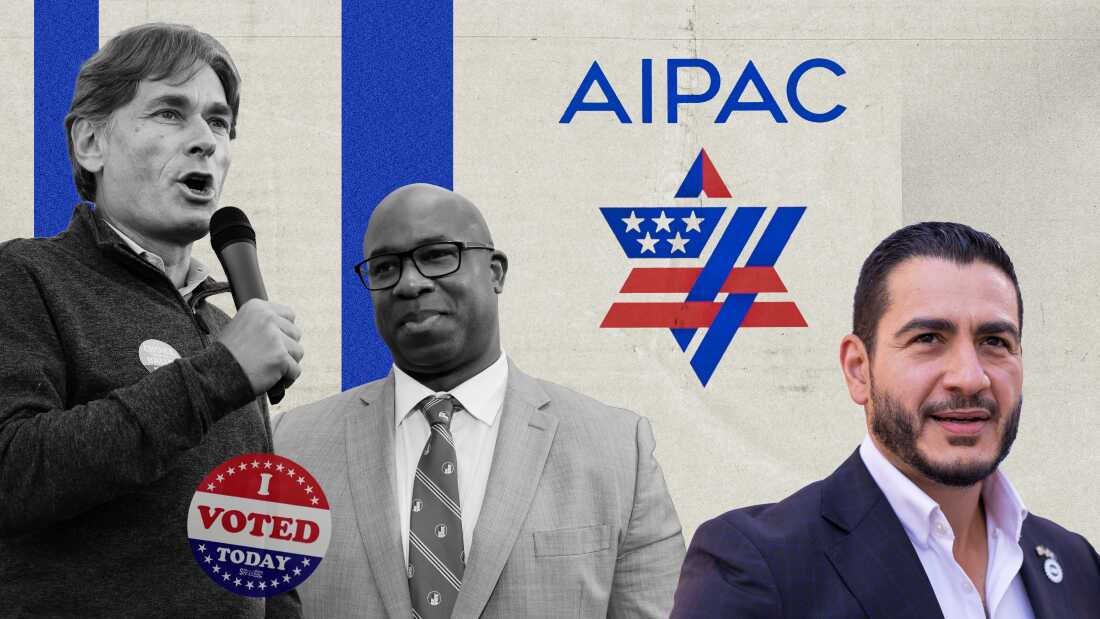
The American Israel Public Affairs Committee (AIPAC) has become a focal point in recent political debates. Some Democratic candidates openly oppose accepting contributions from the group. In Michigan’s U.S. Senate Democratic primary, Abdul El-Sayed criticized opponent Rep. Haley Stevens for receiving AIPAC’s backing. His victory signaled growing influence from the Democratic left and skepticism toward pro-Israel groups and money in politics.
AIPAC’s Role and Evolution
AIPAC aims to foster a strong U.S.-Israel alliance. Established in the early 1950s, it has traditionally worked to build bipartisan Congressional support for policies favoring both nations’ partnership. Ken Toltz, a political activist, noted AIPAC’s past neutrality in candidate endorsements. This changed ahead of the 2022 elections when AIPAC formed a political action committee and super PAC, reflecting a new partisan era. AIPAC’s Howard Kohr cited a rise in anti-Israel sentiment and escalating campaign costs as reasons for this strategic shift.
AIPAC’s spokesperson, Patrick Dorton, emphasized their focus on maintaining a bipartisan pro-Israel majority in Congress. He explained the group’s ongoing evaluation of both primary and general election races.
Decrease in Support for Israel
Criticism of AIPAC has grown as American support for Israel, especially among Democrats, has waned due to conflicts in Gaza and Iran. Ron Kampeas, a former bureau chief for the Jewish Telegraphic Agency, discussed how devastation from the Gaza conflict shifted public opinion. A Pew Research Center survey showed that 60% of U.S. adults hold an unfavorable view of Israel, an increase from 53% the previous year. More Americans now sympathize with Palestinians over Israelis, 41% to 36% according to a Gallup poll.
Over 100 House Democrats voted to cut aid to Israel, a measure that ultimately failed but highlighted declining support within the Democratic Party. Toltz critiqued AIPAC’s campaign spending approach, questioning the success of their efforts in improving party support.
Impact on Democratic Campaigns
Van Jones, a political analyst, remarked that AIPAC’s endorsements have become divisive. AIPAC may not measure success by individual elections, but its influence remains significant. This environment forces pro-Israel Democrats to navigate complexities where AIPAC’s backing can be double-edged.
A New Era of Spending
Beyond Gaza, Kampeas linked AIPAC’s tensions with Democrats to its opposition to the Iran nuclear deal and support for Republicans disputing the 2020 presidential election results. AIPAC’s notable win in the 2024 cycle involved unseating Rep. Jamaal Bowman, a prominent Israel critic. However, the group’s strategy backfired in New Jersey’s House primary, where its spending failed to prevent progressive Analilia Mejia’s victory over moderate Tom Malinowski.
United Democracy Project (UDP), AIPAC’s super PAC, escalated spending significantly, with a reported $62 million in recent election cycles. Brendan Glavin from OpenSecrets noted that AIPAC-related budget allocations are common in closely contested races, often operating under affiliated PAC names to maintain regional relevance. AIPAC continues to mobilize substantial funds, comparable to other major lobbying groups.
Misperceptions and Criticism
AIPAC has faced allegations of foreign influence. Critics like Jones reject depicting AIPAC as a foreign entity, arguing it fuels harmful stereotypes against American Jews. Jones explained that conflating AIPAC’s actions with foreign-driven motives is inaccurate and perpetuates misconceptions about Jewish Americans’ loyalty.
Dorton from UDP underscored AIPAC’s mission of promoting U.S.-Israel relations and defended its role amid political attacks during the primaries. He asserted that AIPAC’s work supporting a pro-Israel agenda is as legitimate as any advocacy cause in American democracy.
As debate surrounding AIPAC escalates, its founding objective of a robust U.S.-Israel alliance faces substantial challenges.
 Trump’s Use of Public Funds for Political Ads Sparks Controversy
  Dennis Hastert’s Legacy: From Political Leader to Controversy
  Tensions Within the Trump Administration Highlighted by Policy Reversals
  Democrats Hold Advantage Before Midterms, But Voter Sentiment Is Complex
  Democrats Strategize As Midterm Elections Approach
  Mary Peltola Emerges as Leading Candidate in Alaska Senate Race