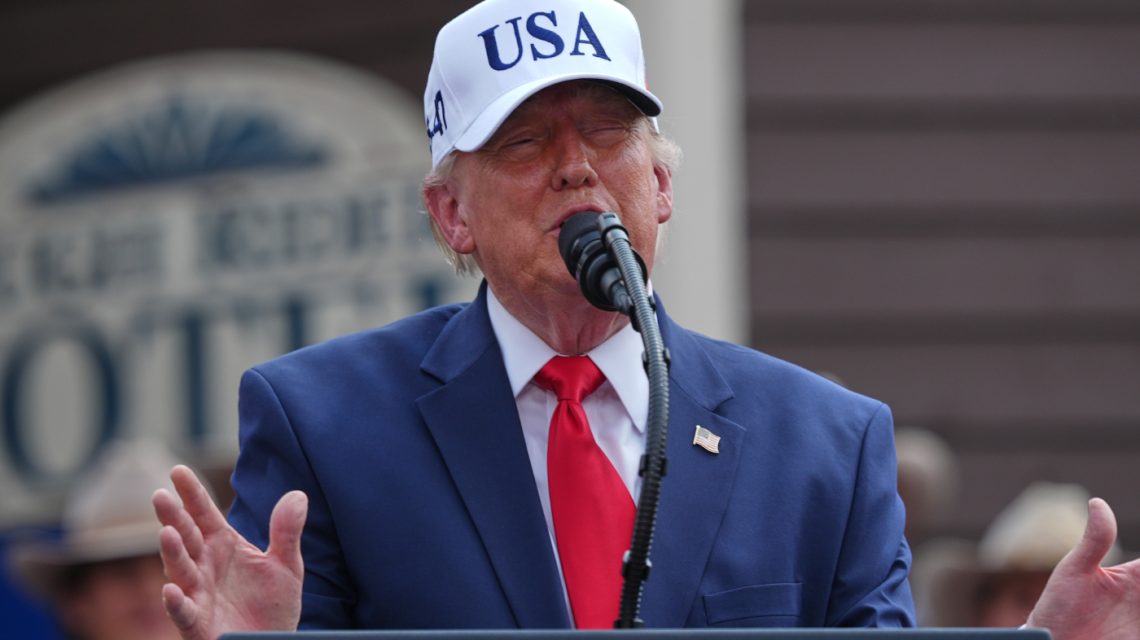
President Donald Trump spoke during the opening ceremony of the Theodore Roosevelt Presidential Library in Medora, N.D., at the Burning Hills Amphitheatre on July 1, 2026. Recently, Secretary of State Marco Rubio visited Abu Dhabi, marking his first trip to the Gulf since the onset of the Iran conflict. During his visit on June 23, he emphasized on including the Gulf states’ perspectives in decision-making. While this approach was overdue, it was a welcomed sentiment.
During the Iran war, Gulf states endured numerous missile and drone assaults. Vital sectors like energy, transportation, and tourism faced massive disruptions. Iranian action also led to the closure of the Strait of Hormuz, causing severe economic impact. Despite this, the Trump administration sent no top officials to support these regions crucially affected by the conflict it initiated.
Rubio’s recent diplomatic effort was necessary, yet underscored the administration’s previous shortcomings. Trump’s foreign policy lagged in building alliances and effectively engaging international partners. This approach weakened the U.S. war strategy and resulted in a memorandum of understanding that ended the war favorably for Iran.
The conflict highlighted the importance of diplomacy within American power. Despite having partnerships comprising significant global diplomatic, military, and economic capacities, Trump neglected coalition-building. This lack of engagement led to ineffective responses to Gulf states, European allies dependent on the Strait of Hormuz, and Asian partners reliant on Gulf oil.
Washington decided on military action without consulting allies, leaving them unmotivated to assist later. While missiles barraged the Gulf and the economic repercussions spread to Europe and Asia, NATO allies declined to aid reopening the Strait of Hormuz. Tariff wars, threats, and insults towards allies came back to haunt the U.S. at its dire moment.
Lessons from these events stress the importance of alliances cultivated through time and respect. Allies bolster policy with crucial resources, not adversaries to be belittled. Future efforts require engaged diplomacy to repair the consequences of Trump’s actions.
Two areas where diplomacy remains crucial are the governance of Hormuz and negotiations on Iran’s nuclear program. The memorandum leaves the long-term control of the Strait ambiguous, though a global consensus exists on restoring the pre-war status. This includes the absence of Iranian fees or regulatory control. U.S. diplomacy must work to isolate Iran with global support, potentially through a UN Security Council resolution.
Regarding Iran’s nuclear ambitions, prior economic leverage was surrendered before talks began. An effective negotiating position requires a broad coalition to define an acceptable final agreement. Such a deal should neutralize Iran’s enriched uranium, impose permanent enrichment limits, and terminate Tehran’s financial support to proxies. A united front advocating these goals is crucial, and was highlighted in Rubio’s recent joint statement with Gulf states.
Overall, expanding and sustaining these diplomatic efforts is vital for rejuvenating U.S. leverage post-conflict. Trump’s presidency moving forward should heed historical wisdom, recognizing that respecting global opinions ultimately aligns with American interests.
John Hannah, a senior fellow at the Jewish Institute for National Security of America, served as national security advisor to former Vice President Dick Cheney.
Copyright 2026 Nexstar Media Inc. All rights reserved. This material may not be published, broadcast, rewritten, or redistributed.
 Atlanta Mayor Challenges DNC Over Southern Representation
  Missouri’s Congressional Map Faces Potential Supreme Court Review
  Trump’s Approach to Iran: A Departure from Reagan’s Diplomacy
  New York City Mayor Opposes Bonuses for Paraprofessionals
  Dr. Heidi Overton’s Nomination for FDA Commissioner
  Chicago Misses Out on Hosting 2028 Democratic National Convention