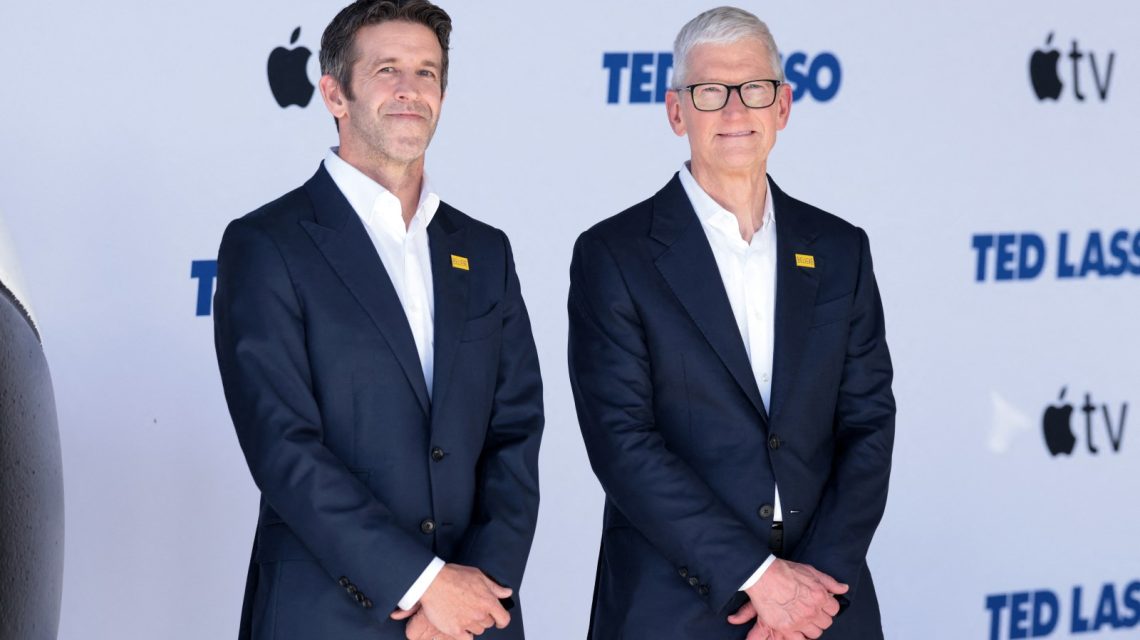
Apple has long been synonymous with American innovation, pioneering products like personal computers, the iPod, and the iPhone. While Apple remains a formidable financial powerhouse, some believe its innovative edge has dulled. John Ternus, newly appointed as Apple’s third CEO since 1997, faces the task of revitalizing the company’s innovative spirit.
The Legacy of Tim Cook
Tim Cook, who succeeded Steve Jobs, transformed Apple into a dominant force in smartphones and expanded its product offerings. Despite Apple’s financial achievements, critics argue that Cook’s era lacked the innovation seen under Jobs. Meta CEO Mark Zuckerberg and Tesla founder Elon Musk have voiced concerns over Apple’s recent lack of groundbreaking inventions.
Cook’s tenure has been marked by financial success. Apple posted $143.8 billion in first-quarter revenue this year, a 16% increase from the previous year. The company now boasts over 2.5 billion active devices and a 49% gross margin. Apple’s market share in the global smartphone sector stands at 20%.
Services and New Product Categories
Under Cook, Apple diversified beyond hardware. The introduction of services like Apple Pay, Apple Music, and Apple TV+ provided recurring revenue streams. The company also launched new product categories including the Apple Watch, AirPods, and most recently, the Vision Pro.
Critics contend that these offerings represent more evolution than revolution. While services have expanded Apple’s ecosystem, new hardware hasn’t matched the impact of the original iPhone. The Vision Pro’s release at a high price point has struggled to capture a mass market.
Ternus’ New Challenge with the iPhone Duo
John Ternus now inherits the challenge of restoring a sense of groundbreaking innovation to Apple. Unlike his predecessor, Ternus has a background in engineering, having overseen the development of Apple’s hardware, including the Duo, a foldable phone.
The Duo features a 7.6-inch internal display, significantly larger than prior models. Priced at $1,999, it falls below anticipated costs, with potential to lead its category by 2027. Lower component costs and aggressive market pricing underline Apple’s strategy to penetrate new market segments.
The same day, Apple adjusted prices for certain products, making AirPods more accessible and maintaining steady pricing for its watch series. This approach ensures loyal buyers have a broader range of accessible options.
Can Apple Still Innovate?
Despite numerous new products, the question remains: can Apple still surprise consumers as it did with the iPhone? Critics argue that while innovations continue, improving upon existing designs doesn’t capture the same consumer excitement.
Ternus emphasizes AI and privacy in Apple’s vision, highlighting how these elements will enhance user experience. Apple’s strategic pivot towards AI, however, must reassure consumers about data security.
Rebuilding Consumer Trust
Public trust in Apple isn’t as robust as it once was. As innovation intertwines with privacy concerns, Ternus faces a market wary of mishandled personal data.
The company isn’t the struggling entity Jobs inherited; it’s a profitable leader. Transitioning from Cook, Ternus must navigate internal changes, including several key executives approaching retirement.
With Cook transitioning to executive chair, Ternus gains an invaluable resource. However, as decisions around legacy projects loom, the dynamics between him and Cook will become apparent, particularly if they diverge on company direction.
 Trump Unveils AI-Powered America.gov Platform
  Trump’s 2024 Campaign Targets Young Men Through Cryptocurrency
  How Modern Windows Improve Home Insulation
  State Department Simplifies Passport Process with Online Applications
  Senate Democrats Block Data Center Bill Over Efficiency Concerns
  Future Cities: Ambitious Projects Aiming for Innovation and Sustainability