Asian stock markets experienced declines on Wednesday, with South Korea’s Kospi extending recent losses. The Kospi, heavily impacted by the global AI boom, fell 1.3% to 5,587.82. This follows a drop of 10.8% on Tuesday and nearly 6% on Wednesday. The index remains 30% higher than the start of the year but is 35% below its June high.
Samsung Electronics gained 2.4% following a report of record quarterly operating profit, aligning with expectations. However, SK Hynix saw a 4% decrease after posting a profit increase sixfold, which failed to meet investor expectations.
In Tokyo, the Nikkei 225 rose 0.6%. While SoftBank Group, an investor in Open-AI, fell 2.7%, Tokyo Electron increased 4.4% and Kioxia Holdings rose 7.5%. Taiwan’s Taiex climbed 0.8%, boosted by TSMC’s 1.8% gain.
Hong Kong’s Hang Seng fell slightly by less than 0.1%, and the Shanghai Composite Index lost 1.2%. Australia’s S&P/ASX 200 dropped 0.9%, and India’s Sensex rose marginally by less than 0.1%.
Oil prices declined Thursday amidst renewed U.S.-Iran tensions. President Donald Trump indicated a strong U.S. response to Iran’s attack on a base in Jordan. Brent crude decreased 1% to $87.18 per barrel, while U.S. crude fell 0.9% to $83.74 per barrel.
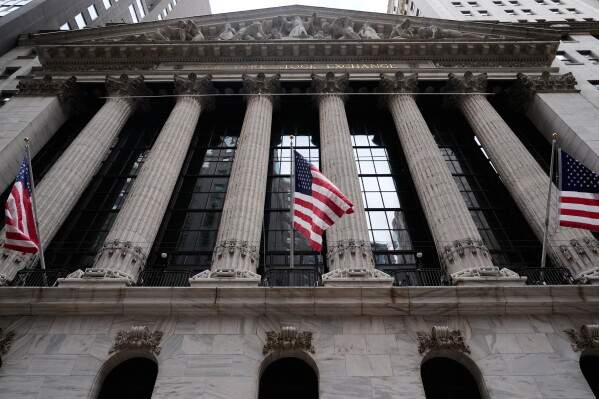
U.S. markets also experienced declines. The S&P 500 decreased by 1.5%, the Dow Jones Industrial Average fell 2.2%, and the Nasdaq Composite lost 1.7%. Notable losses were seen in chipmaker stocks, with Nvidia down 3.6% and AMD shedding 5.5%, alongside Broadcom’s 2.8% fall.
The Federal Reserve’s decision to hold interest rates steady contributed to market uncertainty. Fed Chairman Kevin Warsh emphasized the goal of reducing inflation to 2% but indicated less guidance on future rate policy, leading to potential market volatility.
The U.S. 10-year Treasury yield was at 4.70%, increasing from 4.61% on Tuesday. Currency movements saw the U.S. dollar rise to 163.49 Japanese yen, while the euro slightly decreased to $1.1454.