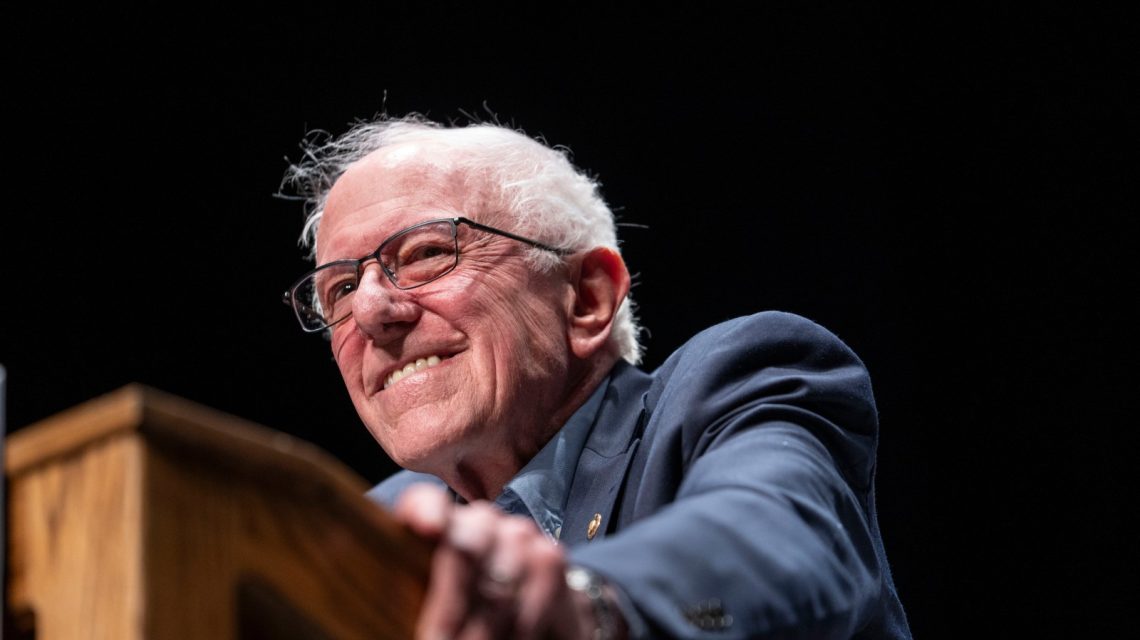
Vermont Senator Bernie Sanders is once again advocating for his flagship healthcare proposal, backed by fresh research. As an independent who aligns with Democrats, Sanders holds the position of ranking member on the Senate Health, Education, Labor, and Pensions Committee. On Tuesday, he issued a statement after Yale University released a study indicating that Sanders’ Medicare for All plan could save 114,000 lives each year and reduce national healthcare spending by more than $1 trillion annually.
This study confirms what we have known for years: Medicare for All saves lives and saves money,Sanders said.It would cost $1 trillion less than our current dysfunctional system.
The timing coincides with a resurgence in support for Medicare for All within the Democratic Party, driven by progressive candidates and Democratic Socialists of America (DSA)-aligned leaders. These groups have made the policy a cornerstone of their recent primary victories. Newsweek reached out to Sanders’ office for comment on Tuesday.
DSA and Progressive Candidates Fuel a Medicare for All Comeback
A series of primary victories has given momentum to Sanders and the progressive movement behind Medicare for All, a policy he has championed for nearly a decade. The DSA includes Medicare for All as a key part of its platform.
In New York City, Mayor Zohran Mamdani supported three progressive congressional candidates who won their June primaries. In Colorado, Melat Kiros defeated the longtime incumbent Representative Diana DeGette. In Michigan, Abdul El-Sayed, backed by Sanders and Mamdani, won against Representative Haley Stevens in the state’s Senate primary while emphasizing Medicare for All.
In Maine, progressive populist Troy Jackson has centered his campaign around Medicare for All in his challenge against Republican Senator Susan Collins. Despite promoting some version of Medicare for All in the Senate for nearly a decade, Sanders has made little progress. His Medicare for All Act of 2017 had 16 Democratic co-sponsors but failed to advance. Attempts in 2019, 2022, and with the current bill S. 1506 introduced in April 2025 have also stalled. Becker’s Payer Issues reported that Sanders’ proposals consistently remain stuck in committee.
What the New Yale Study Found
The Yale research, led by epidemiologist Alison Galvani, concluded Medicare for All would reduce U.S. healthcare spending by nearly 20 percent. Savings would arise from competitive prescription drug pricing, reducing administrative waste, curbing fraudulent billing, and fair provider reimbursement.
The plan could potentially prevent 114,000 deaths annually, including over 33,000 among the uninsured and 20,000 linked to coverage losses under Republican policies. An earlier study by Galvani published in The Lancet found a previous version of the plan could save 68,000 lives and $450 billion yearly.
Opposing studies exist, such as one by Charles Blahous of the Mercatus Center at George Mason University, which showed Sanders’ plan could increase federal health spending by $32.6 trillion over 10 years. Sanders’ office criticized the study as misleading, pointing to assumptions Blahous made about unrealistic payment cuts.
What Recent Polls Show on Medicare for All
Public opinion on Medicare for All shows majority support for government-managed healthcare. A November 2025 Gallup poll revealed 64 percent of U.S. adults believe the government should ensure healthcare coverage—the highest level since 2007. Pew Research found similar trends, with 66 percent support in 2025.
A November 2025 Data for Progress poll showed 65 percent of likely voters favored a Medicare for All system, gaining support even after concerns about higher taxes and government involvement were raised.
However, a July 2026 survey by Tavern Research found less support—only 11 points of net support—when Medicare for All was framed as replacing private insurance with higher taxes. Seventy percent of respondents preferred to maintain their current plans if given a choice.
Polling indicates a growing appetite for government healthcare, but support declines when private insurance is eliminated, as Sanders proposes. He argues that international comparisons validate the feasibility of his plan, stating, If every major country on earth can guarantee healthcare to all, and achieve better health outcomes, while spending substantially less per capita than we do, it is absurd for anyone to suggest that the United States cannot do the same,
he said.
 The Trump Team’s Challenge to the Military Leadership
  Maryland First State to Restrict Electronic Pricing in Grocery Stores
  Activists Push for Nationwide Ban on Child Marriage in the U.S.
  Democratic Hopes and Historical Warnings in 2026 Senate Race
  Republicans Face Challenges Amidst Cost of Living Concerns
  A Different Kind of Fall for Congress This Year