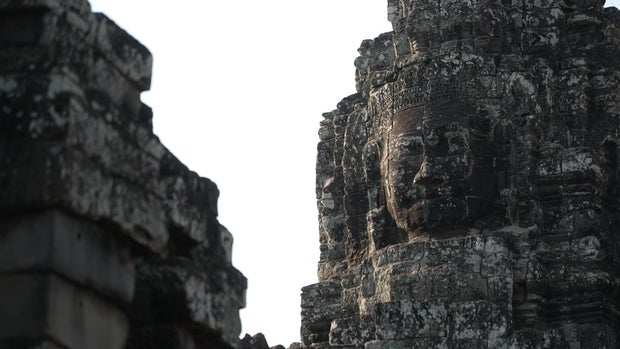
Cambodia’s cultural heritage has suffered tremendously due to the theft of thousands of artifacts over the last century. This large-scale plunder is considered one of the greatest art heists in history, beginning during French colonization and escalating amidst the country’s genocide and civil wars in the latter half of the 20th century.
Much of this illicit trade was orchestrated by Douglas Latchford, a British man whose network of looters sold artifacts to private collectors and museums worldwide. The Cambodian government has spent more than a decade trying to reclaim these stolen treasures.
The Scarred Sanctity of Angkor Wat
Angkor Wat, an architectural marvel almost a thousand years old, highlights Cambodia’s spiritual and artistic achievements. Originally built as a Hindu temple for Vishnu, it later became a Buddhist site. Though it remains a place of worship today, many sculptures are missing heads, torsos, and other elements due to looting. The temple is part of Cambodia’s identity and history, which looters have damaged by stealing its sacred relics.
Looting Across Cambodia’s Temples
The situation is even worse in Cambodia’s other temples, as nearly all of 4,000 sites have been looted. At Sandak, in northeastern Cambodia, Brad Gordon, an American lawyer working with the government, showed the extent of the damage where looters targeted the site. Many treasures, including statues and gold, have been taken from these sacred places.
“It’s remarkable to me just how much stuff is just scattered on the ground,” said Anderson Cooper.
Local Devotion to Statues
For Cambodians, these statues embody sacred deities holding ancestral souls. Phoeurng Sackona, Cambodia’s Minister of Culture, oversees efforts to retrieve these looted pieces. In a guarded warehouse near Angkor Wat, thousands of such artifacts are stored. Each piece crafted by ancient artisans of the Khmer Empire, a dynasty that once spanned Southeast Asia.
“We believe that we can talk with them. They will hear. They will see,” states Phoeurng Sackona.
The Role of Douglas Latchford
Douglas Latchford, dubbed the mastermind behind this extensive looting, allegedly claimed to be a guardian of Cambodian culture. He sold many artifacts to museums like the Metropolitan Museum of Art, while simultaneously publishing books showcasing these stolen pieces.
Revelations from a Former Looter
Gordon’s team received crucial testimony from Toek Tik, a former Khmer Rouge child soldier, who supplied Latchford with numerous artifacts. Toek Tik provided detailed accounts of how he and fellow looters operated, leading Gordon to further evidence of stolen treasures.
Investigations and Legal Proceedings
Latchford’s illicit activities caught the attention of U.S. law enforcement after the attempted sale of stolen antiquities like a Koh Ker statue. J.P. Labbat, a special agent in cultural property, played a key role in uncovering Latchford’s operations. Despite being indicted, Latchford died before facing trial. However, Brad Gordon negotiated the return of Latchford’s collection.
Museum Implications
Cambodia still seeks the return of artifacts hidden in prestigious museums such as the Met, which possesses one of the largest collections of Cambodian antiquities. Many items, procured through Latchford, remain unreturned.
“I think most people walk through the Met, they have no idea those are blood antiquities,” says Brad Gordon.
Continued Repatriation Efforts
The combat against looting continues, as investigators document missing artifacts. With help from U.S. authorities, more pieces are gradually returning home. Cambodia hopes these efforts will preserve its cultural heritage for future generations.
The Lindemann Collection and Public Revelations
Through the cooperation of families like the Lindemanns and public revelations, more stolen pieces are returning to Cambodia. Authorities returned 33 treasures from the Lindemann collection, which were identified in publications and photos as looted items.
A Bright Future
The ongoing recovery of artifacts promises a hopeful future for Cambodia. As its cultural heritage returns, the nation celebrates its historical and spiritual legacy. These efforts forge a path to connect Cambodians with their returned ancestral treasures.
 Amir Odom Discusses Departing from the LGBTQ Movement
  Preserving Ken Kesey’s Iconic Bus ‘Furthur’ for Future Generations
  Historical Events in Chicago on October 3
  Martina Navratilova’s Enduring Influence in Tennis and Beyond
  World Porridge Making Championship: A Unique Scottish Tradition
  Readers React to Miss Manners Column