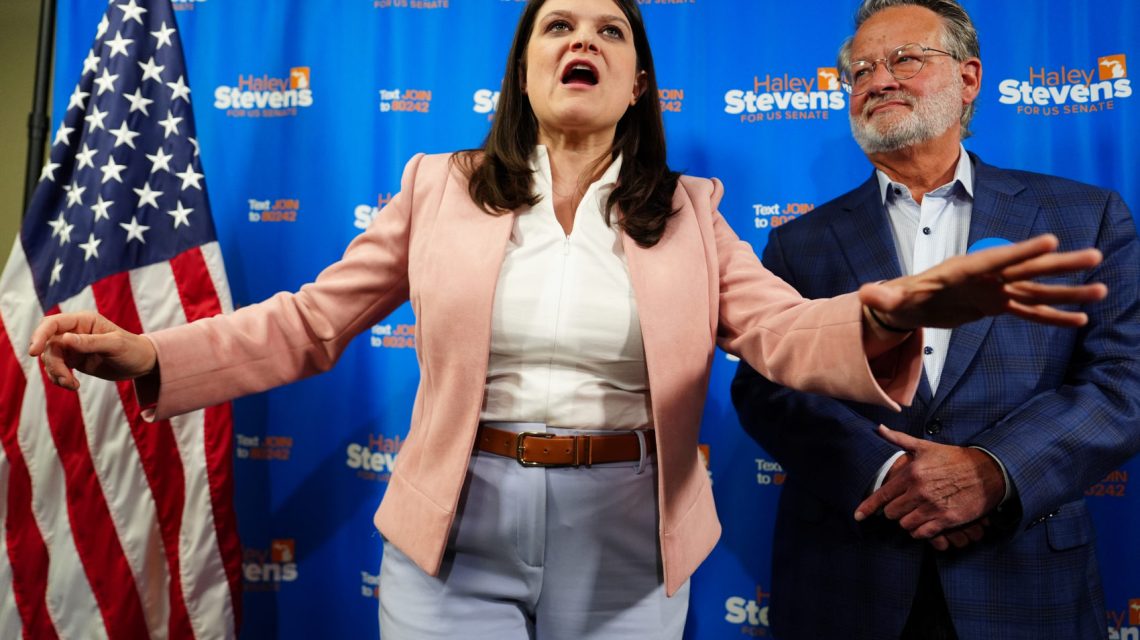
In Detroit, Abdul El-Sayed and U.S. Rep. Haley Stevens worked intensely to secure votes at their final campaign stops ahead of Michigan’s Democratic Senate primary. El-Sayed joined political leaders in a packed church to appeal for support, while Stevens did the same in another Black church nearby. Both sought a win in this fiercely competitive race, which had seen significant investment and national attention.
The candidates focused on reaching Michigan’s diverse Democratic coalition. El-Sayed targeted churches, union halls, and rallies, emphasizing themes of economic opportunity and equal rights regardless of race or background. His message resonated with attendees, as highlighted by Detroit resident Robin Robertson, who decided to vote for him.
Stevens concentrated on her long-standing ties with Detroit churches, advocating her experience and electability. She appealed to voters through ads showing her connections with Barack Obama and her role in his administration’s auto rescue. Supporters like Reggie Williams praised her community presence.
Monday’s campaigning strategies diverged. El-Sayed targeted Detroit, seeking to convert enthusiasm into votes, aided by a statewide volunteer operation. Stevens turned to western Michigan cities with Democratic strongholds, capitalizing on institutional support from influential Democrats.
With few voters left to sway, the critical task was ensuring supporters cast their ballots. After days of campaigning, both contenders looked to election results to define their primary stage strategies.
 Mayor Mamdani’s Policing Reform Plans
 Gen Z Voter Shifts and Their Impact on the 2026 Midterm Elections
 Disappearance of US Senate Candidate Raises Questions
 DOJ Rule Change Reduces Appeal Time for Immigrants Facing Deportation
 Hakeem Jeffries’ Bid for House Speaker Faces Progressive Hurdles
 Ohio Judge Dismisses Defamation Lawsuit by Rep. Max Miller