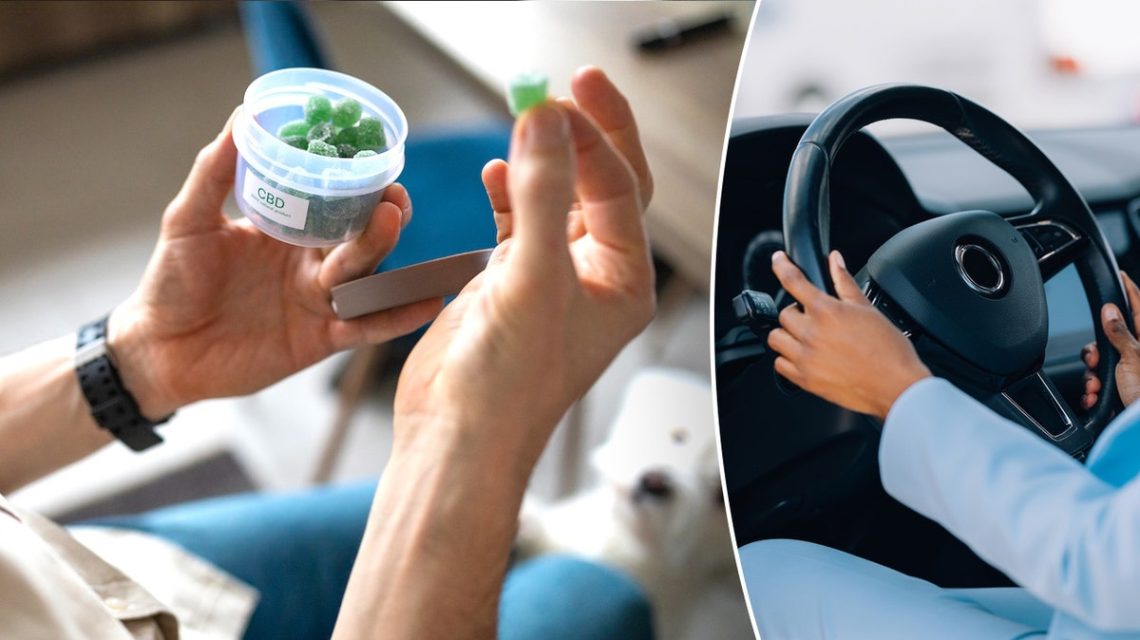
Recent research indicates that consuming cannabis edibles before driving can severely affect performance on the road, even if blood tests show THC levels below the legal limit. Published in JAMA Network Open, this study exposes challenges for impaired-driving enforcement in Canada and certain U.S. areas.
Unlike studies on smoked or inhaled cannabis—which elevate THC levels quickly—edibles provide a slower absorption rate. Despite low blood THC concentrations, drivers show impairment.
Findings revealed drivers consuming higher doses of edible THC struggled with maintaining lane control, exhibited slower reaction times, and experienced inconsistent speeds. These impairments occurred despite blood THC levels being lower than legal roadside cutoffs. The study assessed drivers’ lane stability, reaction times to road events, and speed consistency.
“America hits major marijuana milestone as daily weed use surpasses daily drinking.”
Conducted by researchers at Toronto’s Centre for Addiction and Mental Health, the trial involved 40 adult cannabis users. Participants attended four sessions, consuming gummies with 0, 2, 10, or 20 milligrams of THC.
Driving simulation tests took place at two, five, and 24 hours post-consumption, evaluating lane maintenance, road event reactions, and speed control. Blood samples and self-reported intoxication levels were collected. Participants reported a decreased willingness to drive and lower confidence in their skills after consuming the gummies.
Impairment was evident at two and five hours after consuming 10- and 20-milligram doses. Compared to placebo, these doses showed greater lane variability, with the 20-milligram dose linked to slower reactions and inconsistent speed control.
Blood THC levels averaged 1.6 nanograms per milliliter for the 10-milligram dose and 3.4 nanograms per milliliter for the 20-milligram dose, below the commonly used 5-ng/mL limit. Some samples exceeded this threshold. Comparatively, in smoked cannabis studies, similar impairment occurred with average peak blood THC concentrations of 30.3 nanograms per milliliter.
The study’s limitations include the use of virtual simulators and its focus on regular cannabis users. Effects on occasional users remain unclear. Minimal residual effects persisted after 24 hours, with consistent speed noticeable post higher doses, but reported intoxication vanished.
Dr. José Ignacio Nazif-Munoz of Université de Sherbrooke highlighted difficulties in law enforcement due to biological differences in absorption with edibles versus smoked cannabis. He stated, “The delayed absorption and prolonged duration of effects of edible cannabis distinguish it from smoked or inhaled cannabis, complicating the interpretation of biological measures.”
This study suggests a need for reliable roadside testing tools given the challenges in detecting impaired drivers consuming edibles.
 Increased Funding Needed for Psychiatric Hospitals
  Trump Administration Distributes ACA Refund Checks
  Higher Consumption of Ultra-Processed Foods Linked to Increased Health Risks
  Understanding Inflammation: Myths and Facts
  Calm Parenting: Strategies to Manage Stress
  Trump’s Executive Order to Combat Mosquitoes and Ticks in D.C.