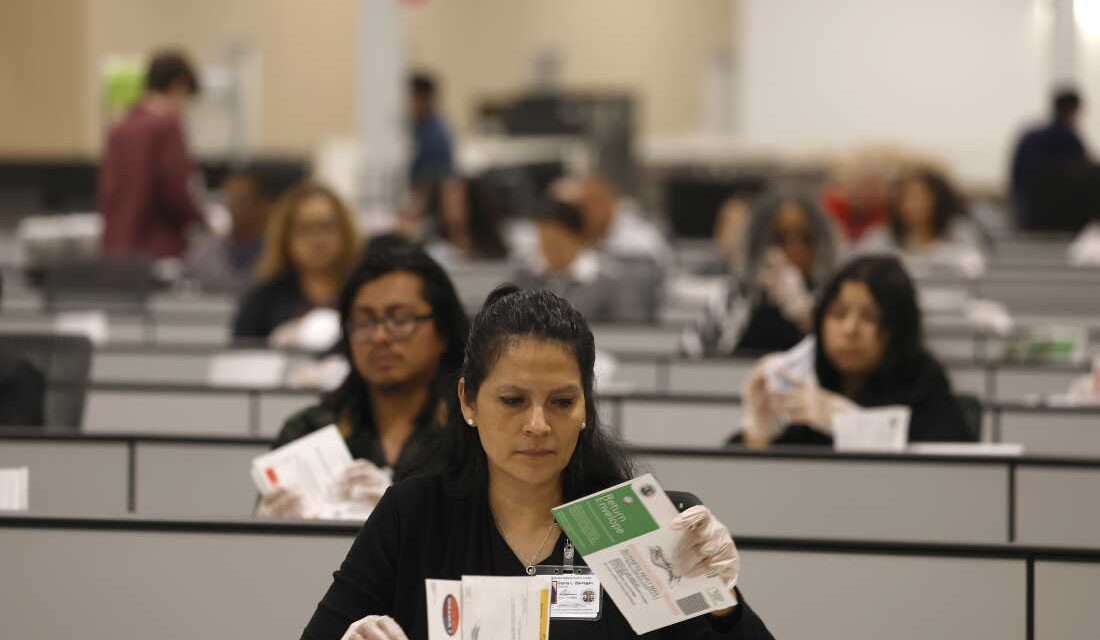
The experience of election workers counting ballots, as witnessed during the California state primary, illustrates the challenges faced in tallying votes. Stephen Richer, who once served as a clerk and recorder in Arizona’s Maricopa County, knows the pressure intimately. On election nights, handling over a million ballots without immediate results often leads to conspiracy theories and criticism. Richer described these times as difficult, with limited resources and accusations of incompetence.
Pressure on Election Officials
Election officials, especially in competitive districts, confront unique pressures. Delays in declaring winners, sometimes days after Election Day, are common. This leads to questions about why some results appear quickly, while others are delayed.
Factors Affecting Timing of Election Results
One key factor is the margin of victory. Rapid announcements seen on TV or social media rely on initial returns and demographics, not complete vote counts. For instance, states like Utah experience quick result calls due to significant margins, creating an illusion of completeness, but no state’s counting concludes on election night.
In contrast, close races necessitate more thorough counts before announcements can be confidently made. Therefore, states with quick counting speeds enable faster determinations. Delays are usually seen in competitive races where vote counting is slower.
California’s Vote Counting Challenges
California exemplifies slow result times, partly due to competitive districts and one of the slowest count processes nationwide. The state’s preference for mail ballots, which can arrive postmarked after Election Day, compounds delays. Election misinformation targets California, adding to the controversy.
Kim Alexander from the California Voter Foundation outlines the ‘pig in the python’ phenomenon, where a large number of mail-in ballots are returned on Election Day, causing processing delays. Envelopes need verification, adding to the time taken. Some counties experience up to 50% of mail-in ballots on Election Day, delaying processing initiation.
Efforts are underway to address this, with $40 million allocated to speeding up counting, including voter education campaigns. Voters informed about quicker voting methods might choose to expedite their participation, potentially reducing delays. Research has shown targeted communication like postcards can encourage earlier voting.
Alaska: Another Example
Other states like Alaska also exhibit slow results, especially when races are tight. In 2024, Alaska was the last state to reach 95% of ballots counted, delaying calls for weeks. Upcoming tight races, particularly in the Senate, might lead to similar waits in determining control of the U.S. Senate.
Overall, these factors highlight the complexity of vote counting and election result announcements, emphasizing the intricate balance of transparency, speed, and voter access.
 Democratic Candidates Aim to Reclaim Political Ground in Montana
 Trump Endorses Netanyahu Amid Israeli Election Campaign
 Alberta Votes to Remain Part of Canada, Supporting National Unity
 The Role and Challenges of the White House Press Secretary
 Controversy Surrounds East Potomac Golf Links Renovation
 Political Maneuvering Over Defense Secretary’s Future