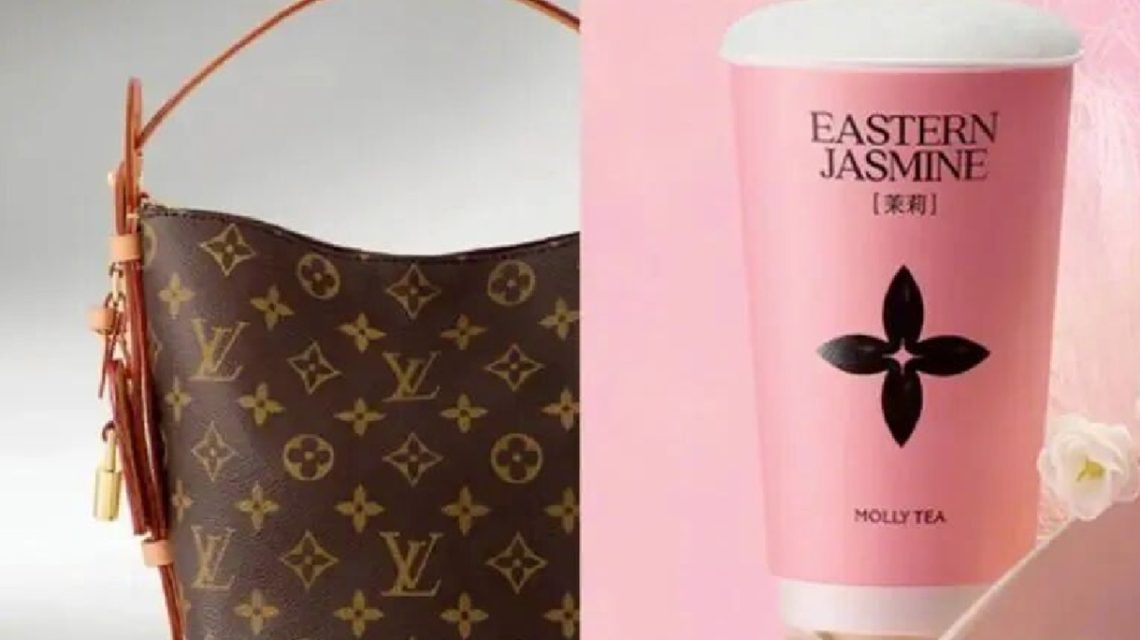
A recent ruling by a Chinese court favoring Louis Vuitton in a trademark dispute has led to significant backlash from Chinese netizens. The French luxury brand is being accused of exploiting traditional Chinese culture while using trademark laws to assert exclusive rights.
Luxury Giant vs. Tea Chain
On June 29, the Intermediate People’s Court in Jiangsu province found that Molly Tea, a local tea chain, had infringed on seven trademarks registered by Louis Vuitton, including its famed Monogram Canvas featuring stylized flowers. Molly Tea was ordered to pay 10 million renminbi (around $1.4 million) in damages and an additional 300,000 RMB in legal fees. This order was reported by Guangzhou-based Nanfang Metropolis Daily. As of now, the ruling is yet to take effect, and Molly Tea’s plans to appeal are unclear.
Molly Tea, headquartered in Shenzhen, has gained popularity among young consumers by combining traditional Chinese tea flavors with modern, minimalist branding that appeals on social media.
The hashtag “LV cannot sue for trademark infringement over its use of Chinese patterns” has garnered over 33 million views on Weibo, reflecting widespread public sentiment.
Trademark Law and Cultural Heritage
Netizens have been comparing Louis Vuitton’s floral monogram with ancient decorative motifs, highlighting patterns that date back over a thousand years. One Weibo user commented, “International brands like LV should not be allowed to appropriate Chinese culture and then accuse others of infringement.” Another user argued that while LV claims intellectual property protection, they exploit Chinese companies for profit.
Criticism has also been leveled at the court itself, with some suggesting judges did not adequately consider the cultural origins of the designs. A commenter questioned, “Do the judges lack a sense of national sovereignty?” The debate centers more on how trademark law addresses longstanding cultural imagery than on Louis Vuitton’s legal ownership of the trademarks.
Commonly used motifs often cannot be trademarked due to their widespread historical use. However, if a company spends significant time and resources promoting a particular design, they can secure exclusive trademark rights if consumers associate the design with the brand.
The Molly Tea ruling brings to mind another case where Louis Vuitton successfully pursued a trademark claim against a Nanjing restaurant earlier in the year.
‘Toilet Bags’
This controversy has reignited a humorous critique among netizens, who mockingly label Louis Vuitton bags as “toilet bags.” The floral pattern on LV products resembles decorative motifs found on traditional Chinese window grills, floor tiles, and a type of ceramic wall tile once common in public toilets.
For further information, contact Newsweek editors John Feng and Sam Wilson.