Election Overview
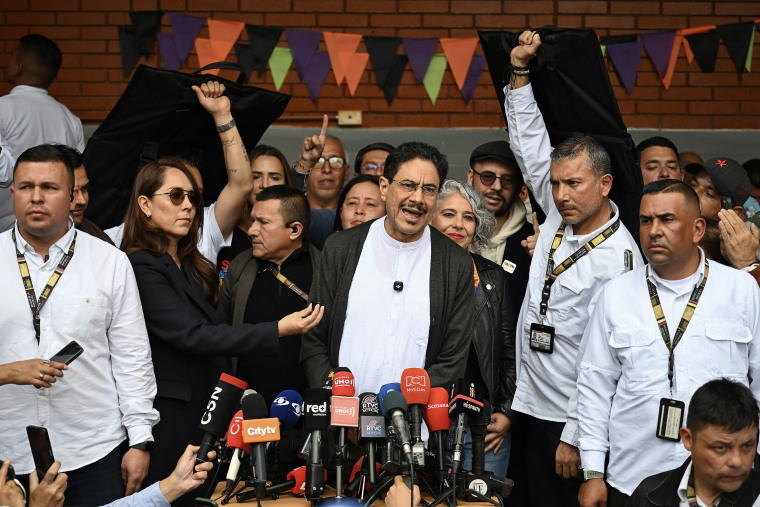
Colombia witnessed a critical election on Sunday, leading to a runoff between two key candidates. Iván Cepeda and Abelardo de la Espriella emerged as the top contenders, sparking debates and controversies.
In the initial round, de la Espriella gained over 43% of the vote, while Cepeda secured just above 40%. This result set the stage for a tense confrontation in next month’s runoff.
Controversy and Claims
Outgoing President Gustavo Petro, a supporter of Cepeda, questioned the integrity of the election process. He asserted that flaws in the software used for vote counting invalidated the preliminary results.
Petro alleged that unauthorized IDs, totaling 800,000, were inexplicably added, casting doubts on the electoral outcome. Cepeda echoed these concerns, pointing to potential vote discrepancies.
Electoral Authority and Trust
Colombia’s electoral body, the National Civil Registry, maintained that their preliminary count achieved unprecedented precision. Hernán Penagos, the office chief, emphasized a precision rate of 99.8% for the recent congressional elections.
Despite this, Human Rights Watch’s Juanita Goebertus backed the credibility of Colombia’s electoral system, urging respect for the election results.
Runoff Set for June 21
The political showdown will occur on June 21. Cepeda, representing the Pacto Histórico party, faces de la Espriella of Defensores de la Patria. De la Espriella, a lawyer with strong U.S. ties, seeks to emulate the rigorous anti-crime measures seen in El Salvador.
Political Alliances and Influence
The unexpected exit of Paloma Valencia, a candidate with less than 7% of the vote, shifts her supporters potentially towards de la Espriella. She officially endorsed him, consolidating right-wing support.
This election is pivotal, marking a decade since Colombia’s peace pact with the FARC. Violence persists despite past efforts, intensifying as the election approaches.
U.S. Involvement
International attention focuses heavily on Colombia’s election. Senator Bernie Moreno of Ohio plans to monitor the election, while statements from U.S. political figures have stirred diplomatic tensions.
President Petro criticized external political endorsements as meddling. U.S. Representative Maria Elvira Salazar and others expressed confidence in de la Espriella’s potential leadership.
 The Trump Team’s Challenge to the Military Leadership
  Maryland First State to Restrict Electronic Pricing in Grocery Stores
  British Police Arrest Man Suspected of Terror Plot
  Activists Push for Nationwide Ban on Child Marriage in the U.S.
  Democratic Hopes and Historical Warnings in 2026 Senate Race
  Republicans Face Challenges Amidst Cost of Living Concerns