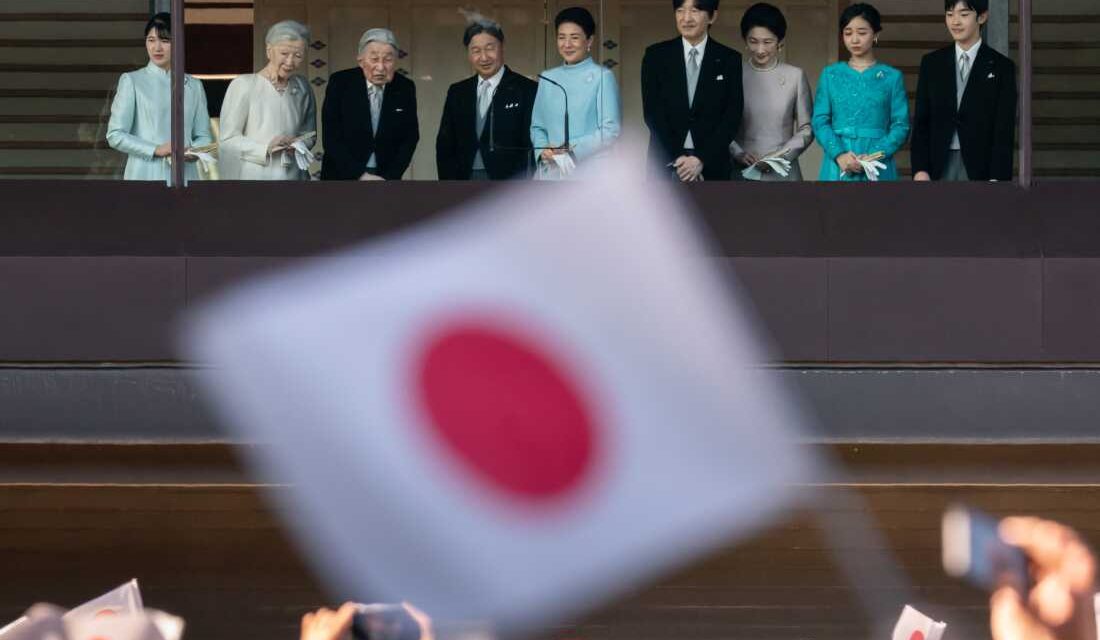
Japan’s upper house of parliament has approved changes to the law governing succession in the world’s oldest hereditary monarchy. This follows the lower house’s recent endorsement. The revisions aim to maintain the number of imperial family members and ensure their public duties despite declining family ranks and age.
Critics claim the revisions have another purpose: prevent the emergence of a female emperor. Seiichiro Noboru, a former diplomat connected to the imperial family, suggests this as their “very clear objective.” Public support for a constitutional monarchy is crucial for Japan as the country strengthens its military presence and positions itself as a reliable protector of a rules-based international order.
Among the key revisions, princesses can remain in the royal family after marrying commoners. The family may also adopt male-line descendants from former imperial branches. However, adopted men and princesses cannot inherit the throne; only the male progeny can.
“The crucial point is that if a female emperor were recognized, we wouldn’t need to resort to such a complex adoption line,” Noboru asserts.
Princess Aiko’s Influence
Princess Aiko, Emperor Naruhito’s 24-year-old daughter, emerges as a popular candidate among those supporting a female emperor. Her presence in public events draws considerable attention, and polls reveal support for female emperors ranging from 60% to 90%. Noboru believes Princess Aiko’s popularity is a significant factor in this support.
Despite public sentiment, Sanae Takaichi, Japan’s first female prime minister, opposes the idea. She emphasizes the importance of male succession as a historic foundational aspect of the emperor’s authority.
Throughout Japan’s history, there have been eight female emperors who continued the male line. The practice ceased in 1889 with the Meiji government’s Imperial Household Law, establishing male commanders as patriarchal figures and relating emperors to divine heritage.
Historical Context and Legal Implications
The law also included provisions for concubines due to high infertility rates and infant mortality, leading to many emperors born outside legal marriage. Noboru argues restricting women from the throne contradicts constitutional guarantees against gender discrimination. Japan’s constitution makes it clear that the emperor’s authority is by the will of the people.
Emperor Naruhito carefully addressed succession issues, expressing hope for public understanding in securing the imperial family. As a constitutional symbol, the emperor refrains from political engagement but highlights the need for consensus among the people.
Chie Kobayashi contributed to this report from Tokyo.
 British Police Arrest Man Suspected of Terror Plot
  Activists Push for Nationwide Ban on Child Marriage in the U.S.
  Investigation into Alleged Incident at Cornell University
  Rising Drone Threats Highlight Vulnerabilities in Moldova’s Airspace Defense
  Bolivia Faces Security Test Amid Unrest
  Incident on FlyDubai Flight Raises Security Concerns