
Today, we explore the complexities of political maneuvering, litigation, and strategic decisions in the current political landscape. With numerous events unfolding worldwide, keeping track of the political battles at home has become more challenging.
California’s Gubernatorial Primaries and Midterm Elections
As the midterm election approaches, political tactics have intensified. Last summer marked the start of this competitive endeavor, beginning in Texas. Here, President Trump influenced Republican lawmakers to redesign congressional maps, aiming to favor the GOP’s hold on the House. In response, California’s electorate passed a measure designed to enhance Democratic outcomes.
State-Level Political Maneuvering
Other states joined the fray, ending with Virginia’s decision to adopt new political lines in April to potentially secure additional Democratic seats. Initially, it seemed Trump’s tactics had backfired, allowing Democrats an edge. However, judicial interventions soon altered this trajectory.
In May, the Virginia Supreme Court invalidated Virginia’s new congressional map, citing procedural breaches by the Democratic-led legislature. More pivotal was the U.S. Supreme Court’s decision, which revoked a portion of the Voting Rights Act, enabling Southern states to redraw district boundaries to Republican advantage.
Implications for the House of Representatives
The ramifications of these decisions suggest a slight Republican advantage, with gains of only a few seats likely. However, redistricting doesn’t guarantee election outcomes. Certain districts remain fiercely contested. In California, Republican-held Central Valley remains a Democratic target. In Texas, redistricting efforts depended on maintaining Latino support, yet changing attitudes indicate tighter races.
Control of the House
Forecasting the House’s future remains uncertain. Historical trends typically benefit the party out of the White House, which suggests a Democratic advantage. With Trump’s approval ratings being low, a correlation between presidential popularity and party performance may foster Democratic gains. Jacob Rubashkin, a political analyst, noted that Republicans are defying historical trends without a popular presidential figure, presenting a challenge for them.
Senate Projections
The Senate appears more favorable to Republicans due to numerical challenges. Democrats need four additional seats, yet only a fraction of the 35 races are competitive, mainly those in Trump-favored states. Despite this, Democrats have managed favorable candidates in traditionally Republican territories like Alaska, Ohio, and Iowa.
Trump’s rhetoric could pose obstacles in key states, including Georgia, Michigan, and North Carolina. His statements on inflation and finances may impact voters dealing with economic pressures.
Targeted Senate Races
Maine remains a pivotal contest, where Republican Senator Susan Collins faces competition in a state previously won by Vice President Kamala Harris. The race’s outcome may reflect more on the Democratic candidate than either Trump or Collins.
Texas Political Landscape
In Texas, Democrats are hopeful with James Talarico challenging Republican Ken Paxton, despite historical difficulties in achieving state victories. Paxton’s controversial record might offer an opening, but success remains uncertain in Texas’s political environment.
 The Trump Team’s Challenge to the Military Leadership
  Maryland First State to Restrict Electronic Pricing in Grocery Stores
  Activists Push for Nationwide Ban on Child Marriage in the U.S.
  Democratic Hopes and Historical Warnings in 2026 Senate Race
  Republicans Face Challenges Amidst Cost of Living Concerns
 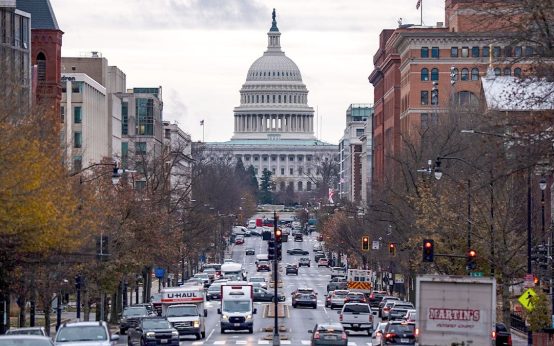 A Different Kind of Fall for Congress This Year