Health officials in North Carolina have announced that the recent cyclospora cases in the state are not linked to the ongoing outbreak associated with Taco Bell. The surge in cases is likely due to several sources.
Over the past week, cyclospora cases have increased in North Carolina while the outbreak tied to shredded lettuce from Taco Bell, sourced from central Mexico, continues to affect multiple states. Officials in North Carolina stated during a July 21 press conference that multiple sources are contributing to the rise in cases.
The North Carolina Department of Health and Human Services has observed rises in case numbers in both June and July in past years, but this year’s numbers are higher. “Many fresh fruits and vegetables can serve as vehicles for cyclospora,” said Carl Williams, a department official. He emphasized that it is likely multiple sources are involved, rather than a single product from a single company. Although many cases in Michigan are linked to Taco Bell’s shredded lettuce, not all of them are.
When questioned about the main sources of cyclosporiasis, Williams acknowledged that lettuce, parsley, and cilantro often appear in investigations. He pointed out that while their frequent appearance does not prove causality, suspicion arises when certain herbs or vegetables consistently show up.
“We start to think that those are probably implicated,” Williams stated.
This summer has seen a cyclospora outbreak spread across the U.S., with the Centers for Disease Control and Prevention (CDC) reporting 4,173 confirmed cases and 308 hospitalizations across 41 states since May 1. State health officials have noted even higher totals.
North Carolina has reported 561 cases since May 1, rising by 254 in one week between July 14 and 21, with 16 hospitalizations. Newsweek reached out to the North Carolina Department of Health and Human Services and the CDC for comments.
What Is Cyclospora?
Cyclospora cayetanensis is a microscopic parasite causing cyclosporiasis, leading to symptoms like watery diarrhea, stomach cramps, nausea, fatigue, and loss of appetite. Humans carry and spread the parasite via contaminated food or water. The FDA states that humans are its only known host.
Symptoms generally emerge one to two weeks after consuming contaminated items. Unlike many foodborne illnesses, cyclospora does not typically spread directly between people, needing environmental time to become infectious.
Fresh produce often plays a role in outbreaks, as the parasite can contaminate through irrigation water or environmental exposure. North Carolina’s guidance flags fresh herbs and produce as common vehicles, especially when eaten raw. Parsley and cilantro are frequently identified.
The department advises:
- Cut away damaged or bruised areas before eating
- Rinse produce before peeling
- Rub produce under running water
- Use a vegetable brush for firm produce
- Dry with a clean cloth or paper towel
- Remove outer leaves of lettuce or cabbage
CDC Expands US Outbreak to Nine States
According to CDC data, the current cyclosporiasis case surge is the largest recorded in recent U.S. years. Recent reports indicated the outbreak involved states like Michigan, Ohio, Indiana, Kentucky, and West Virginia. However, four more states—Illinois, Kansas, Oklahoma, and Pennsylvania—might also be involved.
Patients in the affected states reportedly fell ill around the same time. The investigation seeks to determine which illnesses are connected.
Health Secretary Robert F. Kennedy Jr. claimed the outbreak was “under control,” following a federal investigation identifying the source and triggering a widespread lettuce recall.
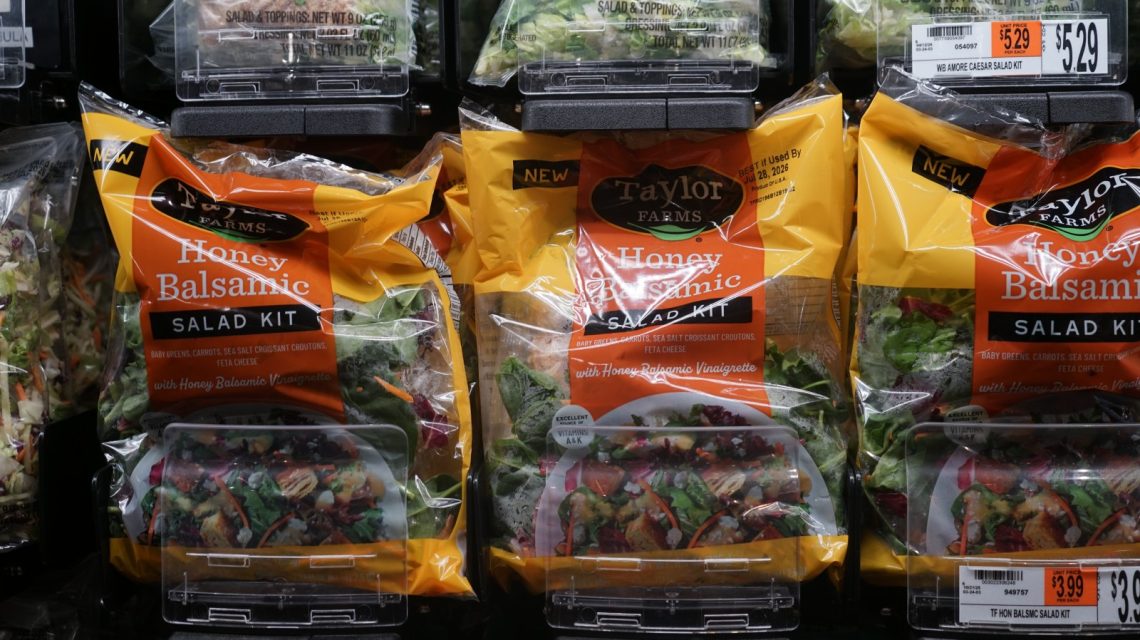
The FDA indicated that a sample of Taylor Farms’ shredded iceberg lettuce, not under recall, tested positive for the parasite, but later classified it as a false positive. Taylor Farms clarified this mistake on Sunday.
Mexican Health Minister David Kershenobich stated there’s no evidence linking Mexican-sourced lettuce to the U.S. outbreak. Kershenobich assured that precautions remain in place, emphasizing cautious investigation into potential links.
 Higher Consumption of Ultra-Processed Foods Linked to Increased Health Risks
  Understanding Inflammation: Myths and Facts
  Calm Parenting: Strategies to Manage Stress
  Trump’s Executive Order to Combat Mosquitoes and Ticks in D.C.
  Overcoming Weight Loss Challenges: Brain Health and GLP-1 Medications
  Supporting Children’s Mental Health at Home: Practical Steps for Parents