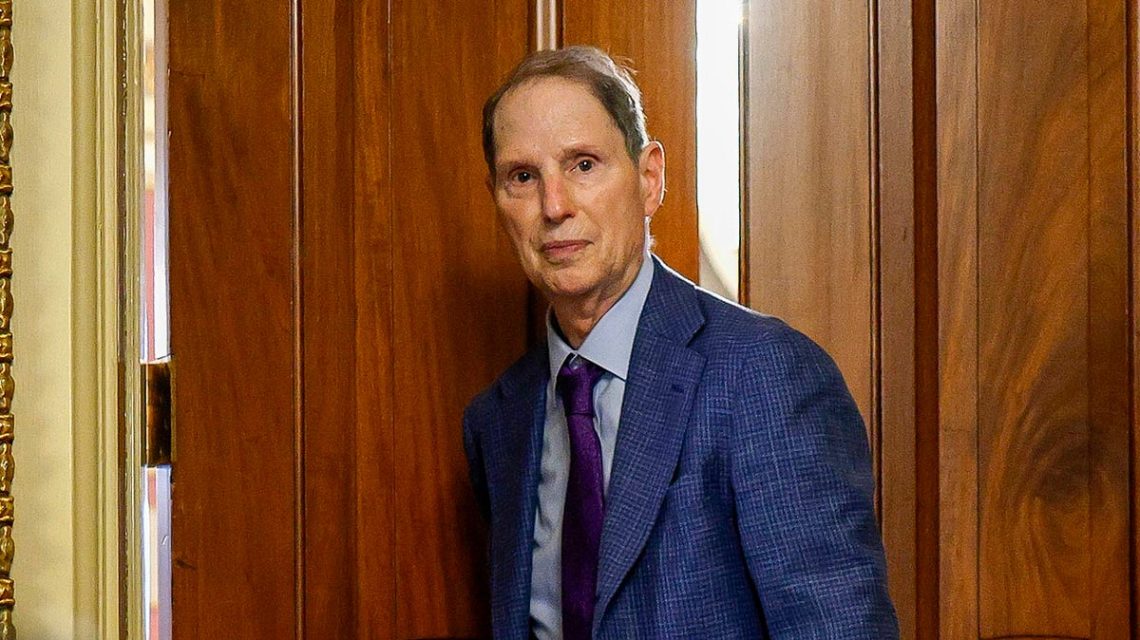
Recent discussions in the U.S. Senate have centered around a proposal by Senator Ron Wyden, the top Democrat on the Senate Finance Committee. This proposal seeks to increase taxes on data centers. Critics warn that this move might elevate costs for services heavily relied upon by Americans.
Wyden released a white paper last week suggesting the end of certain tax incentives for data centers. It also proposes an ongoing tax on data centers operating in the U.S. Critics argue that this tax could ripple through the economy, raising costs for various internet-based services.
This tax will be paid by anyone who uses the internet. A tax on data centers is a tax on your email, family photos, small business operations, cloud storage, and your social media posts,said James Erwin, director of innovation technology at Americans for Tax Reform.
Americans for Tax Reform referred to Wyden’s idea as a “national internet tax.” Attempts to reach Wyden’s office for comment were unsuccessful. His proposal acknowledges difficulties in taxing data centers due to their widespread presence and usage. Data centers primarily house electronic equipment that processes, stores, and transmits digital information.
Wyden suggests excluding undefined “internet infrastructure” from his proposed tax, though cloud computing might not be exempt. His plan targets gross receipts rather than profits with a “low single-digit” annual tax.
Despite citing concerns such as land use and local utility prices, Wyden advocates taxing data centers in Earth’s orbit. This clashes with efforts by former President Donald Trump to boost AI development and infrastructure growth.
Liz Huston, assistant press secretary to Trump, emphasized the administration’s approach to ensure data centers account for their own utility costs while promoting U.S. dominance in AI over China. The Trump White House organized over 200 utilities, data center developers, and state leaders under the “Ratepayer Protection Pledge” to manage energy prices.
Contrasting Wyden’s approach is President Trump’s focus on maintaining economic growth and technological leadership. Both agree on minimizing the impact of data center development on utility prices, though they propose different strategies. Wyden’s stance is less extreme than calls by Sen. Bernie Sanders and Rep. Alexandria Ocasio-Cortez for a complete halt on new data center construction.
 State Department Simplifies Passport Process with Online Applications
  Becerra and Hilton Clash in California Gubernatorial Debate
  California Voters to Decide on $7.5 Billion State Research Fund
  Highlights from the California Gubernatorial Debate: Becerra vs. Hilton
  Becerra vs. Hilton: The Debate and Key Issues in the California Governor Race
  Senate Confirms New Labor Secretary