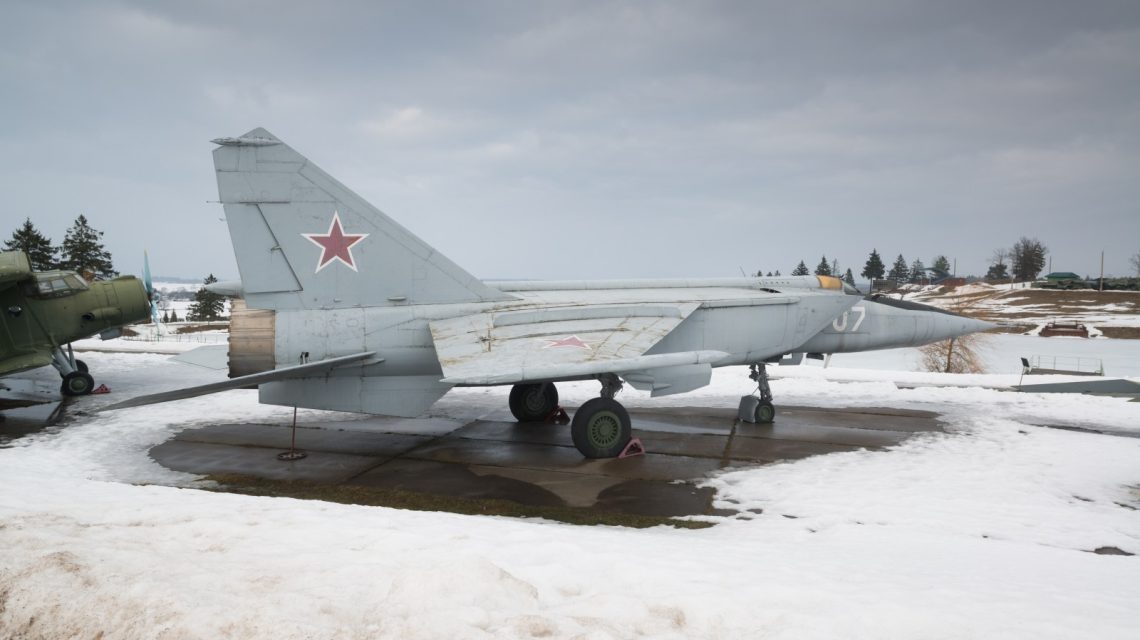
Half a century ago, a Soviet fighter pilot named Viktor Belenko made a daring move that influenced Cold War dynamics. Rising on a typical day, Belenko flew from Chuguyevka Airbase on a training mission. He suddenly broke away, diving his MiG-25 to evade radar, and headed for Japan. With almost no fuel, he landed in Hokkaido. Construction workers on the ground watched as he emerged with a pistol, proclaiming his wish to reach the United States.
Belenko’s actions were a major intelligence gain for the U.S. The CIA director, George H. W. Bush, referred to it as an “intelligence bonanza.” Belenko received asylum and later citizenship, involving himself with the U.S. government until his passing in 2023. His story resonates with questions on whether similar events could happen today.
Current Defections
Since Russia’s invasion of Ukraine, several officials and soldiers broke ties with their government. While none have piloted aircraft like Belenko, some brought knowledge and influence with them.
Anatoly Chubais, an influential figure and former Kremlin official, left Russia shortly after the invasion. Chubais sought residence in Israel, steering away from Western nations. Despite facing significant legal issues back home, he continued his activities, notably through an institute in Tel Aviv focused on Russian studies.
Gleb Karakulov, a captain in the Federal Protective Service, was responsible for secure communications for Russian leaders. His experiences in over 180 trips reveal a leader in political limitations. After leaving during a visit to Kazakhstan, he and his family fled to Turkey.
Meanwhile, Miroslav Simonov, a drone warfare expert, defected to Ukraine. His journey involved the “I Want to Live” initiative, enabling him to cross into Ukrainian territories and offer insights into Russian drone warfare tactics.
New Incentives and Risks
Ukraine introduced regulations encouraging defections. A payment of $1 million awaits any Russian delivering a combat aircraft, with lesser but notable rewards for helicopters. This promise also includes identity protection and residency support.
In August 2023, pilot Maksym Kuzminov flew his Mi-8 helicopter into Ukraine, surrendering alongside valuable aircraft components. Although the Mi-8 lacked cutting-edge technology, it provided Ukrainians with strategic insights. Tragically, Kuzminov was later found dead in Spain. His murder was linked to Russian interests, highlighting the dangers defectors face.
The murder signifies risks involving defections, serving as a deterrent against those contemplating similar actions. Those in Russia face stiff penalties. A former colleague of Karakulov, Mikhail Zhilin, learned this the hard way as he received a prison sentence after being deported back from Kazakhstan.
The Ongoing Exodus
Mass departures from Russia are contributing to challenges back home. In late 2022, following announcements of military mobilizations, tens of thousands of Russians crossed into Europe and neighboring countries. Reports show significant increases in migrations, mainly involving young, educated citizens, according to several studies.
As a result, many highly skilled individuals are leaving, depleting Russian sectors like IT, culture, and science. While these individuals may not bring hardware or military secrets, their departure creates ripple effects felt within the Russian administration.
Viktor Belenko’s own journey left a considerable legacy, blending defection with high-value intelligence. Future instances might introduce novel technology or invaluable knowledge to the worldwide landscape.
 British Police Arrest Man Suspected of Terror Plot
  Activists Push for Nationwide Ban on Child Marriage in the U.S.
  Investigation into Alleged Incident at Cornell University
  Rising Drone Threats Highlight Vulnerabilities in Moldova’s Airspace Defense
  Bolivia Faces Security Test Amid Unrest
  Incident on FlyDubai Flight Raises Security Concerns