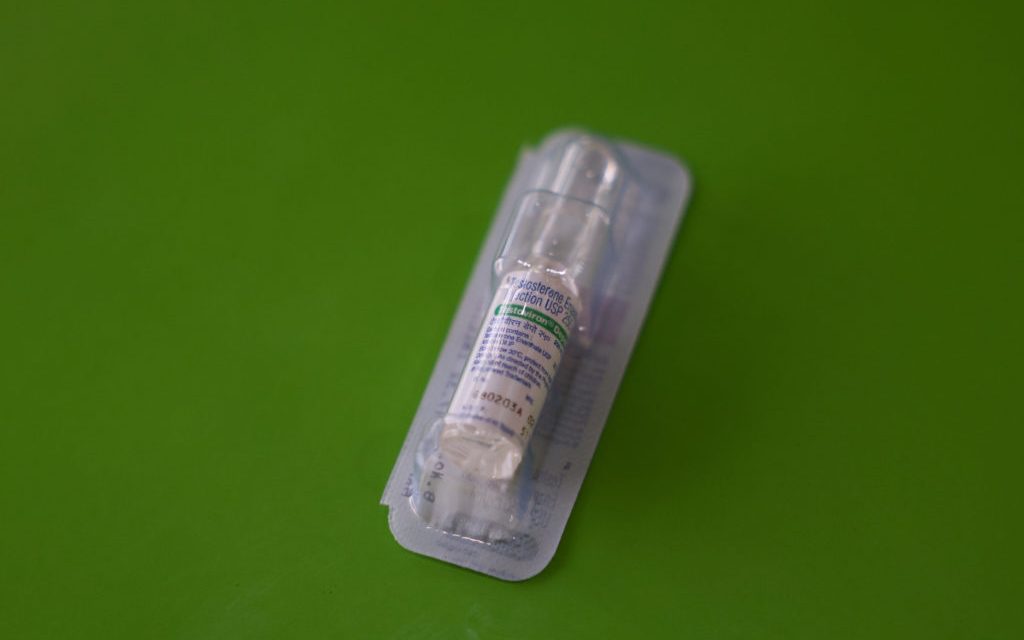
Defense Secretary Pete Hegseth announced plans to annually test testosterone levels in U.S. service members. In a statement on July 15, Hegseth proposed a “High-T Department of War,” where service members aged 30 and older would undergo these tests during their regular health evaluations. Individuals under 30 might choose to opt in voluntarily. If results suggest low testosterone, a decision could be made regarding testosterone replacement therapy.
“This initiative isn’t about artificial enhancement,” Hegseth stated. “It’s about ensuring optimal natural capabilities and supporting longevity.”
Testosterone levels are complex, with no universal agreement on what counts as low. Factors such as sex, age, and symptoms influence this. Not all individuals showing low levels in one test will need replacement therapy, which offers benefits but also presents risks. The Defense Department has not clarified how this policy will be practically implemented, as confirmed by a Pentagon spokesperson on July 15.
Understanding Healthy Testosterone Levels
No specific testosterone level defines health, but doctors agree on general ranges. For adult men, the Endocrine Society suggests 300 to 1,000 nanograms per deciliter. A 2017 study supported a similar range of 264 to 916 nanograms per deciliter. Women naturally have lower levels, generally 15 to 46 nanograms per deciliter, according to the Cleveland Clinic. Other sources report ranges up to 70 nanograms per deciliter.
Those with atypical anatomy, often termed intersex, may have different hormone requirements. Testosterone levels decrease with age, typically by 1% to 2% annually from the age of 30 to 40.
Determining Low Testosterone Levels
There is no singular benchmark for low testosterone levels. Blood tests generally determine these levels, although home saliva tests can be less reliable. For a diagnosis of low testosterone, which can cause symptoms like low sex drive and fatigue, a man’s level usually falls below 280 to 320 nanograms per deciliter. Doctors require at least two separate morning tests to confirm low levels.
Women’s low testosterone levels lack a specific benchmark, and relevant tests often fail to detect low amounts effectively. Diagnosis is based on symptoms and test results, with symptoms including fatigue and low libido.
Katie Horner, a physician assistant, advises treating the patient rather than relying solely on lab values.
What Is Testosterone Replacement Therapy?
Testosterone Replacement Therapy (TRT) addresses low testosterone through supplements like patches and injections. Treatment varieties depend on the form prescribed, such as daily gel applications or weekly injections.
Endocrinologist Dr. Ravi Iyengar highlights that treatment is best suited for those with lab-confirmed low levels and deficiency symptoms. The priority is to stimulate natural hormone production due to the potential implications of external hormone use.
Benefits and Risks of Replacement Therapy
For those with deficiencies, TRT can alleviate symptoms by boosting energy and improving sexual health, according to Dr. Iyengar. But once initiated, stopping therapy can be challenging due to side effects like infertility.
Men may experience side effects such as sleep apnea and increased risk of clots. Women may encounter acne and increased hair growth.
Options for Women and Gender-Affirming Care
Although no FDA-approved treatments exist specifically for women, off-label prescriptions may address low sex drive. TRT is used, particularly around menopause.
Gender-affirming care caters to an individual’s gender identity and can include hormone therapies. Historically, treatments have been provided for cisgender individuals as well. Treatments assisting individuals in aligning with their bodies can be considered gender-affirming care, emphasizing the importance of individual comfort.
 Cargo Plane Crash at Miami International Airport
  Marine Veteran Suing Oregon School District Over Curriculum Reimbursement
  Tennessee Execution Halted as Issues Persist with Lethal Injection Protocol
  Judge Dismisses Case Against Former Olympian Over Lincoln Memorial Incident
  Minnesota Family Files Civil Rights Lawsuit Over ICE Agent Shooting
  Increased Funding Needed for Psychiatric Hospitals