Historical Insights
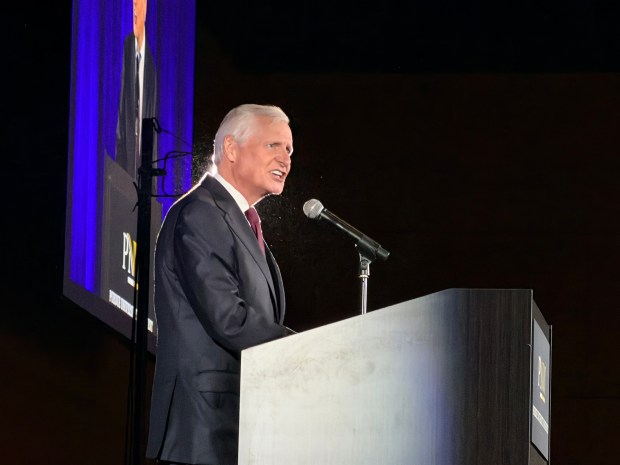
Presidential historian Jon Meacham raised concerns about the state of democracy in the United States. He highlighted the importance of leadership and mindset in overcoming challenges. Meacham emphasized understanding political rivals as opponents, not enemies. He used the analogy of a crisis in a disease, suggesting that public life can similarly have critical moments.
Meacham noted parallels between the 1920s and the 2020s. He quoted Mark Twain: “History does not repeat itself, but it does rhyme.” The 1920s followed World War I, a time marked by the rise and fall of empires, mechanized warfare, and a global pandemic. Anti-immigrant sentiment, totalitarianism, and economic struggles further defined the era.
Overcoming Historical Challenges
The Great Depression exemplified a crisis Americans overcame. Franklin Roosevelt played a pivotal role by inspiring hope and taking decisive actions. Meacham referenced Roosevelt’s inaugural address in 1933, where he declared, “The only thing we have to fear is fear itself.” He also highlighted potential concerns about executive powers during emergencies, citing Eleanor Roosevelt’s apprehensions.
Meacham recounted Smedley Butler’s testimony about an attempted coup against Roosevelt. Despite these threats, Roosevelt remained committed to the Constitution, refusing to surrender to undemocratic forces.
Modern Political Climate
Fast-forward to the current decade, and Meacham described a nation grappling with intense political division. Presidential elections reveal narrow margins, reflecting deep-seated unease. Meacham, describing himself as an “unabashed American constitutionalist,” advocates for preserving the strength of American institutions.
He urges recognizing political opponents as rivals, not enemies. While partisanship is inherent in American democracy, Meacham warned against allowing it to reach destructive extremes.
The Age of Trump
Meacham discussed the influence of Donald Trump on recent American political dynamics. He contrasted this with past leaders like Richard Nixon, whom he depicted as having a sense of responsibility even in wrongdoing. The post-2020 election period introduced challenges to democratic norms, with accusations of stolen elections marking a dangerous precedent.
Meacham reflected on the historical example of Andrew Jackson, who, despite claiming a “corrupt bargain” in 1824, rejected using force. He stressed the necessity of winning and losing elections gracefully for democracy to endure.
The discussion concluded with Meacham questioning the long-term impact of Trump’s presidency, acknowledging that the “age of Trump” will be a defining element for historians studying this era.
Doug Ross provided additional insights for the Post-Tribune.
 State Department Simplifies Passport Process with Online Applications
 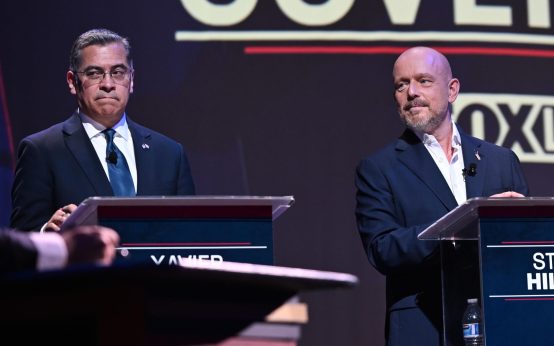 Becerra and Hilton Clash in California Gubernatorial Debate
  California Voters to Decide on $7.5 Billion State Research Fund
 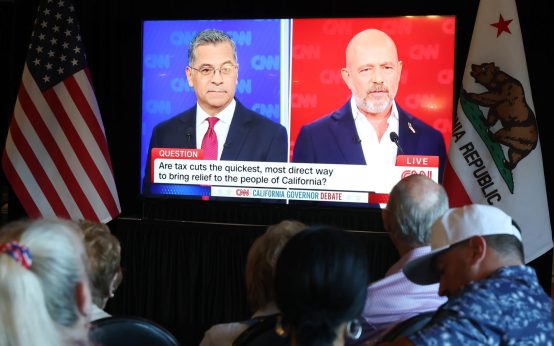 Highlights from the California Gubernatorial Debate: Becerra vs. Hilton
  Becerra vs. Hilton: The Debate and Key Issues in the California Governor Race
  Senate Confirms New Labor Secretary