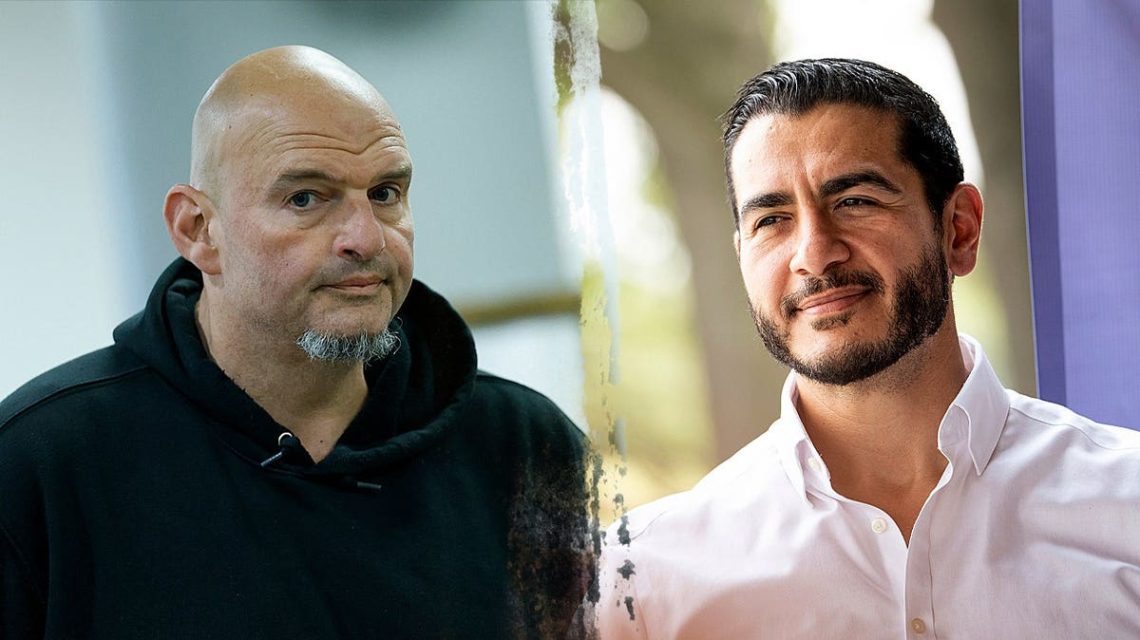
Senate Minority Leader Chuck Schumer has urged Democratic Party unity following recent midterm elections. However, a disagreement between Sen. John Fetterman and Sen.-elect Abdul El-Sayed could hinder attempts to unify the party in the upcoming 120th Congress.
Throughout the 2026 election cycle, both Democrats exchanged personal criticisms. They disagreed on U.S. military assistance to Israel, Medicare for All, and the party’s ideological direction. El-Sayed from Michigan argued in a private Zoom call with progressive donors that challenging moderate Democrats in primaries would send a strong message to the party’s leadership.
Fetterman and El-Sayed’s Contrasting Stances
Fetterman, a senator from Pennsylvania, supported U.S. military aid to Israel, including its Iron Dome missile defense system. He also advocated for military action against Hezbollah and Iran. Conversely, El-Sayed opposed military operations and U.S. aid to Israel, arguing against the war in Iran during his campaign.
According to a longtime Democratic Senate staffer, although tensions might arise between the two, their commitment to the party is expected to surpass personal conflicts. While Fetterman has faced criticism within the Senate Democratic caucus, lawmakers have still worked together despite disagreements.
Debates and Public Disputes
During a primary debate, El-Sayed confirmed his previous remarks targeting Fetterman, accusing him of abandoning his core values. El-Sayed argued against financing foreign defense systems like Israel’s Iron Dome while American schools face financial struggles. Fetterman retaliated by calling El-Sayed the “Pontiac Platner,” referencing another Democrat who withdrew from his race due to scandals.
Fetterman also accused El-Sayed of promoting an emerging pro-Hamas faction within the party, criticizing his stance on Israel. Controversial campaign appearances further fueled the dispute, as El-Sayed aligned with individuals who have made inflammatory statements.
The conflict escalated when El-Sayed narrowly defeated Rep. Haley Stevens in the Democratic primary. Reports indicated that El-Sayed’s campaign had excluded Stevens from final campaign events, leading to criticism from Fetterman.
Future Implications for Democratic Unity
Despite their public disagreements, a Democratic Senate staffer suggests that Fetterman and El-Sayed might eventually put aside differences to support the party’s legislative goals. Nevertheless, managing this feud presents an early challenge for Schumer as he aims to maintain party unity on issues like U.S. foreign policy and the progressive agenda.
El-Sayed and Fetterman did not respond to requests for comments about the disagreement.
 Mayor Mamdani’s Policing Reform Plans
 Gen Z Voter Shifts and Their Impact on the 2026 Midterm Elections
 Disappearance of US Senate Candidate Raises Questions
 DOJ Rule Change Reduces Appeal Time for Immigrants Facing Deportation
 Hakeem Jeffries’ Bid for House Speaker Faces Progressive Hurdles
 Ohio Judge Dismisses Defamation Lawsuit by Rep. Max Miller