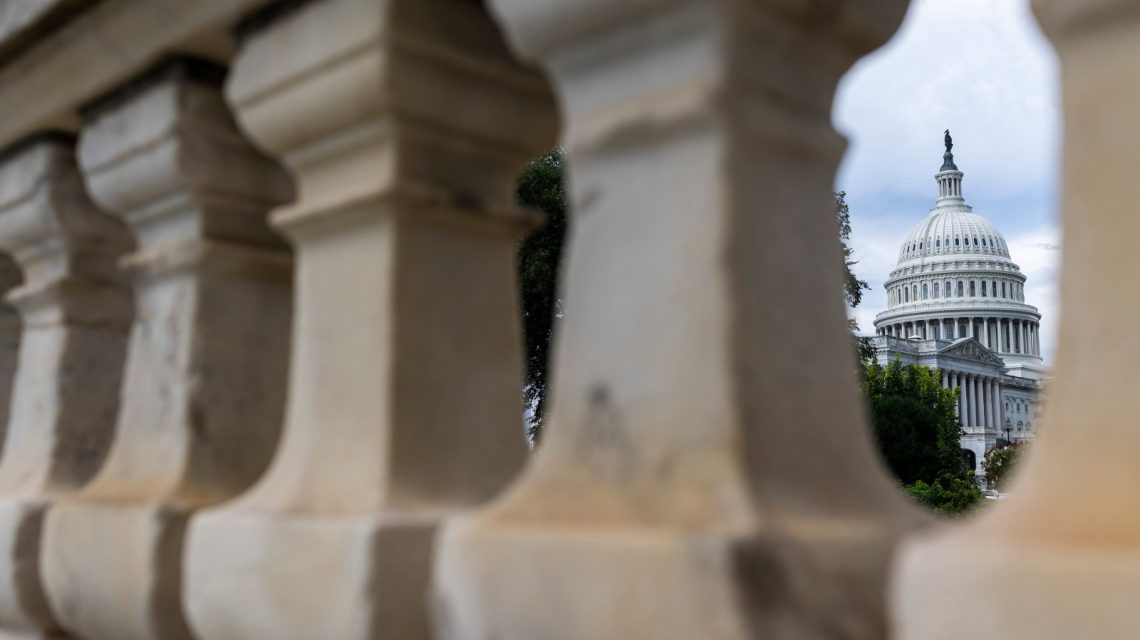
On Thursday, more than 30 Democrats in the House of Representatives supported a measure designed to prevent colleges and universities from receiving federal aid if they engage in specific boycotts against Israel. This bill, led by Virginia Foxx, a Republican from North Carolina, seeks to alter the Higher Education Act of 1965. It intends to block funding to institutions participating in ‘a nonexpressive commercial boycott of Israel’.
The House voted 237-169 in favor of the legislation, named the Protect Economic and Academic Freedom Act of 2026, which now progresses to the Senate. Foxx’s office had not immediately provided comments, but a post on X states she believes, “This legislation has true teeth and completely severs any possible taxpayer support of these concrete campaigns of antisemitism in the form of BDS and academic boycotts of Israel. The Senate should take it up immediately!”
Details of the Bill
The bill aims to prevent higher education institutions receiving federal education funds from engaging in certain commercial boycotts of Israel. Additionally, it mandates that schools receiving international education funds must ensure that students and faculty have equal opportunities to participate in academic programs in Israel as in other nations.
Proponents argue this measure will fight discrimination against Israel and safeguard academic exchange programs. Critics claim it may limit political activism and freedom of expression on campuses.
Changing Attitudes Towards Israel
This vote reflects a significant change in American attitudes towards Israel, particularly within the Democratic Party. A February Gallup poll showed 65% of Democrats favored Palestinians and 17% supported Israelis. Overall, Americans were divided: 41% support Palestinians while 36% favor Israelis. Republicans generally back Israel more, though Pew research reveals growing unfavorable views among younger Republicans.
Democratic Support and Opposition
While 33 Democrats supported the bill along with 203 Republicans, 167 opposed it. Notable among opponents were Minority Leader Hakeem Jeffries from New York, former Speaker Nancy Pelosi from California, and South Carolina’s James Clyburn.
This vote marks a rising divide within the Democratic Party. While some Democratic lawmakers back measures against antisemitism and protective of Jewish students, party voters increasingly distance themselves from Israel amidst conflicts such as the one in Gaza.
Critics worry these measures could obscure distinctions between anti-Jewish bias and critique of the Israeli government, affecting freedom of speech and pro-Palestinian advocacy at colleges.
New York Representative Jerry Nadler expressed that, although disagreeing with the Boycott, Divestment, and Sanctions (BDS) movement, he would still uphold Americans’ right to disagree, underscoring the importance of protecting varied speech.
Only two Republicans, Thomas Massie of Kentucky and Warren Davidson of Ohio, voted against the bill.
Implications for Democrats
The significance of this vote lies in its illustration of Democrats’ internal conflict. The party’s leadership is under pressure to distinguish between safeguarding Jewish students and allowing critique of Israeli policies, as its base increasingly criticizes Israel.
This tension surfaced when Jeffries appointed Jared Moskowitz, a vocal pro-Israel Democrat, to a position that some claimed did not align with the electorate’s changing views. The recent vote highlights this emerging internal debate. Established pro-Israel lawmakers and representatives from competitive districts supporting the measure view campus antisemitism as a civil rights issue, rather than solely an Israeli policy referendum. Meanwhile, the large faction opposing the measure signifies a growing skepticism about tying antisemitism closely to Israel-related disputes within the Democratic caucus.
 State Department Simplifies Passport Process with Online Applications
 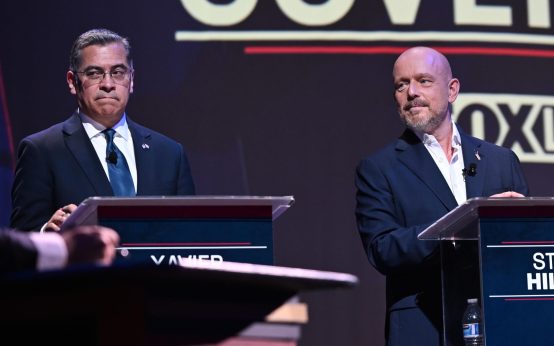 Becerra and Hilton Clash in California Gubernatorial Debate
  California Voters to Decide on $7.5 Billion State Research Fund
 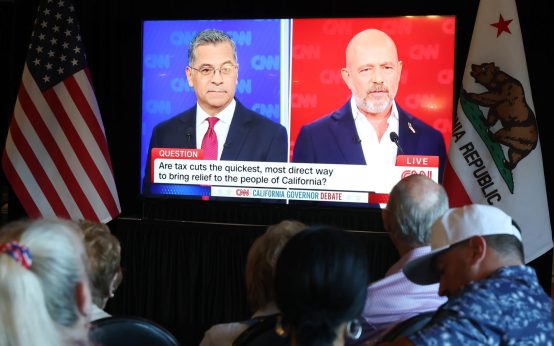 Highlights from the California Gubernatorial Debate: Becerra vs. Hilton
  Becerra vs. Hilton: The Debate and Key Issues in the California Governor Race
  Senate Confirms New Labor Secretary