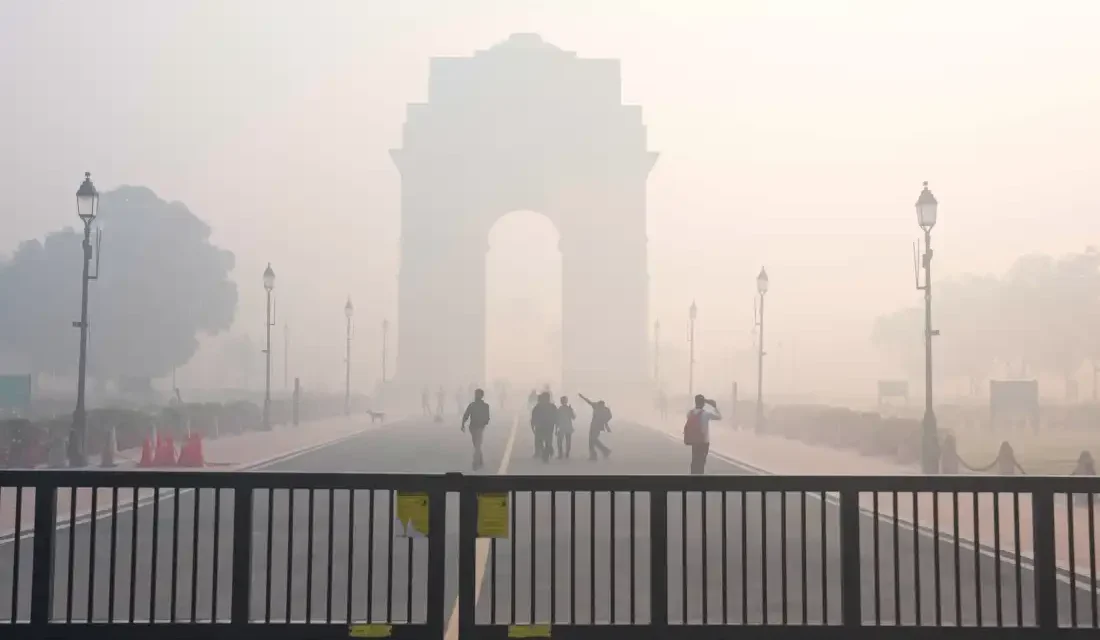
A thick blanket of smog enveloped New Delhi on Monday, following Diwali celebrations laden with fireworks. This exacerbated the already critical pollution levels that afflict the city annually during this season.
Despite rules limiting fireworks, New Delhi residents celebrated with a barrage of firecrackers on Sunday night. This unleashed smoke and fine particulate matter into the air. By Monday morning, the air quality index in various parts of the capital soared beyond 350, reaching the severe category. Such levels pose significant health risks. Monitoring stations across the city reported equally troubling statistics, with visibility plunging as a gray haze blanketed streets and buildings.
India’s Supreme Court attempted to curb Diwali pollution by restricting traditional firecrackers. It allowed only approved “green firecrackers” under specific conditions for limited time periods on Saturday and Sunday. Although these crackers emit fewer pollutants, they are not free from pollution. They still release particulate matter and other harmful pollutants, worsening the city’s hazardous air quality.
Isyad, a New Delhi resident who uses one name, expressed his health concerns. “Because of the pollution there is irritation in the throat and itching in the eyes,” he said.
New Delhi, along with its metropolitan region of over 30 million people, frequently ranks among the world’s most polluted areas during winter. Pollution peaks as Diwali fireworks coincide with cooler weather and smoke from crop-residue burning in neighboring Punjab and Haryana. Farmers in these states often burn leftover stalks after harvesting rice to clear fields for the next planting, sending smoke into New Delhi. This compounds pollution from vehicles, industries, and construction dust.
The situation becomes dire in late October and November when cooler temperatures, low wind speeds, and stagnant atmospheric conditions trap pollutants. This results in a haze that can persist for days over the capital and its surroundings.
New Delhi authorities have imposed measures to curb pollution. These include restrictions on construction activities and diesel generators. The courts have also sought to limit firecracker use. However, these efforts have not prevented the annual return of severe pollution.
Environmentalists emphasize the need for long-term solutions such as cleaner energy and stricter vehicle emission controls to end the yearly crisis. Shweta Narayan, a public health expert at the Global Climate and Health Alliance, criticized the government’s approach as “knee-jerk” and “temporary.” She commented, “A lot of interventions happen only because the government is pressured or pushed into action.”
 Efforts to Counter Food Assistance Cutbacks in San Diego
 Low-Cost Medication May Benefit Stroke Survivors
 The Complex Debate Over Kratom Use in the U.S.
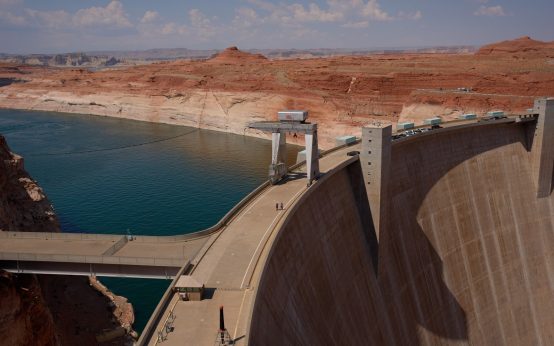 Record Low Hydropower Output in the Southwest
 Health Risks of Plastic Chemicals on Pregnant Women
 Navigating Health Insurance: A 22-Year-Old’s Journey to Coverage