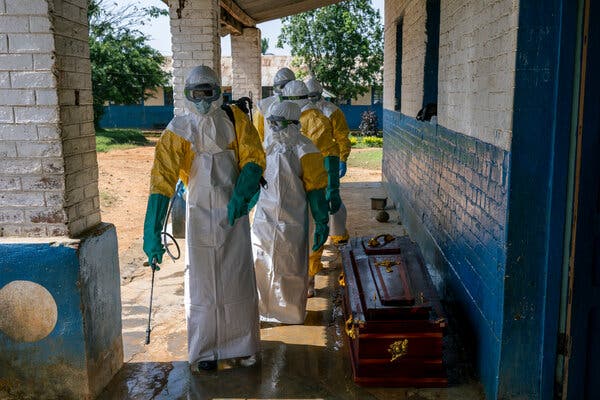
The Bundibugyo virus, a lesser-known type of Ebola, recently became the focus of an expanding epidemic in Africa. This development followed two small past outbreaks.
As the Ebola outbreak spreads in the Democratic Republic of Congo and Uganda, health workers are swiftly providing supportive care. This approach aims to help patients recover naturally while isolating those infected and tracing their contacts.
Vaccines and drugs that could potentially halt the virus are currently absent from the ongoing battle.
The scale of the epidemic has left scientists urgently searching for solutions. Recently, two major nonprofit vaccine organizations announced significant funding to support vaccine development. Experts from the World Health Organization recommended testing monoclonal antibodies and other drugs as potential treatments.
Researchers estimate that it will take months to determine the effectiveness of these measures. Nonetheless, these treatments might still be valuable, considering the outbreak is expected to persist. Richard Hatchett, chief executive of CEPI, emphasized the need for a long-term commitment to control the outbreak.
The complexity of fighting Ebola lies in its diversity. The term “Ebola virus” refers to a species first identified in 1976 in what was then known as Zaire.
 Understanding Inflammation: Myths and Facts
  Calm Parenting: Strategies to Manage Stress
  Trump’s Executive Order to Combat Mosquitoes and Ticks in D.C.
  Overcoming Weight Loss Challenges: Brain Health and GLP-1 Medications
  Supporting Children’s Mental Health at Home: Practical Steps for Parents
  Abdul El-Sayed’s Strategy to Attract Health-Conscious Voters in Michigan