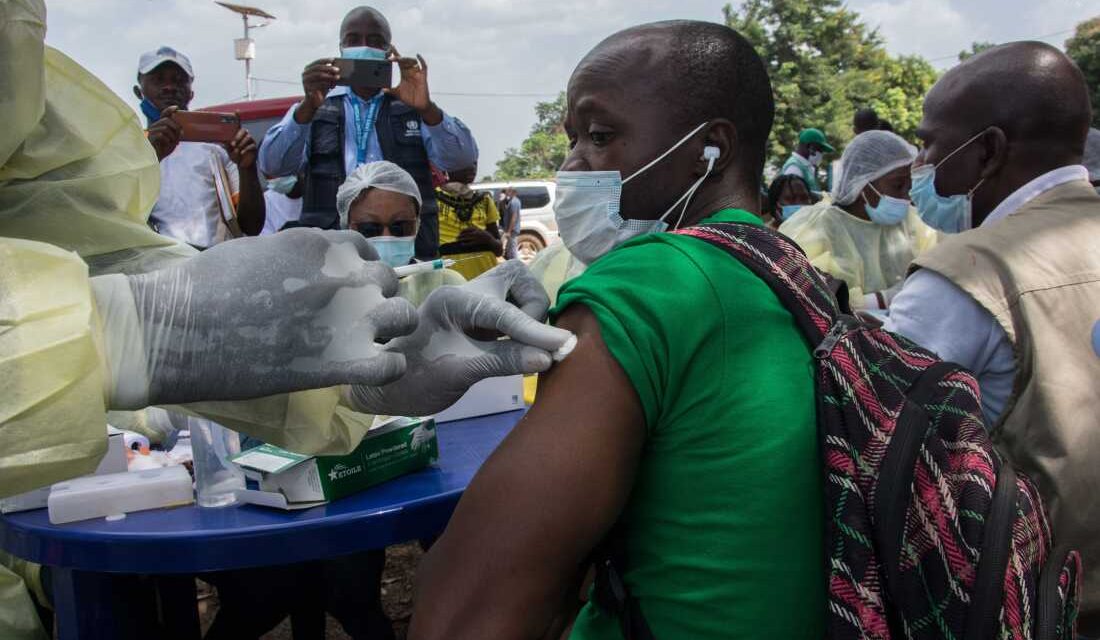
The Guinean Ministry of Health began administering an anti-Ebola vaccine in Gueckedou, Guinea, on February 23, 2021, after an outbreak. A health worker’s preparation marked a crucial moment in the fight against the disease.
The first official Ebola vaccine was approved in 2019, following a devastating outbreak in West Africa that claimed over 11,000 lives. This vaccine, known as Ervebo, specifically targets one species of Ebola and may not be effective against the Bundibugyo species, which is spreading in the Democratic Republic of Congo (DRC) and Uganda. Currently, there are no approved vaccines or treatments for this rarer species.
To address this gap, two major global vaccine organizations have announced significant funding for Bundibugyo vaccine development. The Coalition for Epidemic Preparedness Innovation (CEPI) has committed approximately $62 million toward accelerating research and development for three potential vaccines. Additionally, Gavi, a global vaccine alliance, promised $40 million to create a market for an effective vaccine.
“We know Ebola is a deadly killer, and matching a vaccine to the specific strain makes a difference,” said Nicole Lurie, executive director for preparedness and response at CEPI.
Responding to the urgency of the Bundibugyo outbreak, Lurie and her team evaluated ongoing vaccine research targeting this specific strain. While financial backing is crucial, it will be months before the effectiveness of these vaccines can be determined, and even longer before they reach widespread use.
Recent briefings by World Health Organization (WHO) officials highlight the ongoing discussions about conducting necessary trials. Anaïs Legand, a technical officer for WHO, emphasized the importance of commitment to accelerating vaccine trials.
Historically, the U.S. played a significant role in researching vaccines during outbreaks. However, the Trump administration’s withdrawal from WHO and the dismantling of NIH’s infrastructure have affected the country’s involvement. During the 2014 West African Ebola outbreak, the NIH was instrumental in running clinical trials for the vaccine later approved in 2019.
Elizabeth Higgs, once a strategic research partner for the NIH, now advises WHO in planning therapeutic and vaccine trials amid the current outbreak. Higgs notes that while NIH’s presence is missed, disease preparedness networks established by WHO are progressing well.
Developing Vaccine Candidates
Three vaccine candidates from IAVI, the University of Oxford, and Moderna are now in the spotlight. Each has distinct strengths and potential development timelines.
IAVI’s candidate, using a vesicular stomatitis virus (VSV) similar to Ervebo, has shown promising results in monkey studies. Geisbert, a researcher at the University of Texas Medical Branch, demonstrated that monkeys protected by the vaccine did not get sick. However, there are currently insufficient doses for larger trials. Production could take up to seven months.
The University of Oxford’s candidate mimics the approach of the Oxford/AstraZeneca COVID-19 vaccine. Partnering with the Serum Institute of India, Oxford aims to deliver doses in one to two months.
Moderna’s mRNA vaccine, supported by $50 million from CEPI, seeks to replicate successes seen in protection against the Zaire species of Ebola. Despite advantages, a two-dose approach may not be ideal for rapid outbreak control.
Challenges in Conducting Clinical Trials
Conducting clinical trials for these vaccines in the DRC and Uganda poses formidable challenges. Forecasting outbreak locations is difficult, and the ongoing conflict in northeast DRC further complicates efforts. Laurie of CEPI and Higgs of WHO underscore the importance of engaging communities to break misinformation and distrust surrounding vaccines. Misinformation has led to attacks on clinics.
The focus remains on establishing trials that quickly and rigorously assess the safety and efficacy of candidate vaccines, emphasizing community involvement and transparency.
 Increased Funding Needed for Psychiatric Hospitals
  Trump Administration Distributes ACA Refund Checks
  Higher Consumption of Ultra-Processed Foods Linked to Increased Health Risks
  Understanding Inflammation: Myths and Facts
  Calm Parenting: Strategies to Manage Stress
  Trump’s Executive Order to Combat Mosquitoes and Ticks in D.C.