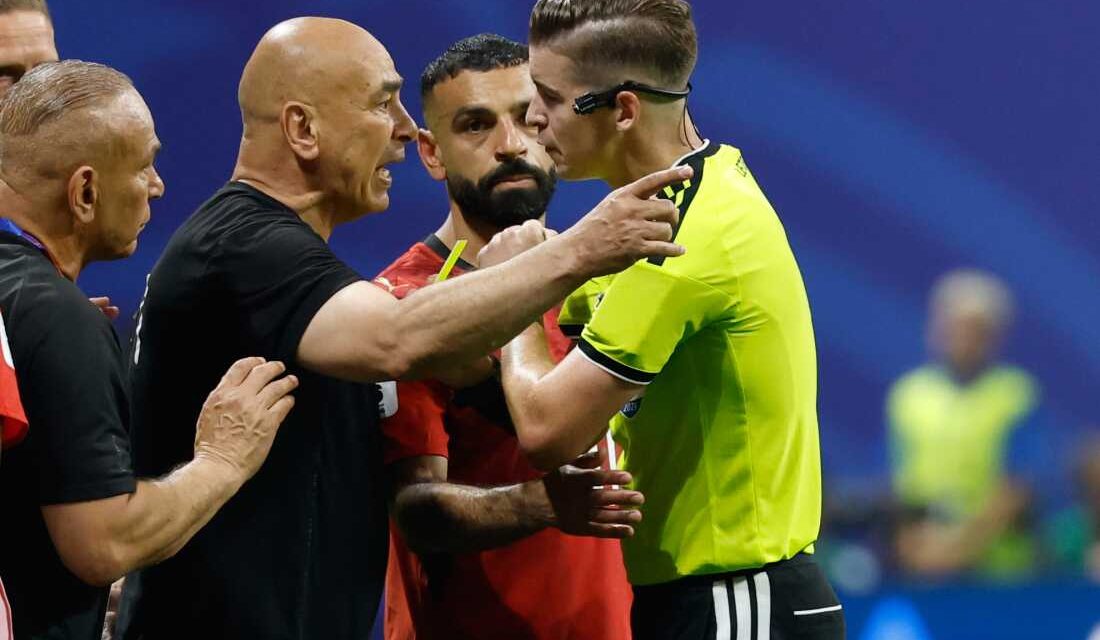
The Egyptian Football Association (EFA) expressed strong discontent over the officiating in Egypt’s recent World Cup round of 16 match against Argentina. On Tuesday, July 7, 2026, Egypt suffered a 3-2 defeat in Atlanta, with Argentina scoring three consecutive goals in the last minutes, marking one of the most significant comebacks in World Cup history.
According to a statement by EFA, it is imperative to defend the rights and interests of the Egyptian national team. The EFA criticized perceived biases and errors in officiating as factors in the game’s outcome. Coach Hossam Hassan and multiple players voiced their disbelief at the match’s sudden turnaround.
FIFA’s chief of refereeing, Pierluigi Collina, responded on Wednesday emphasizing that, while constructive debate regarding decisions is encouraged, unfounded claims have no place in football. He stressed that integrity of match officials should not be called into question, as it can lead to severe consequences.
The EFA raised concerns about the use of the Video Assistant Referee (VAR) system during the match, suggesting it was not applied appropriately. An incident occurred in the 58th minute when Egypt appeared to have scored their second goal. However, a VAR review identified a foul by Marwan Attia on Argentina’s Lisandro Martínez, negating the goal.
“Several key incidents raised serious concerns and left profound questions about the consistency and fairness of decisions,” the EFA statement read.
Collina defended the VAR decision, explaining that if a foul is detected and impacts a goal’s outcome, VAR will suggest an on-field review. The location or timing of the foul relative to the goal does not limit the review process. In Attia’s case, the foul involved stepping on Martínez’s foot.
Egypt subsequently scored through Mostafa Ziko, taking a 2-0 lead. However, Argentina’s momentum shifted with Lionel Messi assisting Cristian Romero in the 79th minute — the first of three quick goals.
Controversially, after Argentina’s final goal, Hossam Hassan signaled racial abuse by holding his arms in an “X” formation. Hassan accused the soccer establishment of bias favoring Messi and Argentina. In the game’s final moments, Egypt’s goalkeeping coach Saafan Elsaghir received a red card, and a flurry of yellow cards were issued to Egyptian players.
Analyzing the match, experts have defended Egypt, emphasizing the necessity for integrity, fairness, and transparency in officiating, especially in high-stakes tournaments. The EFA statement reflected the frustration of Egypt’s players, staff, and supporters.
“Every player who wears the Egyptian shirt, and every supporter deserves fairness, respect, and equal application of the laws of the game,” concluded the EFA.
 British Police Arrest Man Suspected of Terror Plot
  Nick Saban’s Comments on ESPN Spark Debate Over College Sports Regulations
  Activists Push for Nationwide Ban on Child Marriage in the U.S.
  Freddy’s American Adventure: From Soccer to College Football
  Investigation into Alleged Incident at Cornell University
  Rising Drone Threats Highlight Vulnerabilities in Moldova’s Airspace Defense