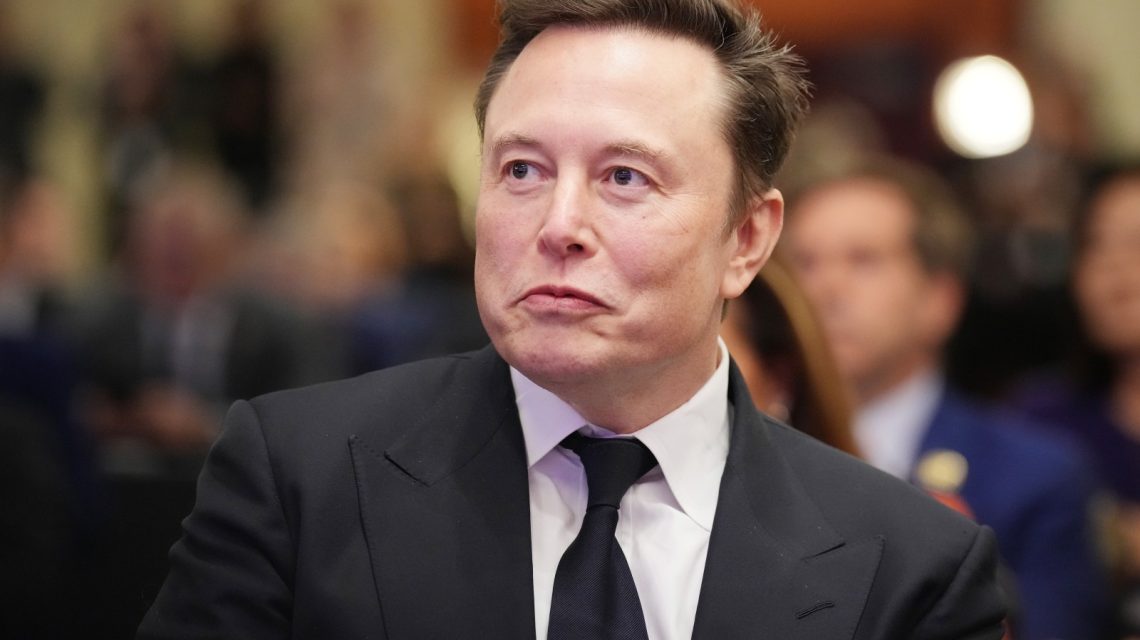
Elon Musk is significantly contributing to Republicans in the midterm elections. According to The New York Times, since July, Musk has invested over $276 million in political funding for Republican groups. This financial involvement comes just over a year after Musk stated plans to reduce political spending following a rift with President Donald Trump.
Republicans are hopeful that Musk’s contributions will provide a much-needed boost as they face a challenging economic backdrop in their campaign efforts. With Democrats in a strong position to potentially capture control of the House of Representatives and the Senate in the upcoming November 3 elections, the GOP is in a tough spot.
Historically, the party in power tends to lose seats during midterms, especially when the president’s approval ratings dip, as in Trump’s case. Frustration with economic issues and the cost of living has grown among voters, affecting Trump’s popularity.
The recent spending spree by Musk focuses on groups like the Senate Leadership Fund rather than individual candidates. Yet, Federal Election Commission (FEC) records reveal Musk’s donations to various conservative House Republicans seeking reelection.
Newsweek has reached out to Musk for comments via emails for SpaceX and Tesla.
Impact of Musk’s Spending
Todd Belt, professor of political management at George Washington University, shared with Newsweek that this spending might have limited impact for Republicans. He suggests the spending might come too late to alter public opinion, with the economy being the central issue for many voters. Saturation in political advertising is another concern raised by Belt.
Allocation of Musk’s Political Spending
According to The Times, of the $276 million Musk has spent, $158 million went to the Senate Leadership Fund, supporting Republican candidates in crucial Senate races. His spending during the summer also included $76 million to America PAC, a Musk-founded organization supportive of various Republican candidates.
Other significant contributions include $20 million to the Congressional Leadership Fund, $10 million each to Lone Star Liberty PAC and the Republican Governors Association, and $2 million to the Republican Attorneys General Association, according to his representatives.
In May, Musk donated $5 million to V-PAC: Victors Not Victims, supporting Republican Vivek Ramaswamy in Ohio’s gubernatorial race. He also gave $10 million to Fight for Kentucky, backing Republican Nate Morris, though Morris later withdrew from the race.
Throughout 2025, Musk continued donations to America PAC and the Senate Leadership Fund. This includes a $5 million contribution to MAGA Inc. in June 2025, a Trump-aligned PAC.
This series of donations in 2025 to various Republicans included individuals like Lauren Boebert (CO-04), Eric Burlison (MO-07), and more. Most beneficiaries are in secure conservative districts with competitive elections expected only in a few cases.
Many Musk-supported Republicans are members of the conservative House Freedom Caucus, with his donations strategically assigned to strengthen GOP positions.
Senator Bernie Sanders criticized Musk’s financial influence in politics, noting Musk’s substantial wealth increase since Trump’s election and urging action against what he described as an oligarchic influence.
Timeline of Musk and Trump’s Relationship
The relationship between Musk and Trump has seen ups and downs over the years.
- 2016: Musk supported Hillary Clinton, opposing Trump.
- 2017: Musk resigned from White House advisory councils post-Paris Agreement withdrawal by Trump.
- 2020: Backed Joe Biden, not Trump.
- May 2022: Announced support for Republicans
- July 2024: Endorsed Trump post-assassination attempt and became a major donor.
- January 2025: Led the Department of Government Efficiency (DOGE) under Trump.
- June 2025: Musk criticized Trump’s policies, leading to a public fallout.
- Late 2025: Relationship stabilized, with Musk attending a state dinner.
Republicans’ Chances in House and Senate
Republicans are facing a challenging election as economic concerns grow. Recent polls show Democrats leading Republicans in upcoming elections, with Democrats needing only to flip a few seats to gain a House majority.
October poll results highlighted a 7-point Democratic lead over Republicans on a generic ballot among 3,526 registered voters.
The Senate poses a tougher challenge for Democrats due to fewer competitive seats. Yet, Democrats have shown competitiveness in traditionally Republican states.
By using prediction markets, Democrats exhibited strong chances of winning majorities in both the House and Senate.
Overall, how Musk’s financial support impacts Republican strategies and outcomes remains to be seen as the elections approach.
 Shift from ‘Artificial Intelligence’ to ‘Super Intelligence’ Gains Traction
 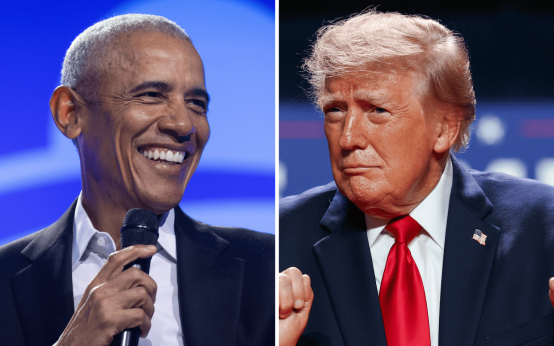 Obama and Trump’s Strategies in the 2026 Midterm Elections
  Michigan Senate Seat Contest Heats Up Between Rogers and El-Sayed
 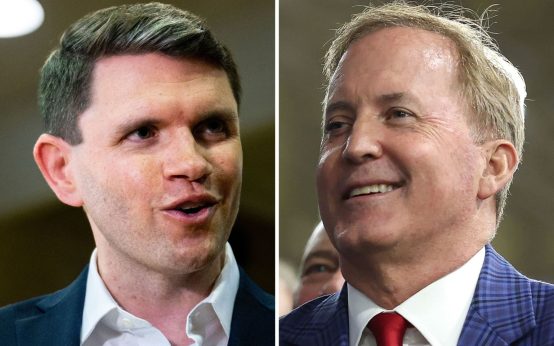 Texas Senate Race Heats Up with James Talarico’s New Campaign Ads
  President Trump Considers Firing Kimberly Guilfoyle Over Allegation
  Georgia Governor’s Race Highlighted by Debate Absence