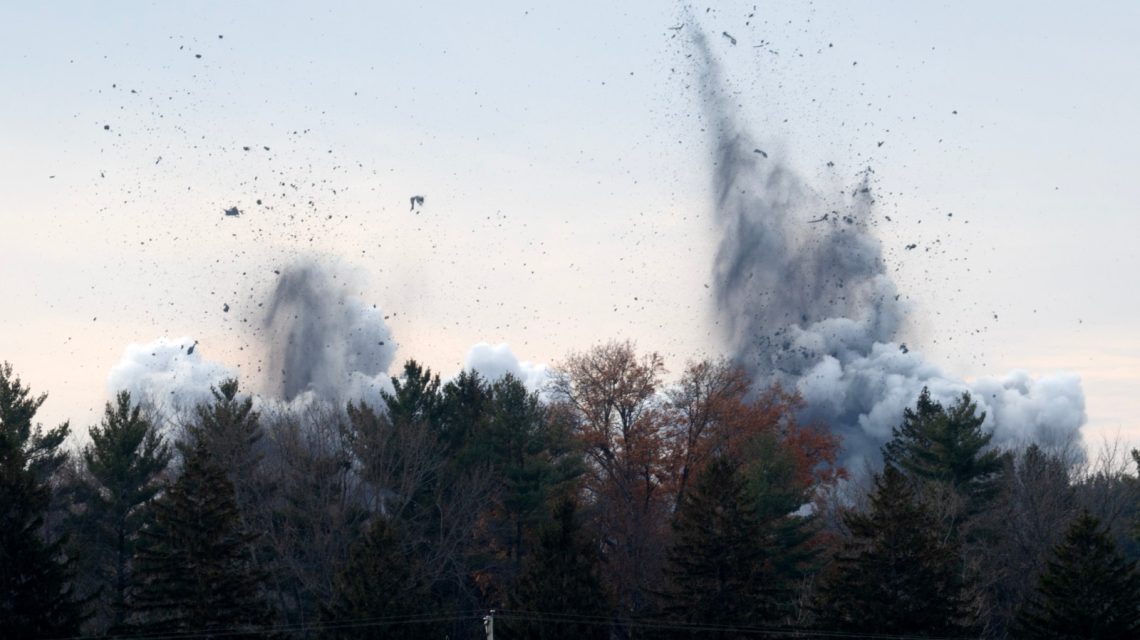
The U.S. Environmental Protection Agency (EPA) announced that preliminary test results following the detonation of the U.S. Army’s lead azide stockpile in Iowa revealed no increase in lead levels in drinking water sources. This detonation had no impact on the 38 water samples tested, which included treated and untreated water from public supplies, according to an EPA press release.
Lead is a hazardous metal, particularly risky for children and pregnant women. Before the controlled detonation, EPA personnel gathered samples from 35 drinking water sources across Iowa, Illinois, and Missouri to establish a baseline.
The agency further reported that Xact air monitoring systems have not detected airborne lead in the area since the event. The Army executed the detonation of five tons of stored lead azide due to the risk of uncontrollable explosions in colder temperatures. This primary explosive can initiate other explosives. Environmentalists had initially sought to halt the procedure over health and environmental concerns.
EPA Administrator Lee Zeldin described the detonation scenario as the “best-case” outcome, citing all evidence as supportive.
President Donald Trump emphasized the success of the operation, claiming the mitigation efforts “exceeded expectations.” Vice President JD Vance credited Stephen Miller, White House chief of staff, for his role in crucial decision-making. Governor Kim Reynolds expressed gratitude to the Army and Trump Administration, calling it a favorable result for Middletown’s community.
The Army implemented safety measures, including barriers and ballistic materials, to contain lead dust. Water spraying followed the explosion to minimize risks.
Democrats criticized the response to potential public health and safety threats, citing concerns about multi-state effects, agricultural damage, and air and water quality.
The EPA’s extensive sampling included 1,632 pre-detonation and 1,607 post-detonation samples of air, water, soil, and dust. The agency gathered samples from 187 structures and various community sites, like parks and schools. While the post-detonation assessment has covered 88% of previously sampled homes, accessing certain private properties remains a challenge due to residents’ absence.
 The Silence of Women in Tech Regarding Jensen Huang’s Return
 Mother Protects Infant during Los Angeles Earthquake
 The Controversy Surrounding Lake Ontario’s Renaming
 Opportunities and Challenges in Recent Developments
 Catholic Dioceses Enhance Support for Retired Priests
 Marine Veteran Warns of Threats to Historical Monuments