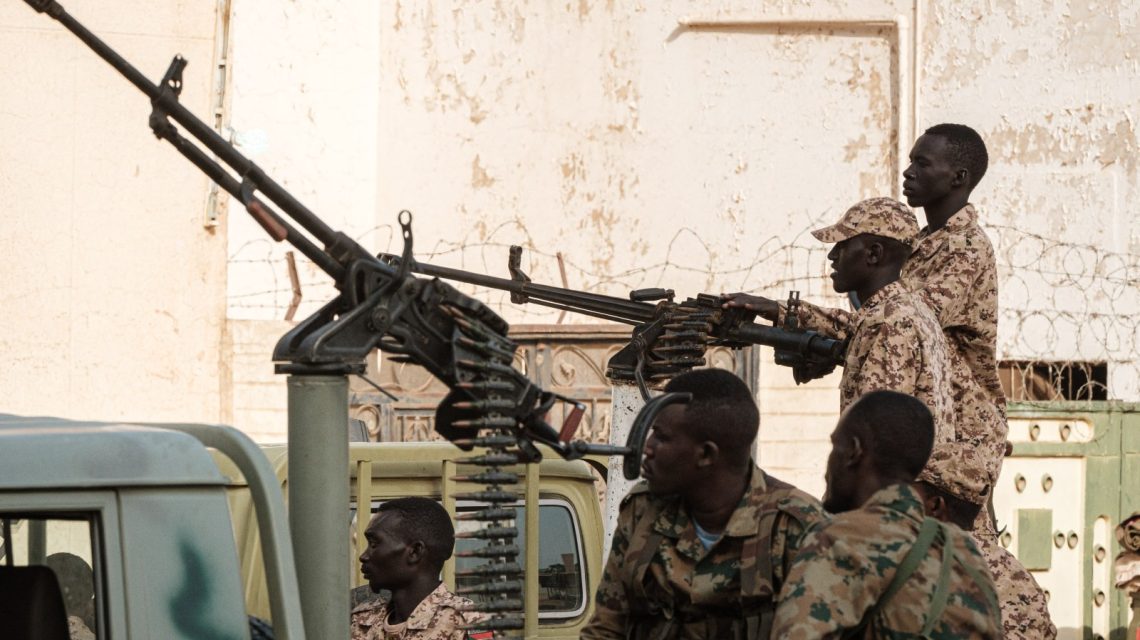
The situation in Sudan is worsening as fighting intensifies along the main front line in the central region. This conflict is not only hindering international peace efforts but also worsening the world’s largest humanitarian crisis. Addressing the war is essential for moral, humanitarian, and strategic reasons and could improve the narrative of Trump’s peacemaking efforts. Stronger U.S. action is needed to push for peace.
The United States has taken steps to hold the Sudanese Armed Forces (SAF) accountable. Recent sanctions aim to pressure SAF into negotiations. Now, similar measures are needed against the Rapid Support Forces (RSF). The Trump administration should label the RSF as a Foreign Terrorist Organization (FTO). This would target the Emirati-linked weapon networks, crucial for the RSF’s warfare capabilities, and affirm the U.S.’s commitment to peace.
Recent developments on the battlefield present a chance to pressure the RSF away from its hardline stance. The ongoing stalemate across Sudan has challenged the RSF’s patronage system. This forces them to choose between further military actions or negotiating. In early 2026, the RSF chose to escalate, opening a new front in southeastern Sudan. They spent June preparing for an offensive on El Obeid, the SAF’s central headquarters, through reinforcements and drone attacks that partially besieged the city.
The diplomatic route might be more viable now as recent SAF efforts have stalled the southeastern offensive. The SAF has eased the pressure around El Obeid by securing the northern Khartoum-El Obeid supply line. These gains could support future SAF offensives toward RSF-controlled regions in Western Sudan.
Ending the conflict in central Sudan is a humanitarian necessity. Various international bodies, including the United States, have warned about potential mass atrocities near El Obeid. The RSF has used siege tactics, involving war crimes like indiscriminate strikes and targeting civilian and humanitarian infrastructure. Despite SAF’s gains, the RSF remains strong near El Obeid. Armed Conflict Location and Event Data researcher Ali Mahmoud Ali notes the ongoing attrition leaves civilians vulnerable to violence.
The RSF’s resources are diminishing, prompting their leader Mohamed Hamdan Dagalo (Hemedti) to allow field commanders to initiate their offensives. This has unleashed undisciplined fighters committing abuses against civilians to punish communities and gather loot.
Securing peace in Sudan aligns with major U.S. interests. Various malicious actors have used the civil war to expand influence in the Horn of Africa and the Red Sea. Islamist factions have grown within the SAF due to their role in countering the RSF. The conflict reduces pressure on smuggling networks between Houthi-controlled Yemen and Sudan. Iran and Russia have made separate attempts to partner with SAF to access Sudan’s extensive Red Sea coastline.
For peace to advance, the U.S. and its allies must go beyond diplomacy and designate the RSF as an FTO. Bipartisan calls in Congress support this action. Former U.S. officials have addressed humanitarian and legal issues. This designation would interrupt Emirati-linked networks arming the RSF. It offers Abu Dhabi a chance to stop support before suffering material and reputational harm from sanctions, avoiding direct conflict with a U.S. partner in the UAE.
Greater pressure on the RSF is vital for sustainable peace. An FTO status would help repair the strained SAF-U.S. relations and encourage SAF participation in U.S.-led mediation. Critical negotiators, including the U.S., agree on the need to preserve SAF post-war to avoid state collapse. The RSF, a coalition blamed for plunder and atrocities, is unsuitable for any role in a united post-war Sudan. SAF understands that chaos-inducing entities like Islamists, Iran, and Russia are unhelpful for reconstruction. They aim to maintain Western alliances, pledging to contain Islamist influence, rejecting Iranian deals, and avoiding inflammatory agreements with Moscow.
It is crucial for the U.S. and its partners to learn from past mistakes. Inaction would imply sacrificing Sudanese lives and U.S. interests to maintain relations with Abu Dhabi. This would be both morally and strategically misguided in a region fraught with challenges from Islamists, Iran, and Russia.
 Upcoming Congressional Elections: Key Districts to Watch
  Bolivia Faces Security Test Amid Unrest
  President Trump’s Pre-Midterm Interview on Key Issues
  Incident on FlyDubai Flight Raises Security Concerns
  Journalist Gershkovich Discusses Wrongful Detention and Release in Russian Prisoner Swap
  Pakistan Airstrikes in Afghanistan: Civilian Casualties Reported